
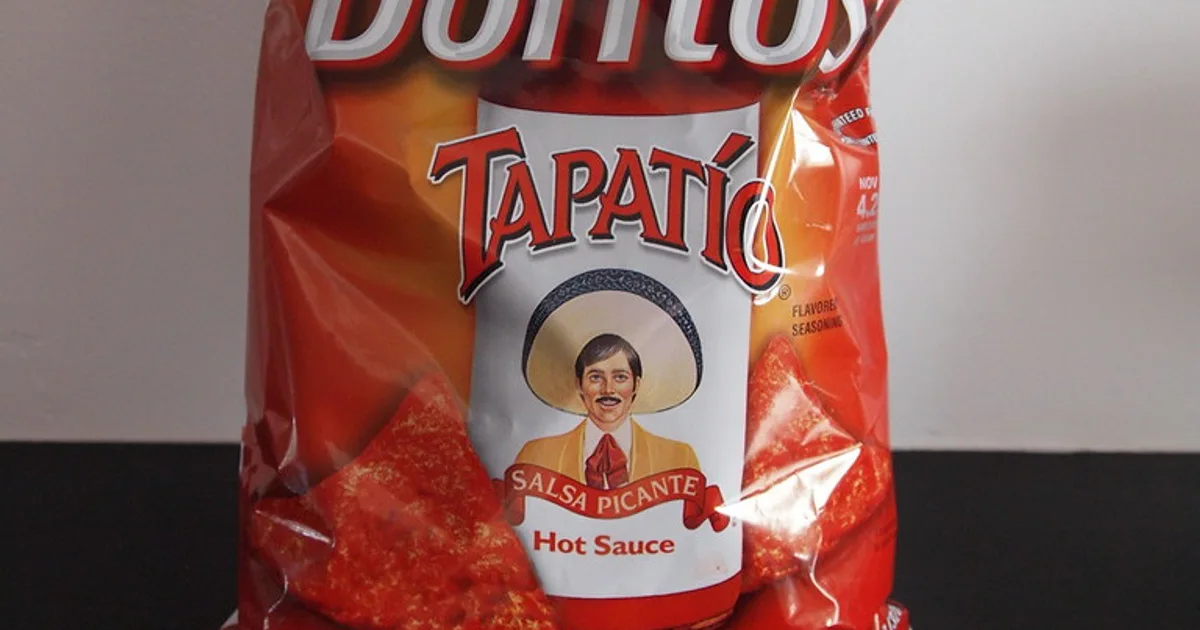
Doritos is one of the most searched products on HalalCodeCheck. Users type “Cool Ranch Doritos” and “Cool Ranch doritoes” and get no results — because we don’t have a brand page for it. This guide closes that gap.
The short answer: no Doritos products in the UK or US carry halal certification. The longer answer explains why the specific flavour and market matter a great deal.
The Tortilla Base — Not the Problem
The core of every Doritos chip is:
- Corn (maize)
- Vegetable oil (sunflower or corn)
- Salt
All three are plant-derived and halal. The issue is entirely in the seasoning blend applied to each flavour. This is where the halal status breaks down.
Cool Ranch (US) vs Cool Original (UK) — Not the Same Product
Many consumers assume the UK “Cool Original” is the same as the US “Cool Ranch”. The names are different because Frito-Lay reformulates products by market, and the formulations differ in meaningful ways.
US Cool Ranch Doritos
Ingredients include:
- Whole corn, vegetable oil, salt
- Cheddar cheese, skim milk, buttermilk, whey, whey protein concentrate
- Natural flavours
- Tomato powder, onion powder, garlic powder, red and green bell pepper powder
- Malic acid, citric acid
The two concerns:
1. Natural flavours — In US food labelling, “natural flavours” can legally include substances derived from animal meat, seafood, poultry, eggs, or dairy. Frito-Lay does not disclose what their natural flavours contain. This has been a long-standing concern for halal consumers in the US.
2. Cheese enzymes — Cheese production uses enzymes to coagulate milk. These enzymes can be:
- Microbial (generally halal)
- Animal-derived (from calf stomach — haram without halal slaughter certification)
Frito-Lay does not specify the enzyme source in Cool Ranch.
UK Cool Original Doritos
UK Cool Original has a different formulation. Key differences:
- Uses dried cream instead of buttermilk
- Contains E635 (disodium ribonucleotides) — a flavour enhancer
- The “flavouring” listed is not broken down further
E635 is a blend of E627 (disodium guanylate) and E631 (disodium inosinate). These can come from:
- Fish (sardines) — halal
- Pork — haram
- Bacterial fermentation of plant sugars — halal
Frito-Lay UK does not disclose the source of E635. This makes the UK product Mushbooh regardless of the US ruling.
Why a US Ruling Doesn’t Apply to UK Products
This is a critical point. If an Islamic scholar in the US has reviewed US Cool Ranch Doritos and issued a ruling, that ruling applies only to the US product with the US ingredient list. The UK product has:
- A different formulation
- Different E-codes (E635 in UK, different additives in US)
- Different natural flavours (formulated to different regional specs)
Do not apply a US halal ruling to a UK-purchased bag, or vice versa.
Other Flavours — UK
| Flavour | Key E-codes | Status |
|---|---|---|
| Lightly Salted | None | Halal (generally) |
| Cool Original | E635 | Mushbooh |
| Chilli Heatwave | E635, E621 | Mushbooh |
| Tangy Cheese | E635, E160c | Mushbooh |
| BBQ Rib (limited) | E635, natural flavours | Mushbooh |
Lightly Salted is the one clear option — corn, oil, salt, no seasoning additives.
If every seasoned row above rules Doritos out for you, the honest answer is that we cannot point you at a certified replacement. Our UK online snack picks hold no certified crisp or tortilla chip — the nearest candidates either name no certifier or carry E635, the same blend of E627 and E631 this page rules Mushbooh. The picks that stand are sweets, noodles and jerky, and they are Amazon UK stock.
What Frito-Lay Has Said
Frito-Lay has historically been vague on halal status. They do not:
- Hold halal certification for any UK or US product line
- Specify the source of “natural flavours”
- Specify the enzyme source in cheese-seasoned products
They have stated that some products are made without pork-derived ingredients, but this statement:
- Is not a halal certification
- Does not address slaughter method for any animal-derived ingredient
- Does not address alcohol-based flavouring extracts
Halal-Certified Doritos — Do They Exist?
Yes, in some markets:
- Gulf region (Saudi Arabia, UAE, Kuwait, Qatar): PepsiCo/Frito-Lay produces regionally formulated Doritos that may carry local halal certification. Check the pack for a logo from the relevant authority.
- Malaysia: Doritos sold locally may carry JAKIM certification.
- Pakistan: Verify each pack — certification status varies by batch and import.
If you purchase Doritos from a Gulf-region supermarket or import them from a certified market, look for the halal logo on the bag itself. Do not assume Gulf certification applies to UK-purchased bags.
How to Check Your Bag
- Check for E635 in the ingredients — present = Mushbooh
- Check for “natural flavours” — present without specification = Mushbooh
- Check for a halal logo — none on standard UK/US bags
- Check the country of production on the pack
The Simple Rule
- Lightly Salted (UK): Generally halal — no seasoning additives
- Any flavoured variety (UK/US): Mushbooh — natural flavours or E635 from unverified sources
- Certified Gulf/Malaysian Doritos: Halal — only if the certification logo is on the specific bag you are holding
For full brand-level detail including all variants and E-code breakdowns, see the Doritos brand guide.
How we reached this verdict
We checked the following Tier-1 sources before publishing this verdict:
- Halal certification bodies (HMC, HFA, JAKIM, MUI): Where the brand or ingredient appears in certified products, the certifying body’s audit covers source verification; where it appears in uncertified products, manufacturer disclosure is required.
- Manufacturer statements: Public ingredient lists, vegetarian / vegan suitability labels, customer-service correspondence on source disclosure.
- Sunni fatwa scholarship across the four madhabs:
- Hanafi-leaning bodies: IslamQA Hanafi, Darul Iftaa Birmingham, AskImam.org, Daruliftaa.com (Mufti Taqi Usmani), Wifaqul Ulama, Darul Iftaa New York.
- Shafi’i / Maliki-leaning bodies: NU (Nahdlatul Ulama, Indonesia), Dar al-Ifta al-Misriyyah (Egypt), e-fatwa.com (UAE), al-Azhar.
- Hanbali / Saudi-Salafi-leaning bodies: Saudi Permanent Committee for Scholarly Research, IslamQA Saudi.
Madhab note
The four Sunni madhabs broadly converge on the rules applied in this guide:
- Pork-derived sources — Haram across all four madhabs.
- Alcohol-based ingredients — Haram across all four madhabs.
- Source-ambiguous E-codes (E471, E476, E631, E627, E635, E920) — manufacturer plant-source disclosure (vegetarian-suitable label) is treated as sufficient under the Hanafi/Maliki/Shafi’i mainstream rule (Darul Ifta Birmingham, IslamQA case 245452); HMC-strict / Hanbali-leaning view requires formal independent certification.
- Istihāla (transformation) — Hanafi and Maliki accept istihāla strongly; spirit vinegar (alcohol → vinegar) is halal. Most Shafi’i scholars permit spirit vinegar specifically; some Hanbali scholars more cautious.
- Insect-derived dyes (E120 cochineal/carmine) — Hanafi, Shafi’i, and Hanbali generally treat as haram; some Maliki scholars permit small insects.
- Non-zabihah meat (Ahl al-Kitāb / People-of-the-Book slaughter) — Maliki and classical Shafi’i/Hanbali generally accept; Hanafi-Deobandi tradition more restrictive.
If your madhab differs on a specific ruling, the relevant section above flags the school-specific position. For binding rulings on borderline products, consult a competent scholar in your tradition.
Ingredients change. Be first to know.
Brands reformulate without warning. We track every E-code update and halal certification — one short weekly email.
Related Articles
 Shopping Guides
 Is Pringles Halal? Every Flavour Checked by Region (2026)
Pringles Original is halal and vegan-labelled. Every flavoured UK variety we verified contains E621 with E627/E631 or E635 — but all carry vegetarian labels. Flavour-by-flavour table for UK, US and certified Gulf/Malaysian versions.
 Shopping Guides
 Which Crisp Flavours Are Haram? UK Brand-by-Brand Guide (2026)
We verified 30+ UK crisp flavours against current official labels. Fewer are haram than you think — Walkers is now enhancer-free, but flavoured Pringles still use E631/E635. Full brand guide: Walkers, Pringles, Tyrrells, Kettle, McCoy's.
 Shopping Guides
 The Complete Guide to Halal Crisps and Savoury Snacks (2026)
Every snack category covered: potato crisps, Doritos, Pringles, popcorn, rice cakes, nuts and crackers. Brand verdicts across Walkers, Tyrells, Kettle, Doritos, Cheetos, Pringles, Popchips and more.