
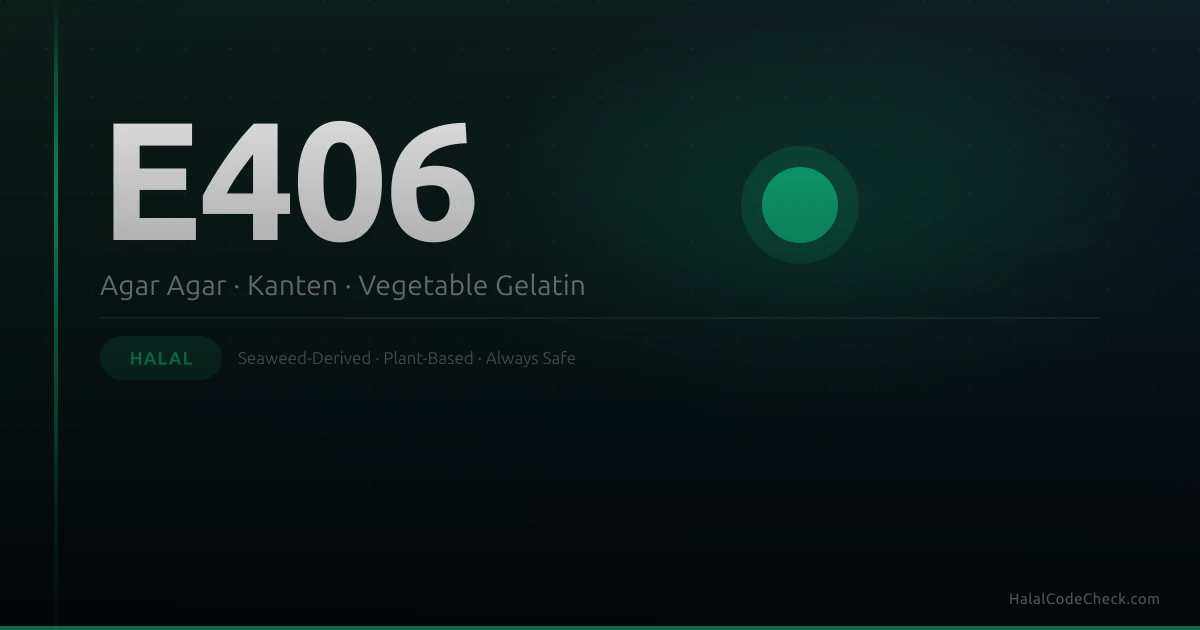
You see “agar,” “agar-agar,” or E406 on a label. Is it halal?
Yes - agar agar is 100% halal. It comes from red seaweed. No animals, no slaughter, no solvent concerns. Every major school of Islamic jurisprudence permits it.
This is one of the few ingredients where the answer is simple and certain.
What Is Agar Agar?
Agar agar (also spelled agar-agar, or simply “agar”) is a gelling agent extracted from red algae - a type of seaweed. When dissolved in hot water and cooled, it sets into a firm, clear gel.
It has been used in Asian cooking for centuries, particularly in Japan (where it is called kanten) and across Southeast Asia. Today it is found in food products worldwide, from Asian confectionery to Western vegan desserts.
On food labels it appears as:
- Agar or Agar-Agar
- E406 (European food code)
- Kanten (Japanese labelling)
- “Vegetable gelatin”
Is Agar Agar (E406) Halal?
Yes. Agar agar is unambiguously halal.
| Criterion | Status | Reason |
|---|---|---|
| Source | ✅ Halal | Derived from red seaweed - no animal ingredients |
| Processing | ✅ Halal | Water extraction - no alcohol or haram solvents |
| Scholar consensus | ✅ Halal | Accepted across all four major madhabs |
| Vegan | ✅ Yes | Entirely plant/algae-based |
Unlike E441 (gelatin), which requires you to verify the animal source, or E471 (mono and diglycerides), which depends on the fat used, agar agar carries no ambiguity. There is no animal origin to question and no manufacturing step that introduces a halal concern.
E406 in the E-codes database: View full entry
Agar Agar vs Gelatin - Key Differences
This comparison matters because agar agar is the main halal substitute for gelatin. Understanding the difference helps you shop with confidence.
| Agar Agar (E406) | Gelatin (E441) | |
|---|---|---|
| Source | Red seaweed (plant/algae) | Animal collagen (pork, beef, fish) |
| Halal status | ✅ Always halal | ⚠️ Depends on animal source |
| Vegan | ✅ Yes | ❌ No |
| Sets when | Cooled below ~40°C | Cooled below ~15°C |
| Texture | Firmer, slightly stiffer | Softer, more elastic |
| Heat stability | Higher - holds shape up to 85°C | Melts at room temperature |
| Common in | Asian desserts, vegan products | Western confectionery, capsules |
The texture difference is the main trade-off: agar agar sets harder than gelatin and may produce a slightly grainier mouthfeel in some applications. For desserts and jellies, most people find it a direct substitute.
Where Is Agar Agar Used?
Agar agar appears in a wide range of products:
Confirmed halal categories:
- Asian desserts - grass jelly, almond tofu, puddings, agar jellies
- Confectionery - jelly sweets made without gelatin (halal-certified gummies)
- Dairy alternatives - yogurt-style products, plant-based desserts
- Baking - as a vegan stabiliser in cakes and icings
- Processed foods - broths, sauces, canned foods as a thickener
- Microbiological use - Petri dish growth media (non-food use)
If a product lists agar or E406 as the gelling agent instead of gelatin, it is a positive sign for halal shoppers. It is often a deliberate choice by manufacturers targeting vegetarian, vegan, or halal markets.
Agar Agar and Vegetarian/Vegan Labels
Agar agar is almost always found in products labelled “suitable for vegetarians” or “vegan.” These labels strongly suggest agar was used instead of gelatin - but always confirm by checking the full ingredient list.
If you see E406 alongside a “suitable for vegetarians” mark, you can be confident the gelling agent is halal.
Other Halal Gelling Alternatives to Know
If you are checking labels for gelatin alternatives, these are the other plant-based gelling agents that are also halal:
| E-code | Name | Source | Halal Status |
|---|---|---|---|
| E406 | Agar Agar | Red seaweed | ✅ Halal |
| E440 | Pectin | Apple/citrus peel | ✅ Halal |
| E407 | Carrageenan | Red seaweed | ✅ Halal |
| E412 | Guar Gum | Guar beans | ✅ Halal |
| E415 | Xanthan Gum | Bacterial fermentation | ✅ Halal |
Knowing these codes means you can identify halal-safe gelling agents at a glance - without needing to research every product from scratch.
Frequently Asked Questions
Is agar agar the same as gelatin?
No. Agar agar and gelatin behave similarly (both gel when cooled) but come from completely different sources. Gelatin is an animal protein extracted from bones, skin, and connective tissue. Agar agar comes from seaweed. Agar is halal; gelatin’s halal status depends entirely on the animal source.
Does agar agar need halal certification?
No. Because agar agar is derived entirely from seaweed through water extraction, it does not require halal certification - the ingredient itself has no halal concern. However, if a product contains agar agar, other ingredients in that product still need checking.
Is E406 always plant-based?
Yes. E406 is defined by its seaweed origin. There is no animal-derived version of E406.
Can I find agar agar in supermarkets?
Yes. Agar agar powder is widely sold in the baking aisle, health food shops, and Asian grocery stores. It is available in most major UK and international supermarkets. Brands marketed to vegetarians and vegans will often specify agar agar on the front of pack.
Are Asian agar jelly desserts halal?
The agar component is always halal. However, check other ingredients (colourings, flavorings, added gelatin in some recipes) to confirm the full product. In Asian shops and restaurants, agar jellies are typically made with 100% plant ingredients.
What To Do Next
Agar agar is the clear winner when you need a gelatin substitute:
- Already have a product with E406? You can eat it - the gelling agent is not the concern. Check the other additives.
- Unsure about gelatin vs agar? Read Is Gelatin Halal? for the full breakdown on when gelatin is and isn’t permitted.
- Want to check any product’s full additive list? Scan the ingredient label - get instant halal status for every E-code in seconds.
- Browse all gelling agents: E-codes database - filter by category to see all thickeners and stabilisers with their halal status.
Agar agar is one of the few ingredients where Muslim shoppers can stop reading and start eating.
Related Articles
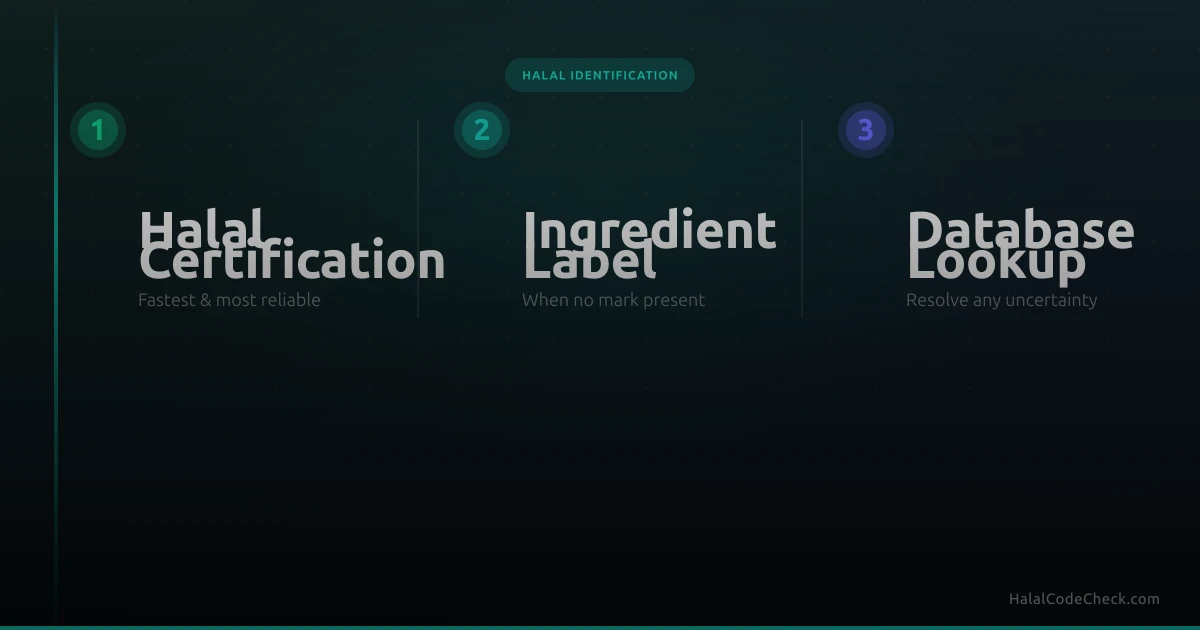 How-To Guides
 How to Identify Halal Products: A Practical 3-Step System
Learn how to identify halal products quickly and confidently - certification marks, ingredient label reading, E-codes to watch, and tools that do the checking for you.
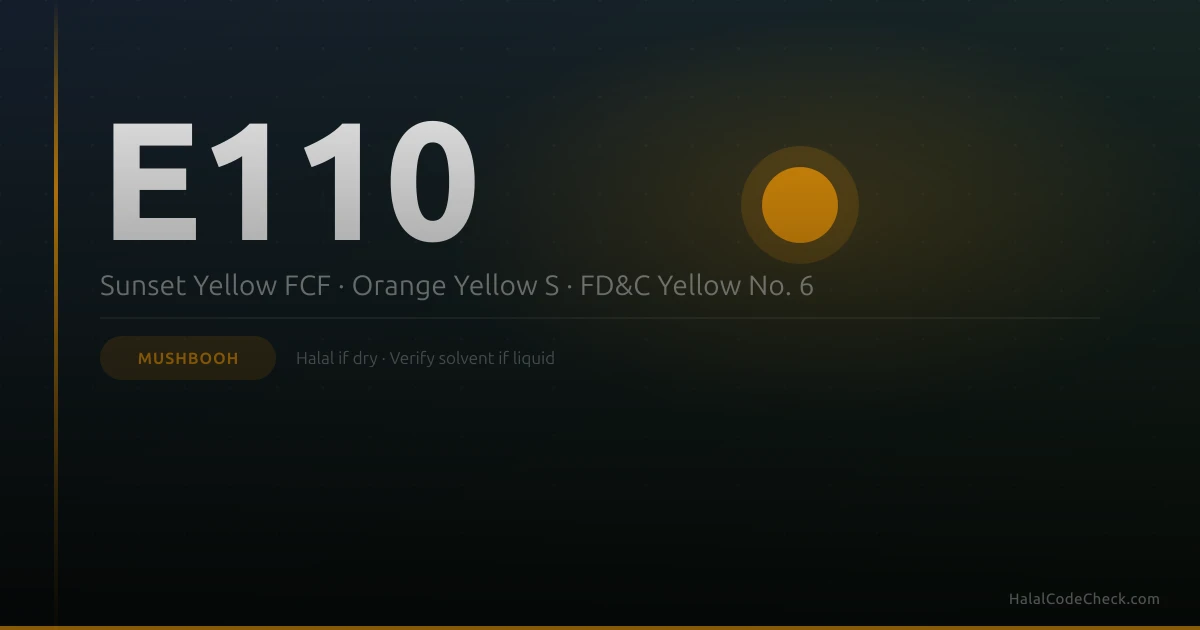 E-Codes & Additives
 Is E110 (Sunset Yellow) Halal? The Complete Guide
E110 (Sunset Yellow FCF) is Mushbooh - halal as dry powder, but depends on the solvent if liquid. Learn what countries require warnings, where it hides, and how to check fast.
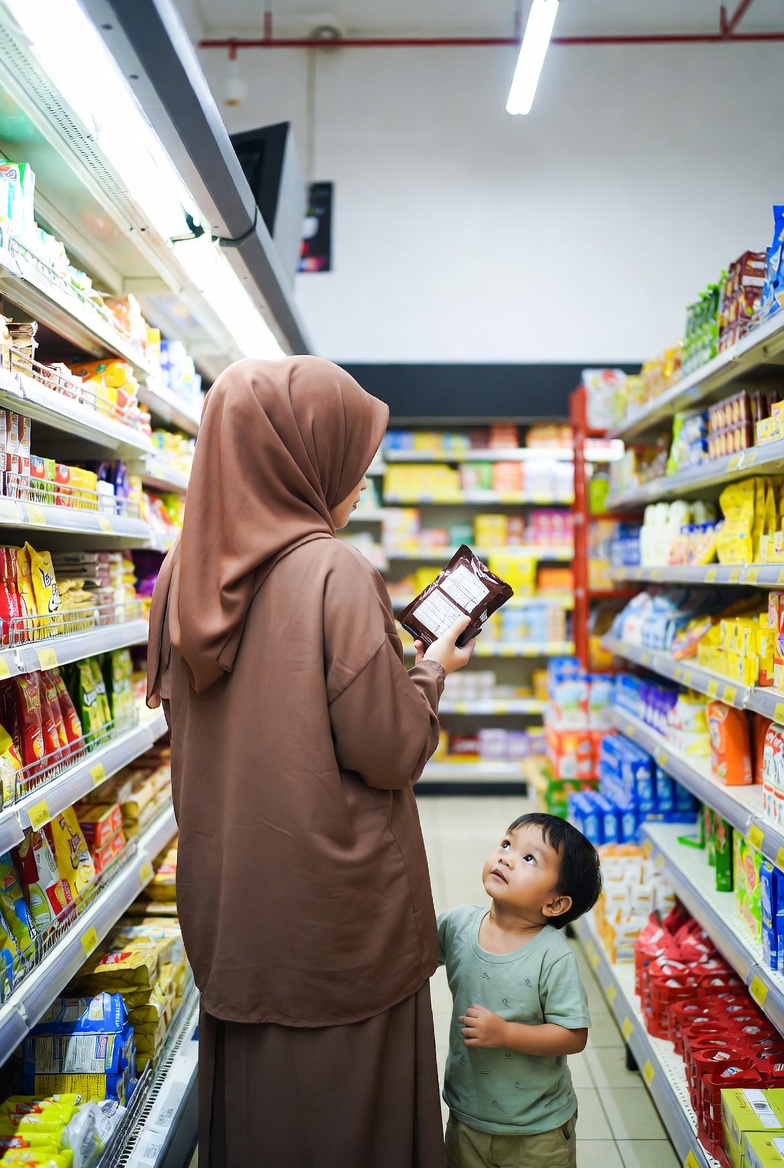 How-To Guides
 Reading Food Labels: A Muslim Parent's 5-Minute Halal Crash Course
A practical, parent-friendly system to check ingredient labels quickly without stress. Learn what to scan first and what to verify later.
Ready to verify E-codes instantly?
Stop guessing about food ingredients. Use HalalCodeCheck to scan products and get instant halal verification.