
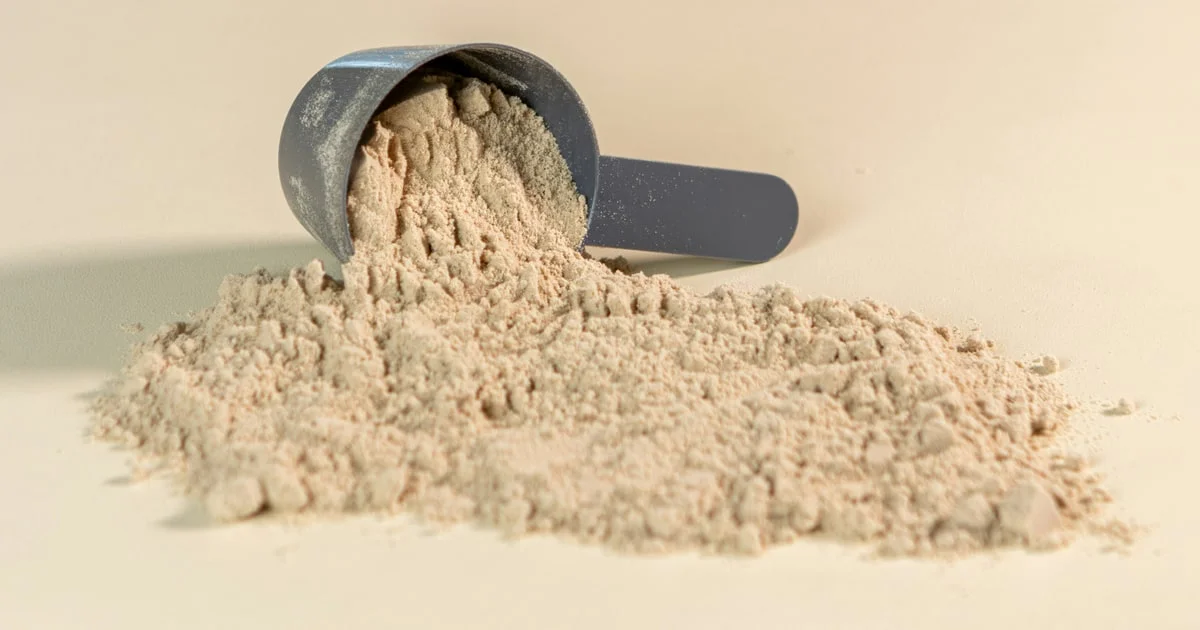
South Korea wants to be a halal exporter — the government has said so, and KMF certificates now sit on kimchi, ramyeon and Choco Pie bound for Jakarta and Kuala Lumpur. The domestic gym shelf has not caught up. After checking the Korea Muslim Federation’s published material and the major domestic brands, we could not find one Korean-made protein powder with halal certification. That is the finding, and this guide is built around it: what that means for the tubs you can actually buy in Korea, and how to choose an uncertified one on ingredients.
What KMF Certifies — and Doesn’t
The Korea Muslim Federation (KMF) has certified halal products since 1994 and holds mutual recognition from Malaysia’s JAKIM, Indonesia’s BPJPH and Singapore’s MUIS — so a KMF mark is meaningful internationally. Its certified list is dominated by export foods: Lotte, CJ CheilJedang, Daesang and Nongshim products from kimchi to rice cakes; Samyang’s export Buldak ramyeon; Crown’s Kuk He cookies; Orion’s reformulated Choco Pie.
Protein powders and “health functional foods” (건강기능식품) are a different regulatory category, and as of 2026 none of the domestic whey brands appear in KMF’s published material. KMF’s current certificate list lives at kmfhalal.org and changes; it is the place to check before assuming the finding above still holds.
Maeil Selex: The Brand Everyone Asks About
Maeil Dairies launched Selex (셀렉스) in 2018 — Core Protein powder, Sports Whey Protein sticks, ready-to-drink protein and bars — and it has become the default Korean protein brand in pharmacies, Olive Young and Coupang. Its base is whey protein isolate and milk protein.
No halal certification is published for any Selex product. On ingredients: no gelatine in the powders, no pork-derived component, dairy proteins throughout. The open question is the one that decides all uncertified whey — the rennet used to make the cheese the whey came from. Maeil does not disclose whether it is microbial or animal. Verdict: Mushbooh. Nothing haram declared; nothing certified; one undisclosed processing step.
The same reading applies to the other domestic dairy-company powders (Namyang, Ildong’s ranges): dairy-based, uncertified, rennet undisclosed.
How to Read an Uncertified Powder in Korea
The label is in Korean; the halal questions are the same four as anywhere.
| Look for (한국어) | Meaning | Halal reading |
|---|---|---|
| 유청단백 / 분리유청단백 | whey / whey isolate | halal if rennet was microbial or halal-certified; undisclosed → Mushbooh |
| 젤라틴 | gelatine (capsules, bars, gummies) | pork unless stated → avoid |
| 콜라겐 (돼지 / 소) | collagen (pork / bovine) | pork haram; bovine needs halal slaughter |
| 주정, 에탄올 | alcohol (flavour carrier) | trace excused by the majority; added liquor not |
| 완두단백, 대두단백, 현미단백 | pea, soy, rice protein | no rennet question — cleanest uncertified option |
| 식물성 캡슐 / HPMC | vegetable capsule | clears the gelatine-capsule problem |
A plant-protein powder with a vegetable capsule for any accompanying vitamins is the lowest-risk uncertified buy. Our whey guide and protein powder guide cover the rennet reasoning in full; creatine and pre-workout have their own pages.
The Imported Certified Route
Because nothing domestic is certified, the simplest answer in Korea is an imported certified powder. Coupang and iHerb Korea carry Australian, Malaysian and US brands whose halal certificates (JAKIM, AFIC, ISA, IFANCA) travel on the tub — Musashi’s halal-labelled range is one example that ships to Korea. The certificate settles rennet, gelatine, flavour carriers and collagen in one stamp. Check that the specific product carries the mark: several international brands certify only part of their range. Our complete supplements guide lists the certified brands this site has verified.
Summary
| Question | Answer |
|---|---|
| Any KMF-certified Korean protein powder? | None found as of 2026 — check kmfhalal.org for changes |
| Selex (Maeil) | Uncertified, dairy-based, rennet undisclosed — Mushbooh |
| Cleanest uncertified option | Plant protein (pea/soy/rice) with vegetable capsules |
| Simplest certified option | Imported certified whey via Coupang / iHerb — check the mark is on that product |
| What decides an uncertified whey | Rennet source, gelatine, alcohol carriers, collagen source |
Check any additive from a Korean label in the E-codes database, or scan the 원재료명 line with the ingredient scanner.
How we reached this verdict
Sources checked September 2026:
- Korea Muslim Federation: kmfhalal.org certification pages; Korea.net and Al Jazeera reporting on KMF’s role since 1994, JAKIM/BPJPH/MUIS recognition, and which Korean food groups hold certificates (Lotte, CJ, Daesang, Nongshim, Samyang, Crown, Orion). No protein powder found in KMF’s published material.
- Maeil Selex: Maeil’s brand pages and Selex official mall (range launched 2018; whey isolate / milk protein base); no certification statement; Hankyung reporting on the launch. Korean-language searches for 셀렉스 할랄 인증 returned no certification.
- Market context: South Korea protein powder market reports (Expert Market Research); Business Wire on Korean exporters obtaining halal certification for Middle East trade.
- Whey and capsule rules: existing HalalCodeCheck whey, protein powder and supplements guides; IslamQA (Hanafi) and Darul Iftaa Birmingham on rennet source and gelatine capsules.
Madhab note
- Whey from cheese made with animal rennet of undisclosed source — permissible under the Hanafi view (rennet from a dead or non-halal-slaughtered animal is pure per Abu Hanifa); Mushbooh-to-avoid under the Shafi’i and Hanbali mainstream; certification or microbial rennet clears it for all.
- Gelatine capsules — haram if porcine; bovine requires halal slaughter; vegetable (HPMC) capsules clear it.
- Trace alcohol in flavour carriers — excused as non-intoxicating trace by the majority; added spirits are not.
- Plant proteins — no halal concern in any madhab.
For binding rulings, consult a competent scholar in your tradition.
Ingredients change. Be first to know.
Brands reformulate without warning. We track every E-code update and halal certification — one short weekly email.
Related Articles
 Shopping Guides
 Halal Protein and Supplements in France: The Certifiers Do Not Cover This Category At All
France has strong halal certification, and it is built around meat. AVS and the Lyon mosque both publish their certified brands, and neither certifies a single supplement or protein company. That is a structural fact, not an oversight.
 Shopping Guides
 Halal Protein and Supplements in Canada: Optimum Nutrition Is Certified, But Read the Market It Covers
IFANCA certifies Optimum Nutrition Gold Standard whey, its creatine and its BCAA line, tagged for worldwide sale. Canada's own certifier lists no sports nutrition brand at all. The gap between those two facts is the whole story.
 Shopping Guides
 Halal Protein Powder in South Africa: USN, Biogen, NPL — Who Is Actually Certified (2026)
South Africa has certified whey — but per product, not per brand. USN certifies a named list through NIHT and SANHA; SANHA confirms specific Biogen whey flavours; NPL claims its whole range is certified without naming the certifier publicly. Here is which tub to pick up at Dis-Chem and Clicks.