
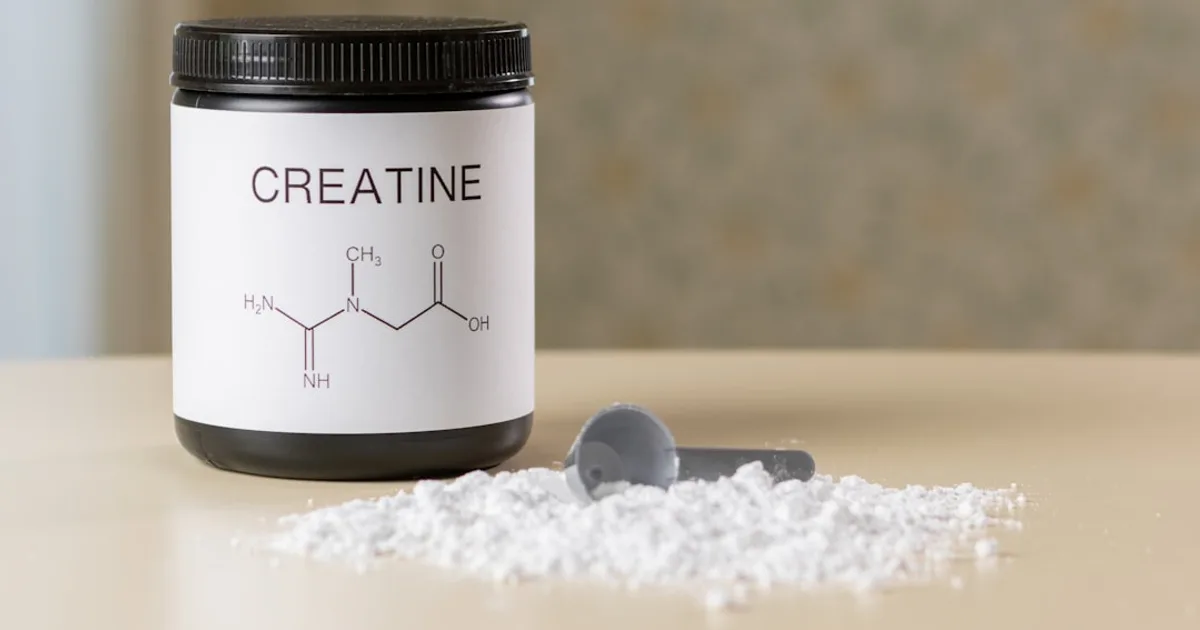
Creatine is the most studied performance supplement in existence — and for good reason. A 5g daily dose of creatine monohydrate is backed by over 30 years of research showing genuine strength and muscle gains. For Muslim gym-goers, the question is straightforward: is it halal?
The short answer: yes, almost certainly. Commercial creatine monohydrate in 2026 is overwhelmingly synthetic. But “almost certainly” is not “confirmed” — and this guide gives you the tools to verify your specific brand.
How Creatine Is Made: The Halal-Critical Question
Creatine is a naturally occurring compound found in vertebrate muscle tissue. The historical concern arises from this: early creatine supplements were extracted directly from animal (typically bovine) muscle. Those methods required zabiha verification or were simply considered mushbooh.
Today, virtually all commercial creatine monohydrate is synthesised chemically:
- Sarcosine (sodium salt of N-methylglycine) reacts with cyanamide
- The reaction produces creatine monohydrate crystals
- No animal tissue is involved at any stage
This is a purely chemical synthesis. The raw materials (sarcosine and cyanamide) are themselves synthetically produced. No animal involvement = no halal concern from the active ingredient itself.
The Only Remaining Concern: Capsule Format
If you are taking creatine in capsule form, the capsule shell itself may use pork gelatin (E441). This is the standard concern with any supplement in capsule format.
Powder form: No capsule concern. Creatine monohydrate powder is clean.
Capsule form: Check the label for “vegetable capsule”, “HPMC capsule”, or “plant-based capsule”. If it just says “gelatin capsule” with no further detail, assume pork gelatin.
For creatine specifically, powder form is both cheaper and safer — no reason to take creatine capsules.
Brand Comparison Table
| Brand | Product | Creatine Source | Capsule/Powder | Halal Cert | Verdict |
|---|---|---|---|---|---|
| Optimum Nutrition | Micronised Creatine | Synthetic (CreaPure) | Powder | None | Halal (synthetic) |
| MyProtein | Creatine Monohydrate | Synthetic | Powder | None | Halal (synthetic) |
| Bulk | Creatine Monohydrate | Synthetic | Powder | None | Halal (synthetic) |
| SciTec Nutrition | 100% Creatine | Synthetic | Powder | None | Halal (synthetic) |
| AlzChem CreaPure® | Raw ingredient | Synthetic | N/A | Kosher | Halal |
| MyProtein | Creatine HCl Capsules | Synthetic | Capsule | None | Mushbooh (capsule) |
| BPI Sports | Best Creatine | Synthetic | Capsule | None | Mushbooh (capsule) |
CreaPure® is the gold standard. When a brand states “uses CreaPure creatine”, that is the clearest signal of synthetic, high-purity production. Optimum Nutrition’s micronised creatine uses CreaPure.
What About Creatine Ethyl Ester (CEE) and Other Forms?
- Creatine ethyl ester: Synthetic, halal. Less effective than monohydrate — skip it.
- Creatine HCl: Synthetic, halal in powder form. Capsule form: check shell.
- Buffered creatine (Kre-Alkalyn): Synthetic, halal. No proven benefit over monohydrate.
- Creatine nitrate: Synthetic, halal. Found in some pre-workouts.
None of the alternative creatine forms introduce new halal concerns from the active ingredient.
What Label Claims to Look For
When purchasing creatine, look for any of these on the label or product page:
- “Synthetic creatine monohydrate”
- “CreaPure®” — branded synonym for synthetic, audited German creatine
- “No animal-derived ingredients” / “Suitable for vegans” — strongest signal
- Kosher certification — accepted by most halal scholars for synthetic ingredients where the kosher audit confirms no animal byproducts
- Third-party tested (Informed Sport, NSF) — adds quality assurance but does not specifically address halal sourcing
The absence of any of these does not mean the creatine is haram — it simply means you should contact the manufacturer to confirm.
Practical Verdict
Creatine monohydrate powder from a mainstream brand = Almost certainly halal. The synthesis method is industry-standard and no animal tissue is used. The probability of encountering animal-extracted creatine from a major UK or US brand in 2026 is extremely low.
Creatine in capsule form = Mushbooh until you confirm the capsule shell is HPMC or vegetable-based.
Recommended approach:
- Buy powder form, not capsules
- Choose a brand that uses or cites CreaPure, or labels “vegan”
- No halal certification required for synthetic creatine monohydrate powder — the synthesis method eliminates the concern
How We Reached This Verdict
We checked the following sources before publishing this verdict:
- Manufacturer technical sheets: AlzChem CreaPure® product documentation confirms sarcosine + cyanamide synthesis with no animal raw materials
- Halal certification bodies (HMC, HFA, JAKIM): Synthetic creatine monohydrate does not appear in any haram/mushbooh ingredient lists from major certifying bodies
- Scholarly fatwa sources: IslamQA (Hanafi), Darul Iftaa Birmingham, AskImam.org — consensus that synthetically manufactured compounds with no animal input are permissible
- Sunni madhab positions: All four madhabs agree that a synthetic compound with no animal-derived raw materials is halal; the only concern would arise if animal extraction were confirmed
Madhab Note
The four Sunni madhabs converge on synthetic creatine:
- Hanafi: Synthetic compounds with no animal-derived ingredients are permissible (mubah). The original source (natural creatine in muscle) is irrelevant when the synthetic route uses no animal material.
- Maliki: Same position — permissibility based on the actual manufacturing route.
- Shafi’i: Same; the distinction is between substance and source.
- Hanbali: Same. Kosher certification (AlzChem/CreaPure) is noted as a supporting verification by some scholars.
The capsule concern applies equally across all four madhabs — pork gelatin is haram per unanimous consensus.
Check our E-codes database — E441 (gelatin) and E470b are common supplement additives worth knowing. Or scan your supplement label to identify every ingredient at once. For the broader picture on gym supplements, see our guide on is pre-workout halal.
Ingredients change. Be first to know.
Brands reformulate without warning. We track every E-code update and halal certification — one short weekly email.
Related Articles
 Shopping Guides
 Is Protein Powder Halal? UK Brands Compared (Whey, Vegan, Casein)
Whey protein is Mushbooh without halal certification — it's dairy-derived but processing aids may be animal-based. Vegan protein is generally halal. Full UK brand guide.
 Shopping Guides
 Is Pre-Workout Halal? Caffeine, Beta-Alanine & Proprietary Blends
Most pre-workout powders are halal in formula but lack halal certification. Key concerns: undisclosed flavoring sources, gelatine in capsule form, and alcohol-based extracts.
 Shopping Guides
 Is L-Carnitine Halal? Meat-Derived Supplement Checked
L-Carnitine halal status depends on production method — synthetic L-Carnitine is halal, but bacterial fermentation and meat-extracted variants require verification.