
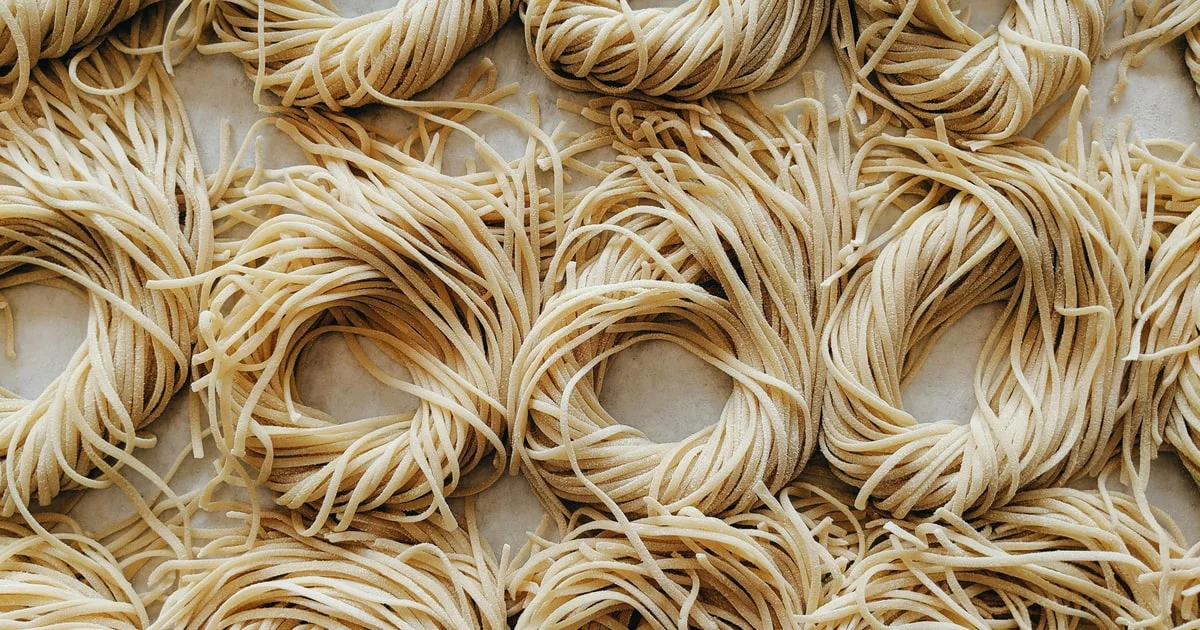
Instant noodles look like a category where everything is suspicious and nothing is checkable. In Ireland the opposite turns out to be true. Two Korean makers publish certificate numbers you can look up. One Japanese maker answers the question with a flat no. And the flavour names that worry people most are, on the evidence, the least of it.
Nissin Answers the Question Itself
This is the cleanest fact in the guide and it is worth knowing before you shop.
Nissin Foods Europe states in its own FAQ that its products are not halal. The question is asked plainly and answered plainly, and the German version of the same FAQ says the same thing. That covers the Nissin Soba, Cup Noodles and Demae Ramen range supplied into Irish and British retail.
The same FAQ also states that Nissin’s products do not contain alcohol, which is a useful thing to have in writing from a manufacturer.
One scope note. The Demae Ramen sold in Dublin’s Asian grocers is often Hong Kong origin, made by a different corporate entity. The “not halal” statement covers the European range. Do not read it across to an imported pack without checking.
Samyang and Nongshim Publish Real Certificates
The KMF Halal Committee of the Korea Muslim Federation certifies both, and unusually it publishes its whole certified-company register, with certificate numbers, the plant, the individual product names and the validity dates.
Nongshim holds several live certificates. One covers Shin Ramyun, Shin Cup Noodle Soup, Shin Big Bowl, Shin Ramyun Kimchi, Potato Noodle Soup and Chapaguri, valid into 2029. Another covers Shin Ramyun Black, Zha Wang, Neoguri Mild and Chapagetti. A third covers Soon Veggie Ramyun and Soon Veggie Cup Noodle.
Here is a pairing you can act on. Soon Veggie Cup Noodle sits on a KMF certificate valid to October 2028, and the same product is stocked by Asia Market in Dublin. Certificate and shelf, matched.
Samyang holds around thirty currently valid KMF entries across its Miryang, Wonju and Iksan plants, covering the Buldak range by name: original, 2x Spicy, Carbonara, Cheese, Quattro Cheese, Rosé, Habanero Lime and Stew, plus the Samyang Ramen, Kimchi Ramen and Jjajang lines. Some entries name EU-specific packs explicitly.
One nuance matters and we would rather state it than bury it. Most Samyang entries in the register are marked for export. The certification attaches to export formulations rather than to Korean domestic packs. That is good news for an Irish shopper, since the pack in Dublin is an export pack, but it means a pack bought in Seoul is not covered by the same logic.
Separately, Samyang’s Indonesian distributor holds an MUI halal decree covering several Buldak lines.
What we could not confirm is whether the packs imported into Ireland physically carry the KMF mark. If the logo is on your pack, the register behind it is real and checkable.
Indomie Names Its Certifier
Indomie’s own UK-facing site publishes a certifications table naming the issuer in full: the Assessment Institute for Foods, Drugs and Cosmetics of the Indonesian Council of Ulama, known as LP-POM MUI. Its parent company states that all of its products are halal certified and describes internal halal supervisors and auditors across its facilities.
Two honest caveats. We found no certificate number and no expiry date for any Indomie product, and no Indonesian state certificate. And Indomie is made under licence outside Indonesia, including in Nigeria, so the origin on the pack matters. The Dublin Asian-grocer packs are listed as Indonesian origin; supermarket stock we could not verify.
The Flavour Names Are Mostly Not Meat
This is the finding most likely to change how you shop, and it runs against intuition.
In every mainstream British and Irish instant noodle we could read, a meat flavour name is a flavouring, not meat:
- Batchelors Super Noodles Bacon Flavour contains no bacon and no pork. The relevant line is flavouring, yeast extract, flavour enhancers and smoke flavourings.
- Batchelors BBQ Beef contains no beef. Southern Fried Chicken and Chicken Flavour contain no chicken.
- Maggi’s two-minute Chicken Flavour noodles carry a seasoning of potassium chloride, flavour enhancers, maltodextrin, salt, flavourings, sugar, onion powder, herbs and spices. No chicken.
- Nongshim Shin Ramyun, marketed on a spicy beef broth, has no beef in its ingredient list.
- MAMA Chicken Flavour declares artificial chicken flavour.
One exception we found: a Nissin soba duck product tagged for Ireland and Britain contains chicken fat. That was the only animal fat we found in any European-market instant noodle.
Where the Pork Actually Is
Not in the mainstream aisle. In the Asian grocery aisle, and it is named on the front of the pack.
- MAMA Tom Yum Pork Flavour and MAMA Minced Pork Noodle, both Thai and both stocked in Dublin
- KSF Stew Pork Rib Noodles, Chinese
- Pot Noodle King Pot Pasta, which lists smoked belly bacon. Note this is a pasta product under the Pot Noodle brand, not a noodle pot
- Batchelors Pasta ‘n’ Sauce Cheese and Pancetta, which declares dried pork
MAMA is the brand needing most care, because its range mixes pork SKUs and non-pork SKUs under identical branding. Read every MAMA packet individually.
The Frying Oil Is Not the Problem
A common worry, and we can put it down. Across Indomie, Koka, Nissin, Batchelors, McDonnells, Nongshim, Samyang, MAMA and Maggi, the noodle block is fried in palm oil. One Maggi product uses sunflower oil.
We found no instant noodle block fried in animal fat anywhere in the Irish or British market.
What About E471 and Alcohol
Two questions we can only answer partly, so here is exactly how far the evidence goes.
E471 is present in some products and absent in many. We found it in Batchelors Cup a Soup and Pasta ‘n’ Sauce, and in one Samyang EU pack. It was absent from Nongshim Shin Ramyun, Nongshim Soon Veggie, Samyang Buldak Cheese, Maggi UK noodles, Batchelors Super Noodles, McDonnells, Koka and Indomie UK, which use lecithin, guar gum, glycerol or polyglycerol esters instead. Where it does appear, the fat source is not declared.
Alcohol: Nissin states its products contain none. For Korean ramen we scanned every European ingredient list we could read and found no alcohol, mirin, sake or rice wine, but that is a small sample. We are not going to tell you Korean ramen is alcohol-free, and we are not going to tell you it contains alcohol. Neither is established.
Worth flagging separately: Itsu’s rice noodle cups declare alcohol explicitly in their soy sauce and seasoning, which is consistent with what we found on Itsu’s other products.
Ireland’s Own Certifiers Do Not Cover This
Ireland has two genuine bodies and neither reaches instant noodles.
The Department of Halal Certification Europe, operating under the Islamic Centre of Ireland since 2011, is recognised by JAKIM, MUIS, EIAC and IHAF, and its scope does include processed food. But it publishes no searchable client list, only a certificate register you query with a number you already hold. So we could not check whether it certifies any noodle producer.
The Islamic Foundation of Ireland has certified halal meat for export from Ireland since 1981 and is recognised by the World Halal Food Council. Its scope is meat for export, not imported noodles.
A naming trap worth avoiding: the Islamic Centre of Ireland in Blanchardstown, the Islamic Cultural Centre of Ireland in Clonskeagh, and the Islamic Foundation of Ireland at the Dublin Mosque are three different organisations.
What We Could Not Check
Every Irish and British supermarket site, and both Unilever and Nestlé, blocked automated access. So the two most mainstream brands have the weakest evidence here.
- Pot Noodle: no certification found, but we could not read a single Unilever source, so this is not a manufacturer denial. We also found no dated source showing any Pot Noodle flavour ever contained pork, and we will not assert it.
- Maggi: no halal wording anywhere on its British site. The Maggi packs in Dublin’s Asian grocers are Malaysian-market products, which is a different Nestlé entity. We could not confirm those are JAKIM certified, so check the pack.
- Koka: no halal page, and an on-site search returns nothing. Singapore’s certifier directory is behind a login.
- Real shelf listings at Tesco Ireland, Dunnes, SuperValu, Centra, Aldi and Lidl Ireland.
How to Shop It
- For Korean ramen, look for the KMF mark and check the product name against the published register. It is the most verifiable certification in this category.
- Read MAMA packets individually. The range contains pork SKUs beside non-pork ones under the same branding.
- Do not fear the flavour name. Bacon, beef and chicken flavours in mainstream brands are overwhelmingly flavourings with no meat in them.
- Skip the European Nissin range if you want certification, because the company has told you plainly it is not halal.
- Check the origin on an Indomie pack, since it is made in several countries under licence.
Summary
| Brand | Certification | Status |
|---|---|---|
| Nongshim | KMF, certificate numbers published, valid into 2028 and 2029 | Certified |
| Samyang | KMF, ~30 live entries, mostly export formulations | Certified |
| Indomie | LP-POM MUI, named by the brand, no number published | Certified, unnumbered |
| Nissin Europe | None. Company states products are not halal | Not halal |
| Maggi UK | None found | Not certified |
| Pot Noodle | None found, no Unilever source readable | Unknown |
| Koka, Ottogi, Batchelors, McDonnells | None found | Not certified |
| MAMA | Not certified, and some SKUs are pork | Read each packet |
Ingredients change. Be first to know.
Brands reformulate without warning. We track every E-code update and halal certification — one short weekly email.
Related Articles
 Shopping Guides
 Halal Shopping at Coles: Aisle-by-Aisle Australia Guide (2026)
Coles stocks halal-certified meat from accredited abattoirs but own-brand packaged goods require E-code checking — here's what to look for in each aisle.
 Shopping Guides
 Halal Shopping at Carrefour: France, UAE & Turkey Guide (2026)
Carrefour's halal status varies by country — UAE stores stock certified halal products throughout, while French stores require label-by-label checking.
 Shopping Guides
 Halal Food in Malaysia: Beyond JAKIM — Full Supermarket & Brand Guide
JAKIM certification is Malaysia's gold standard but not every product on shelf is JAKIM-certified — here's how to shop confidently in Mydin, Giant, and Aeon.