
Italy has around 2.6 million Muslims — among the largest Muslim communities in Western Europe — yet finding halal-certified packaged dairy or ice cream in a standard Italian supermarket is genuinely difficult. There is no mainstream Italian halal certification body comparable to the UK’s HMC or Malaysia’s JAKIM. For Muslim travellers and Italian Muslim residents alike, the default approach is ingredient scrutiny, not certification trust.
This guide covers the main brands, the key E-codes to watch, and practical advice for buying gelato at a gelateria.
Packaged Ice Cream: The Main Brands
Algida (Unilever Italy)
Algida is the Italian name for Unilever’s global ice cream brand — the same company that owns Walls in the UK and Heartbrand worldwide. Cornetto, Magnum, and Carte D’Or are all sold under the Algida label in Italy.
None of these products carry halal certification in Italy. Cornetto cones in particular contain E471 (mono and diglycerides of fatty acids), an emulsifier that can be derived from animal fat or vegetable oil — but Algida Italy does not publicly confirm the source. Without confirmation, E471 in packaged ice cream is Mushbooh.
Verdict: Mushbooh — no halal certification, E471 source unconfirmed.
Ferrero Ice Cream
Ferrero produces ice cream in Italy based on its confectionery brands (Rocher, Raffaello-style bars). No halal certification applies to these products in the Italian market.
Verdict: Unverified / Mushbooh
Nestlé Ice Cream Italy
Nestlé sells ice cream in Italy under brands including Motta and Maxibon. No halal certification is held for the Italian market.
Verdict: Unverified / Mushbooh
Galbani Dairy
Galbani (owned by Lactalis) is Italy’s most recognised cheese and dairy brand — mozzarella, ricotta, mascarpone. While plain fresh cheeses like mozzarella and ricotta are generally lower risk (no obvious haram additives in the basic product), Galbani holds no halal certification, and rennet sourcing in Italian cheesemaking is not publicly disclosed. Treat as Mushbooh unless you can verify the rennet is microbial or vegetable-derived.
Artisan Gelato: The Gelateria Question
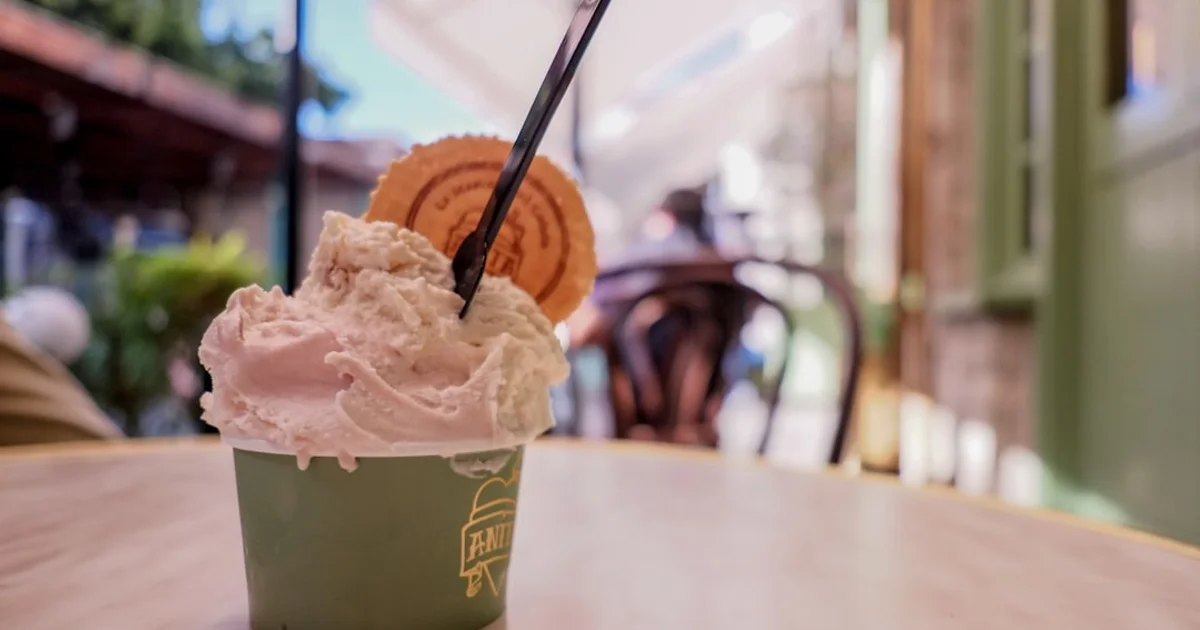
Italian artisan gelato is not a single product — it varies enormously by gelateria. The base of most creamy gelato is milk, cream, eggs, and sugar, which is halal by default. The concerns come from what is added on top of that base.
Three Risks to Ask About
1. Alcohol-based flavourings
Flavours like tiramisù, zabaione, nocino (walnut liqueur), rum-raisin, and amaretto all contain or are flavoured with alcohol. These are Haram. For more on tiramisù specifically, see our dedicated post on is tiramisu halal.
2. E120 (Carmine / Cochineal)
E120 is an insect-derived red colourant used in some red and pink fruit sorbets (strawberry, raspberry, cherry). It is Haram in Islamic jurisprudence. Not every gelateria uses it — some use natural fruit or beta-carotene blends — but it is common enough that red/pink sorbets should prompt a question.
3. Gelatine (E441) as a stabiliser
Some gelaterias use gelatine as a stabiliser in creamy gelato to improve texture. Gelatine in Italy is almost universally pork-derived unless explicitly stated otherwise. Ask directly: “C’è gelatina in questo gelato?” (“Is there gelatine in this gelato?”)
Safer Choices at the Gelateria
| Flavour type | Risk level | Notes |
|---|---|---|
| Plain fruit sorbet (lemon, mango) | Lower | Check for E120 in red/pink varieties |
| Pistachio | Lower | Nut paste, milk — no obvious concerns |
| Plain chocolate | Lower | Check for alcohol in dark chocolate bases |
| Stracciatella | Lower | Milk + chocolate chips |
| Tiramisù | High | Contains coffee liqueur or Marsala wine |
| Zabaione | High | Egg yolk + Marsala wine |
| Rum-raisin | High | Alcohol-soaked raisins |
| Strawberry/cherry sorbet | Medium | Ask about E120 |
| Creamy stabilised gelato | Medium | Ask about E441 gelatine |
Key E-Codes in Italian Ice Cream
| E-code | Name | Source | Halal status |
|---|---|---|---|
| E471 | Mono and diglycerides of fatty acids | Animal or vegetable fat | Mushbooh |
| E120 | Carmine / Cochineal | Insects (scale bug) | Haram |
| E441 | Gelatine | Usually pork in Italy | Check source |
| E160a | Beta-carotene | Plant-derived (usually) | Halal |
| E410 | Locust bean gum | Plant-derived | Halal |
| E412 | Guar gum | Plant-derived | Halal |
E160a, E410, and E412 are commonly used as natural stabilisers and colourants in Italian gelato and pose no halal concern. E471 in packaged products and E120 in red sorbets are the two codes that matter most.
Practical Shopping Tips
In supermarkets: No major Italian ice cream brand (Algida, Nestlé, Ferrero) is halal-certified. The safest supermarket option is a product that is explicitly labelled vegan — this rules out animal-derived E471 and any gelatine. Look for vegano on the label.
At a gelateria: Ask the staff two questions: (1) Does this flavour contain alcohol? (2) Is gelatine used as a stabiliser? Most gelateria staff are used to allergy questions and will answer helpfully. Stick to simple, clearly named flavours and avoid anything associated with Italian desserts that traditionally contain alcohol.
Dairy generally: Italian mozzarella, ricotta, and mascarpone are lower-risk than aged cheeses when it comes to rennet, but none of the mainstream brands are halal-certified. If rennet is a concern for you, seek out explicitly vegetariano labelled cheeses, which use microbial or vegetable rennet.
Summary
Italy is a challenging market for halal ice cream and dairy. No major Italian supermarket ice cream brand holds halal certification. Artisan gelato can be halal by ingredients — but alcohol-based flavourings, E120 in fruit sorbets, and gelatine in creamy gelato are real risks that require a direct question to the gelateria. For packaged products, your clearest signal is a vegan label, which eliminates the main animal-derived additive risks. When in doubt, keep it simple: a plain lemon sorbet or a pistachio cone is far easier to verify than a tiramisù tub.
Disclaimer: This article is for informational purposes. Always verify with the manufacturer or gelateria for the most current formulations. Halal status can change when recipes are updated.
Ingredients change. Be first to know.
Brands reformulate without warning. We track every E-code update and halal certification — one short weekly email.
Related Articles
 Shopping Guides
 Halal Ice Cream and Dairy in the Netherlands: Ola, Hertog and What to Check (2026)
No Dutch supermarket ice cream is halal-certified. Ola's Raket is gelatine-free, Albert Heijn labels vegetarian whey, and the classic Malaga flavour contains real rum. The Dutch freezer aisle, checked.
 Shopping Guides
 Halal Ice Cream and Dairy in Germany: Langnese, Schöller and What to Check (2026)
No mainstream German supermarket ice cream is halal-certified. But Langnese's classic water ices are now certified vegan, and Lidl's Bon Gelati declares plant-origin E471. Here is the German freezer aisle, brand by brand.
 Shopping Guides
 Halal Ice Cream and Dairy in Japan: Meiji, Glico, Lotte and What to Check (2026)
No major Japanese ice cream brand is halal-certified. Glico Papico lists gelatine, some Akagi flavours list liqueur, and emulsifier origins are hidden. Here's how Muslims read a Japanese ice cream label.