
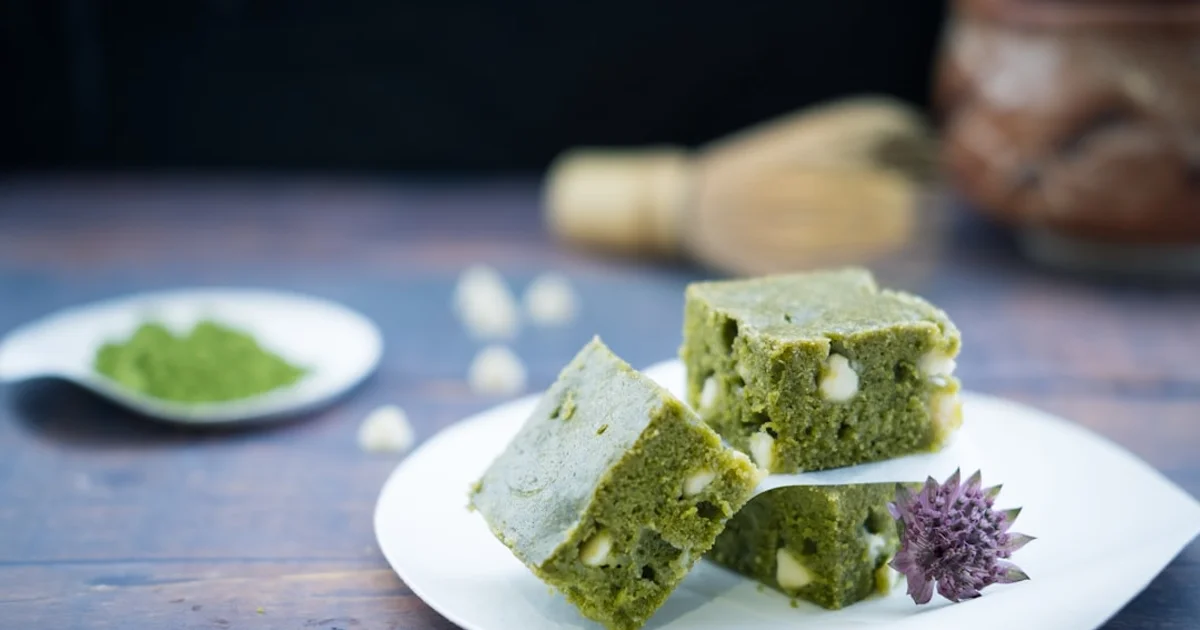
Chocolate searches from Japan on this site are dominated by two names: Cadbury and KitKat — specifically the matcha (green tea) variety that’s become a signature Japanese confectionery export in its own right. Both brands carry the same underlying halal concern regardless of the flavour twist.
Is KitKat Matcha Halal?
KitKat’s matcha flavour is a Japan-specific variant that’s become internationally famous, but the halal question doesn’t change with the flavour. Per this site’s KitKat brand page, the standard range — matcha included — is Mushbooh, driven by E471 with an undisclosed fat source and no halal certification for the Japan-market product. The matcha powder itself isn’t a concern; the emulsifier and certification gap sits at the manufacturing level and applies across the flavour range.
Is Cadbury Halal in Japan?
Cadbury sits at Mushbooh globally on this site, and Japan-market Cadbury chocolate follows the same pattern — E442, E476, and E471 without confirmed plant sourcing, and no halal certification for the standard product. Cadbury does hold regional certifications in some Muslim-majority markets (Pakistan, Malaysia), but that doesn’t extend to product sold in Japan.
Japan’s Halal Certification Landscape
Japan has a small but structured halal certification ecosystem — around 22 certifying entities exist, reflecting the country’s growing halal tourism and export ambitions rather than a large domestic Muslim population. The two most recognised bodies are:
- NAHA (Nippon Asia Halal Association) — established 2014, certifies Japanese food manufacturers, restaurants, and ingredient suppliers, with auditors visiting kitchens directly.
- JMA (Japan Muslim Association) — founded 1953, one of Japan’s oldest Muslim organisations, recognised by JAKIM (Malaysia) as an accepted certifying body.
Neither Cadbury nor KitKat currently carry certification from either body for their standard Japan-market chocolate.
Summary
| Question | Answer |
|---|---|
| Is KitKat Matcha halal? | Mushbooh — same E471 issue as standard KitKat |
| Is Cadbury halal in Japan? | Mushbooh — no certification for the Japan-market product |
| Japan’s main halal certifiers | NAHA and JMA |
Look up any E-code from a packaged product in the E-codes database.
To scan a full ingredient list for halal status in seconds, use the ingredient scanner.
How we reached this verdict
We checked the following Tier-1 sources before publishing this verdict:
- Halal certification bodies: confirmed NAHA and JMA as Japan’s most recognised halal certifying bodies; no certification found for standard-market KitKat or Cadbury chocolate.
- Search data: Japanese search activity on this site’s own analytics shows Cadbury and KitKat matcha as the dominant chocolate queries.
- Cross-reference: consistent with this site’s existing KitKat and Cadbury brand pages, both independently verified as Mushbooh.
Madhab note
The four Sunni madhabs broadly converge on the rules applied in this guide:
- Source-ambiguous E-codes (E471, E442, E476) — treated as Mushbooh pending manufacturer disclosure under the mainstream Hanafi/Maliki/Shafi’i approach; HMC-strict and Hanbali-leaning positions require formal certification regardless.
- Flavour variants of an uncertified product — carry the same verdict as the base product unless a specific flavour is independently certified; matcha KitKat is not an exception.
If your madhab differs on undisclosed emulsifier sourcing, consult a competent scholar in your tradition for a binding ruling.
Ingredients change. Be first to know.
Brands reformulate without warning. We track every E-code update and halal certification — one short weekly email.
Related Articles
 Shopping Guides
 Halal Chocolate in South Korea: Lotte Ghana, Choco Pie's Two Recipes and KMF (2026)
Korea's own chocolate — Lotte Ghana, Crunky, ABC — is uncertified for the domestic market. Orion's Choco Pie exists in two recipes: pork gelatine in Korea, beef gelatine and JAKIM/MUI/GCC certification from Vietnam. Here is how to tell them apart on the shelf, and which Korean confectionery KMF actually certifies.
 Shopping Guides
 Halal Chocolate in New Zealand: Whittaker's FIANZ Range, Cadbury and Pineapple Lumps (2026)
New Zealand is unusual: its biggest local chocolate maker, Whittaker's, holds FIANZ halal accreditation for a named list of flavours. Cadbury's AU/NZ range publishes its own certified list. Pascall Pineapple Lumps contain gelatine and are not halal-safe. Flavour-by-flavour guide.
 Shopping Guides
 Halal Chocolate in the Netherlands: Tony's, Albert Heijn and the Certification Gap (2026)
No mainstream Dutch chocolate brand is halal-certified. Tony's Chocolonely uses no animal fat or alcohol but shares production lines and holds no certificate — Mushbooh. Here is what is actually on the shelf at AH and Jumbo, and where the certified bars are.