
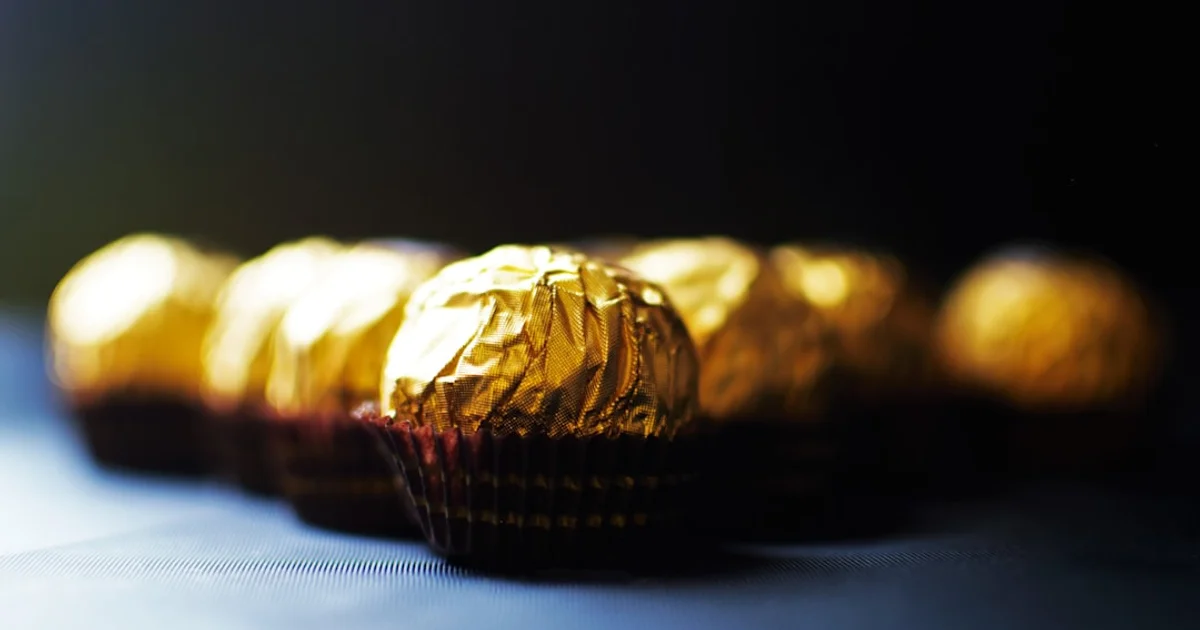
Italy is a global chocolate powerhouse — home to Ferrero (the world’s third-largest confectionery company), Perugina (the creator of Baci pralines), and Venchi (a premium artisan brand). Italian chocolate is sold worldwide and consumed across the country’s 2.6 million-strong Muslim community. Yet not a single major Italian chocolate brand holds halal certification for the domestic market.
This guide covers the brands Muslims in Italy and Italian tourists encounter most often, the E-codes that matter, and the practical choices available.
The Key E-Codes to Watch
| E-code | Name | Found in | Halal status |
|---|---|---|---|
| E471 | Mono and diglycerides | Milk chocolate, wafer fillings | Mushbooh — source often undisclosed |
| E322 | Soya lecithin | All chocolate | Halal — plant-derived |
| E476 | PGPR | Compound chocolate coatings | Generally halal — castor oil derived |
| E120 | Carmine (Cochineal) | Red/pink coatings, some fillings | Haram — insect-derived |
| E441 | Gelatine | Some filled chocolates | Check source — often pork in EU |
Ferrero (Rocher, Nutella, Kinder, Raffaello)
Ferrero is headquartered in Alba (Piedmont) and is Italy’s dominant confectionery group. Its brands are ubiquitous globally.
Ferrero Rocher
Ferrero Rocher contains:
- E322 (soya lecithin) — Halal
- E471 (mono and diglycerides) — Mushbooh, source unconfirmed
- Dairy from uncertified Italian supply chains
- Hazelnut and wafer (halal ingredients)
No halal certification. Verdict: Mushbooh.
Nutella
Nutella’s Italian ingredient list: sugar, palm oil, hazelnuts (13%), skimmed milk powder (8.7%), fat-reduced cocoa (7.4%), emulsifiers (E322 soya lecithin), vanillin.
Nutella does not typically list E471 — palm oil is used as the main fat instead of an emulsifier blend. This makes its ingredient profile lower risk than many chocolate products. However:
- Skimmed milk powder from uncertified dairy
- No halal certification
- Shared manufacturing with other Ferrero products
Verdict: Mushbooh — not certified, dairy unaudited, but lower-risk ingredient profile than chocolate bars with E471.
Kinder Products
Kinder (Bueno, Surprise, Chocolate bar) contains dairy, E471 in some variants, and wafer. No halal certification in Italy. Verdict: Mushbooh.
Raffaello
Raffaello (coconut and almond balls) contains coconut, almonds, cream powder, and E322. No E471 in the standard formulation. No halal certification. Verdict: Mushbooh — cleaner ingredient list, still uncertified.
Perugina (Nestlé Italy)
Perugina was founded in Perugia in 1907 and is now owned by Nestlé. It is best known for Baci (“kisses”) — dark chocolate with a whole hazelnut and a gianduja cream centre.
Baci ingredients: dark chocolate (cocoa mass, sugar, cocoa butter, E322), gianduja filling (sugar, hazelnuts, cocoa mass, E322), whole hazelnut.
No E471 in the standard Baci recipe — the simpler dark chocolate formulation uses only soya lecithin. No halal certification is held. Dairy from uncertified supply chains is present in milk chocolate variants.
Verdict: Mushbooh — cleaner than many alternatives, but unaudited.
Venchi
Venchi is a premium Italian artisan chocolate brand sold in its own boutiques. High cocoa percentage dark chocolates typically contain only cocoa mass, sugar, cocoa butter, and E322. Milk chocolates add dairy.
No halal certification. For pure dark chocolate bars, the ingredient list is often very clean. Dark Venchi → Generally Halal by ingredients; milk Venchi → Mushbooh.
Lindt in Italy
Lindt (Swiss, but widely sold in Italian supermarkets) operates the same way in Italy as elsewhere. See the Is Lindt Chocolate Halal? guide for detail. Short version: no halal certification, E471 in milk chocolate, dark chocolate is lower risk.
Alcohol in Italian Confectionery
A specific concern with Italian premium chocolates: alcohol-filled chocolates are common in gift boxes and specialty stores. Rum-flavoured truffles, amaretto pralines, and grappa-filled chocolates are culturally popular. These are Haram — always check fillings when buying Italian boxed chocolates. Italian chocolate shops typically display or label their flavour selections; ask staff directly if unsure.
Verdict Summary
| Brand / Product | Verdict | Key note |
|---|---|---|
| Ferrero Rocher | Mushbooh | E471 unconfirmed source |
| Nutella | Mushbooh | No E471, but dairy uncertified |
| Kinder Bueno / Surprise | Mushbooh | E471, dairy, no cert |
| Raffaello | Mushbooh | Cleaner profile, no cert |
| Perugina Baci (dark) | Mushbooh | No E471, dairy unaudited |
| Venchi dark chocolate | Generally Halal | Simple ingredients, no animal-derived additives |
| Any alcohol-filled praline | Haram | Alcohol content regardless of other ingredients |
Practical Advice for Muslim Travellers in Italy
- Dark chocolate 70%+ from artisan producers is your safest supermarket pick — ingredient list typically: cocoa mass, sugar, cocoa butter, E322.
- Avoid any box claiming “liqueur”, “rum”, “amaretto”, or “grappa” filling — these are haram.
- Ferrero brands are Mushbooh across all variants in Italy — choose alternatives if strict compliance is needed.
- In major cities (Milan, Rome, Turin, Florence), halal grocery stores carry certified chocolate imports.
For more on the Italian halal food landscape, see the Halal Ice Cream and Dairy in Italy guide. To check any E-code on an Italian label, use the E-codes database or scan the label.
How we reached this verdict
- Ferrero SpA: Ingredient lists for Rocher, Nutella, Kinder, Raffaello reviewed from Italian and UK packaging. No halal certification claimed. E471 listed without fat-source disclosure in Rocher and Kinder products.
- Nestlé Italy / Perugina: Baci ingredient list reviewed. E322 only in dark chocolate base — no E471.
- Halal certification bodies: HMC, HFA, JAKIM — no Italian chocolate brands with certification for European markets.
- Sunni fatwa scholarship: E471 Mushbooh ruling as per other brand guides. Alcohol in food: Haram across all four madhabs.
Madhab note
The halal concern with Italian chocolate is primarily E471 (same ruling applies globally — Mushbooh where undisclosed) and the manufacturing certification gap. The alcohol question is simpler: all four Sunni madhabs hold that alcohol used as an ingredient in food is haram. For dark chocolate with only E322 (a plant-derived emulsifier), Hanafi and Shafi’i positions generally accept it as halal by ingredients where no certification exists. The Hanbali / HMC-strict position requires formal certification even for apparently clean products.
Ingredients change. Be first to know.
Brands reformulate without warning. We track every E-code update and halal certification — one short weekly email.
Related Articles
 Shopping Guides
 Halal Chocolate in Belgium: Which Brands Are Safe? (2026)
Belgian chocolate is world-famous, but most major brands — Côte d'Or, Neuhaus, Godiva, Leonidas — carry no halal certification. Here is what Muslim consumers and tourists in Belgium need to check.
 Shopping Guides
 Halal Chocolate in Australia: Tim Tams, Cadbury and What to Actually Buy (2026)
Tim Tam, Kit Kat and Darrell Lea carry no AFIC halal certification. Cadbury Australia is the exception: it publishes a 43-product list certified by Halal Certification Authority Australia. Here is what Australian Muslims actually buy and where to find it.
 Shopping Guides
 Halal Chocolate in Sweden: Marabou, Daim and What to Buy (2026)
Marabou, Daim and Aladdin are Swedish household names but none are halal-certified. Here is what Swedish Muslims actually buy and which imported options are safe.