
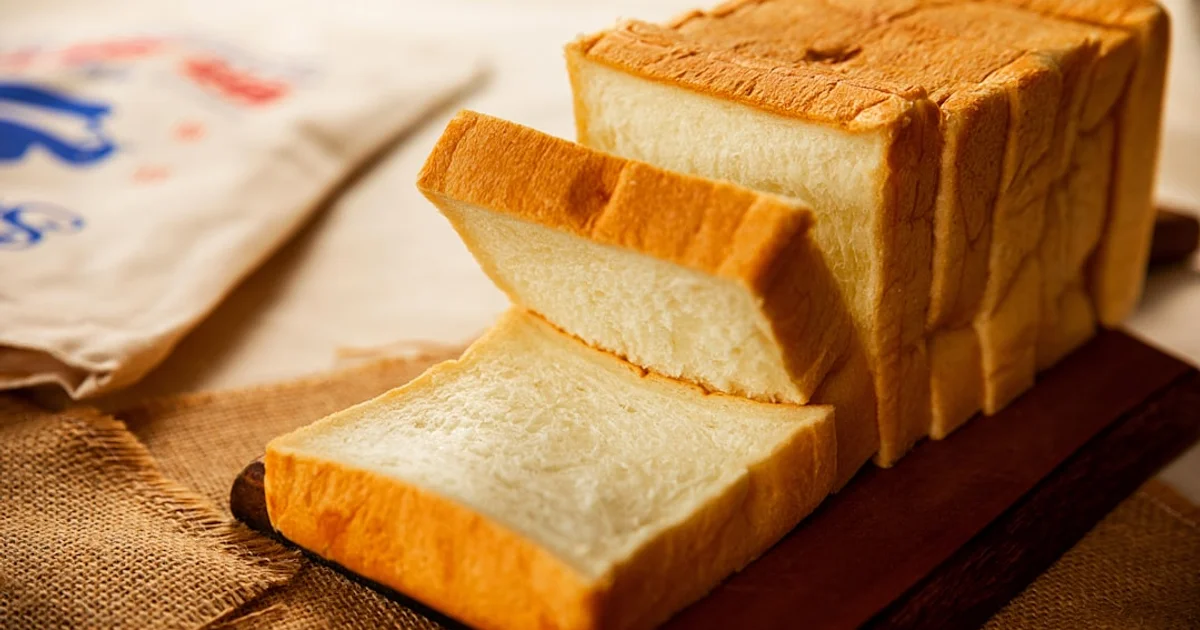
Flip over a loaf of US sandwich bread and you’ll usually find L-cysteine, DATEM, or SSL somewhere in the ingredients — additives that can come from a plant, a lab, or an animal, and the label never says which. We checked five US bread and bakery brands directly for how they handle that disclosure. One names its ingredient sources outright. None carries a named halal certifier.
Why Bread Additives Need a Source Check, Not Just an Ingredient List
The chemistry here is already covered in depth elsewhere on this site — see Is L-Cysteine (E920) Halal? for the human-hair/feather/synthetic breakdown, and E471 in Bread: The Complete Guide for how mono- and diglycerides split between plant and animal fat. This guide doesn’t re-derive that chemistry — it applies it to specific brands sold in the US, which neither of those posts (both UK-market) covers.
The short version: L-cysteine, DATEM (E472e), and SSL (E481) are all source-ambiguous. None are inherently haram, but without a vegan label, an explicit manufacturer statement, or halal certification, the safest default is Mushbooh.
What We Checked, and What We Found
The one real disclosure: King’s Hawaiian
King’s Hawaiian — its own FAQ states plainly: “The only animal-based ingredients we use are Eggs and Dairy Products. Besides those two ingredients, everything (including the Enzymes and Mono- & Diglycerides) is vegetable-based.” That’s a direct, on-the-record answer to exactly the question this guide keeps running into elsewhere — where do the emulsifiers come from. The same FAQ confirms King’s Hawaiian bread is Kosher Dairy (KD) certified and pork-free. What this isn’t: a halal certification. No certifying body is named, and the statement doesn’t specifically address L-cysteine by name (King’s Hawaiian’s sweet bread does contain L-cysteine per its ingredient panel) — but “everything besides eggs and dairy is vegetable-based” is about as close to a direct answer as any brand in this guide gives.
Kosher-certified, no halal statement found
Dave’s Killer Bread — OU (kosher) certified as of 2026, confirmed via Kosherquest’s own certification announcement. No halal certifying body found on the brand’s own site. A third-party barcode-scanning app shows conflicting halal tags between different Dave’s Killer Bread products (one variety marked halal, a very similar one marked not halal) with no stated reasoning — we don’t treat scanning-app tags as a primary source, and the inconsistency itself is a reason not to repeat the claim either way.
Clean formulation, no certification
Rudi’s Organic Bakery — its organic breads (aside from honey varieties) are egg- and dairy-free, and the dough conditioner used is ascorbic acid (vitamin C) rather than L-cysteine, DATEM, or SSL. Ascorbic acid doesn’t carry the same source-ambiguity question. No halal certification is stated anywhere on the brand’s site — this is a genuinely cleaner ingredient list, not a certified one.
No certification, no disclosure found
Nature’s Own (Flowers Foods) — ingredient panels list dough conditioners including sodium stearoyl lactylate (SSL/E481), DATEM (E472e), and mono-/diglycerides across its standard bread lines. We could not find a direct, current statement from Flowers Foods itself on the source of these additives — an earlier-circulating claim that Flowers Foods avoids L-cysteine in its core bread lines could not be traced back to a primary source during this research, so we’re not repeating it. No halal certification found. Standard Mushbooh treatment applies.
Muslim-owned, no named certifier confirmed
Shatila Bakery — Dearborn, Michigan, Muslim-owned, ships nationwide via Goldbelly. We checked the brand’s own site directly and found no named halal certifying body (IFANCA, ISNA, HFA, or similar) stated anywhere. Being Muslim-owned is not the same claim as being certified — worth asking directly if a specific certification matters to you.
Comparison Table
| Brand | Certification Status | Real Finding |
|---|---|---|
| King’s Hawaiian | Not halal-certified; Kosher Dairy certified | Own FAQ: only eggs/dairy are animal-derived, enzymes and mono-/diglycerides are vegetable-based |
| Dave’s Killer Bread | OU Kosher certified, no halal certifier found | Third-party scanning app shows conflicting halal tags across products — not treated as verification |
| Rudi’s Organic Bakery | Not certified | Uses ascorbic acid, not L-cysteine/DATEM/SSL, in its organic lines |
| Nature’s Own | Not certified | SSL, DATEM, mono-/diglycerides present; source undisclosed on any primary source we could find |
| Shatila Bakery | No certifying body confirmed | Muslim-owned, ships nationwide — certification claim not found on the brand’s own site |
What to Ask Before Buying “Halal” Bread in the US
- Is a halal certifying body actually named? None of the five brands here name one — a “Muslim-owned” or “no pork” claim isn’t the same thing.
- Does the brand disclose its emulsifier/dough-conditioner source directly? King’s Hawaiian’s FAQ is the only one in this guide that does, in writing, on its own site.
- Is there a vegan label? A vegan-labelled loaf rules out animal-derived L-cysteine, DATEM, and SSL by definition — this site’s E471 bread guide covers why that shortcut works.
- Is the dough conditioner something other than L-cysteine, DATEM, or SSL? Ascorbic acid (Rudi’s) and plain fermentation (sourdough) sidestep the question entirely.
- Would a kosher certification satisfy you instead? It’s a different standard, not a halal one — Dave’s Killer Bread’s OU certification doesn’t answer the halal question either way.
Summary
| Question | Answer |
|---|---|
| Any US bread brand with a named halal certifier? | None found among the five checked here |
| Best manufacturer disclosure? | King’s Hawaiian — direct, on-the-record ingredient-source statement |
| Cleanest ingredient list without certification? | Rudi’s Organic Bakery — ascorbic acid, not L-cysteine/DATEM/SSL |
| Any claim that didn’t hold up? | A third-party scanning app’s conflicting Dave’s Killer Bread tags, and an untraceable “L-cysteine-free” claim for Nature’s Own — both excluded |
For the underlying additive chemistry, see Is L-Cysteine (E920) Halal? and E471 in Bread: The Complete Guide, or search any additive in the E-codes database.
How we reached this verdict
We checked the following before publishing this guide:
- King’s Hawaiian’s own FAQ page, which states directly which ingredients are animal-derived and which are vegetable-based, plus its Kosher Dairy certification.
- Kosherquest’s own certification announcement for Dave’s Killer Bread’s OU status.
- Rudi’s Organic Bakery’s own ingredient panels, confirming ascorbic acid as the dough conditioner in its organic lines rather than L-cysteine, DATEM, or SSL.
- Nature’s Own / Flowers Foods ingredient panels, listing SSL, DATEM, and mono-/diglycerides — we could not confirm a primary-source statement on their origin, so we did not repeat a secondary claim that we couldn’t trace back to the company itself.
- Shatila Bakery’s own site, checked directly for a named certifying body — none found.
- What we explicitly did not treat as verification: a third-party barcode-scanning app’s product-by-product halal tags for Dave’s Killer Bread, which conflicted between similar products with no stated reasoning.
- Brand pre-flight: none of the five brands checked here have an existing HalalCodeCheck brand-verdict page.
Madhab note
This guide’s core question — whether a manufacturer’s plant-source ingredient statement is enough on its own, without independent certification — follows the same rule already applied across this site’s E-code coverage (see the E471 bread guide and is-l-cysteine-halal’s Madhab note). Under the mainstream Hanafi, Maliki, and Shafi’i position (per Darul Ifta Birmingham and similar bodies), a direct manufacturer statement that an ingredient is vegetable-sourced — like King’s Hawaiian’s — is treated as sufficient without independent certification. A stricter, more Hanbali-leaning or HMC-style position holds that only formal third-party certification resolves the doubt, regardless of what the manufacturer states. King’s Hawaiian’s FAQ statement is real and dated, but it is a manufacturer’s own word, not an independent audit — where your standard falls on that line determines whether it settles the question for you.
Run a certified halal brand that belongs in this guide?
Get featured here and across HalalCodeCheck — reach shoppers at the moment they verify.
Ingredients change. Be first to know.
Brands reformulate without warning. We track every E-code update and halal certification — one short weekly email.
Related Articles
 Shopping Guides
 Halal Shopping at Coles: Aisle-by-Aisle Australia Guide (2026)
Coles stocks halal-certified meat from accredited abattoirs but own-brand packaged goods require E-code checking — here's what to look for in each aisle.
 Shopping Guides
 Halal Shopping at Carrefour: France, UAE & Turkey Guide (2026)
Carrefour's halal status varies by country — UAE stores stock certified halal products throughout, while French stores require label-by-label checking.
 Shopping Guides
 Halal Food in Malaysia: Beyond JAKIM — Full Supermarket & Brand Guide
JAKIM certification is Malaysia's gold standard but not every product on shelf is JAKIM-certified — here's how to shop confidently in Mydin, Giant, and Aeon.