
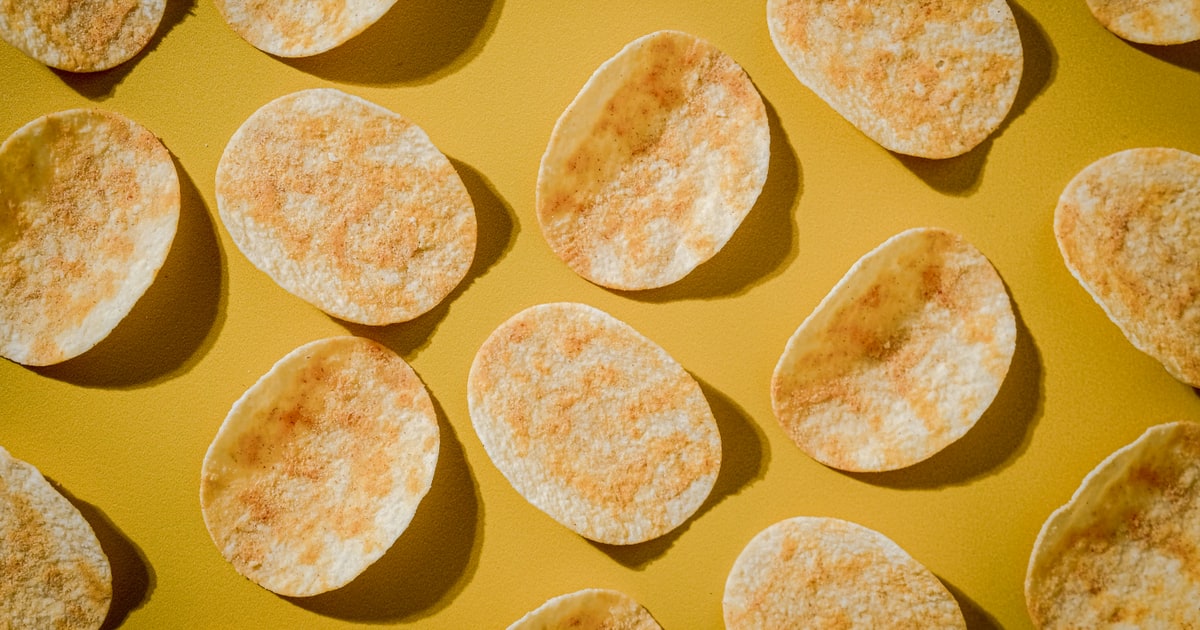
Are Pringles Halal?
Pringles are one of the world’s most popular snacks — but for Muslim consumers, the answer to whether they’re halal is not a straightforward yes. The halal status of Pringles depends heavily on the specific flavour, the country of purchase, and which E-codes are present in that variant.
The short verdict: Original Pringles (UK/US) are Mushbooh (doubtful) due to E631. Some flavours are Haram due to E120. Malaysian Pringles with JAKIM certification are Halal.
Ingredients Check
The main area of concern with Pringles is a cluster of flavour-enhancing E-codes that appear across various flavours:
E631 — Disodium Inosinate This is the most widely discussed concern. E631 is a flavour enhancer commonly used alongside E621 (MSG) to create a more intense savoury taste. The critical issue is that E631 can be sourced from:
- Sardines or other fish (considered halal by most scholars)
- Pork or other meat (Haram)
- Yeast extract (Halal)
Kellogg’s (who manufacture Pringles) has not publicly confirmed the source of E631 used in their UK or US products. Without that confirmation or a halal certification, E631 remains doubtful.
E627 — Disodium Guanylate Similar to E631, this flavour enhancer is often used alongside it. It shares the same sourcing ambiguity — fish, meat, or yeast-derived. The two are frequently listed together as “flavour enhancers (E621, E627, E631)”.
E621 — Monosodium Glutamate (MSG) MSG itself is generally considered halal when derived from plant fermentation, which is the most common industrial method. However, its presence alongside E627 and E631 is a signal to examine the full flavour enhancer blend carefully.
E120 — Carmine / Cochineal This is the most serious concern in the Pringles range. E120 is a red colouring extracted from the dried bodies of cochineal insects. The majority of Islamic scholars consider insects Haram, making E120 impermissible. It appears in certain BBQ and paprika-flavoured Pringles. If E120 is present, that flavour is Haram — not merely Mushbooh.
Which Flavours/Varieties Are Halal?
Here’s a breakdown of the major Pringles flavours and their status:
Original (Salted) Status: Mushbooh. Contains E631 (source unconfirmed). No halal cert. No E120.
Sour Cream & Onion Status: Mushbooh. Contains E631 and E627. Sour cream base uses dairy, which is halal, but the flavour enhancer source remains unconfirmed.
Cheese & Onion Status: Mushbooh. Similar profile to Sour Cream & Onion. E631 present.
BBQ Status: Mushbooh to Haram. Some production runs of BBQ flavour have included E120. Always check the specific tin. If E120 is listed, it is Haram.
Paprika Status: Mushbooh to Haram. Paprika flavouring can include red colouring agents. Check the label for E120.
Prawn Cocktail Status: Mushbooh. Uses natural prawn flavourings (shellfish — debated as halal by some scholars, haram by others from Hanafi perspective). Also contains E631.
Malaysian Market (JAKIM Certified) Status: Halal. Pringles manufactured for Malaysia carry JAKIM certification, meaning ingredients and production processes have been verified. If you’re shopping in Malaysia or can source JAKIM-certified stock, these are permissible.
What Do Scholars Say About E631?
The Islamic Fiqh Academy and scholars from JAKIM (Malaysia), IFANCA (North America), and the Islamic Foundation of Ireland have all noted that E631 requires verification of its source. Without a halal certificate or a manufacturer statement confirming non-animal or halal-animal sourcing, the safe position is to treat E631 as Mushbooh (doubtful).
Many Muslims apply the hadith principle: “Leave that which makes you doubt for that which does not make you doubt” (Tirmidhi). On that basis, Pringles without halal certification are best avoided by those who follow a cautious approach.
How to Check Before You Buy
- Read the label every time. Kellogg’s reformulates flavours periodically. An ingredient present in 2024 may not be present in 2026 and vice versa.
- Look for halal logos. If the tin carries a credible halal certification logo (JAKIM, IFANCA, HMC, HFA), the product is verified.
- Use HalalCodeCheck. Scan the ingredient list on the back of the pack using our OCR scanner and we’ll flag any doubtful or haram E-codes instantly.
- Contact Kellogg’s directly. You can ask their consumer care team to confirm the source of E631 and E627 in your specific product.
Are There Halal Alternatives to Pringles?
Yes — several snack brands offer similar stackable or tube-packaged crisps with confirmed halal status:
- Tyrrell’s crisps — many flavours carry no doubtful E-codes
- Walkers crisps (select flavours) — some varieties carry halal certification
- Lay’s (Middle East production) — often carry Gulf halal certification
- Own-brand supermarket crisps — check labels; plain salted varieties often have the simplest ingredient lists
Summary
| Factor | Detail |
|---|---|
| Status | Mushbooh (most flavours) / Haram (E120 flavours) |
| Main Concern | E631 (source unconfirmed), E120 (carmine — Haram) |
| Halal Certified | Malaysia (JAKIM) only |
| UK/US Status | Not certified — Mushbooh |
| Verdict | Avoid UK/US Pringles unless you’ve confirmed no E120 and accept the E631 ambiguity |
If you’d rather not gamble on the E631 ambiguity at all, the certified crisp aisle is emptier than you would hope: our UK online snack picks contain no certified crisp, because we could not verify one. The picks that stand are sweets, noodles and jerky. For crisps specifically, plain salted from a mainstream brand clearing on ingredients remains the realistic answer.
Ingredients change. Be first to know.
Brands reformulate without warning. We track every E-code update and halal certification — one short weekly email.
Related Articles
 Shopping Guides
 Is Pringles Halal? Every Flavour Checked by Region (2026)
Pringles Original is halal and vegan-labelled. Every flavoured UK variety we verified contains E621 with E627/E631 or E635 — but all carry vegetarian labels. Flavour-by-flavour table for UK, US and certified Gulf/Malaysian versions.
 Shopping Guides
 Which Crisp Flavours Are Haram? UK Brand-by-Brand Guide (2026)
We verified 30+ UK crisp flavours against current official labels. Fewer are haram than you think — Walkers is now enhancer-free, but flavoured Pringles still use E631/E635. Full brand guide: Walkers, Pringles, Tyrrells, Kettle, McCoy's.
 Shopping Guides
 The Complete Guide to Halal Crisps and Savoury Snacks (2026)
Every snack category covered: potato crisps, Doritos, Pringles, popcorn, rice cakes, nuts and crackers. Brand verdicts across Walkers, Tyrells, Kettle, Doritos, Cheetos, Pringles, Popchips and more.