
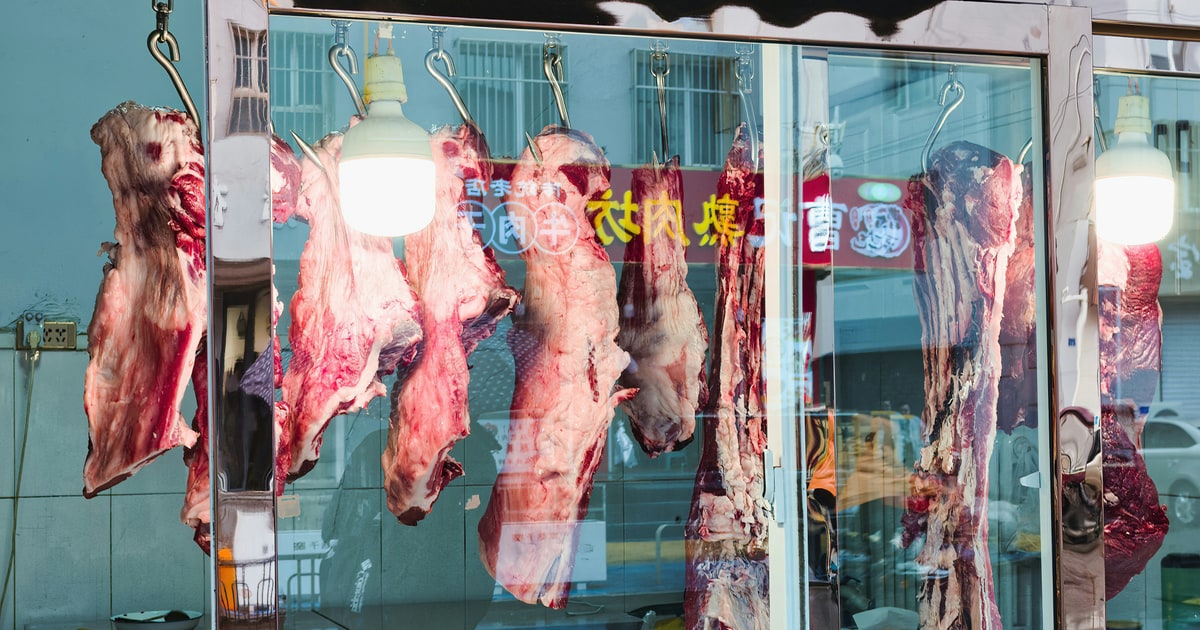
Every Muslim navigating UK supermarkets eventually faces the same uncertainty standing in the meat aisle: the packaging says “halal” but what does that actually mean? The answer involves centuries of Islamic jurisprudence, a live debate about animal welfare practices, and two competing UK certification bodies with meaningfully different standards.
The Core Requirements for Halal Meat
Islamic food law (fiqh) sets out clear requirements that must all be satisfied for meat to be considered halal. These are not bureaucratic rules — they reflect values of mercy, consciousness, and gratitude in the act of taking an animal’s life.
1. The animal must be alive at the point of slaughter
This is non-negotiable across all four major Sunni schools (Hanafi, Maliki, Shafi’i, Hanbali). An animal that has already died from disease, accident, or pre-slaughter handling errors cannot be eaten. This is why the stunning debate matters so much — if electrical or mechanical stunning kills the animal before the knife reaches it, the meat becomes carrion (mayta) and is haram.
2. Bismillah must be recited
The slaughterman must say “Bismillah Allahu Akbar” (In the name of God, God is Greatest) at the moment of slaughter. In hand slaughter, this is said individually for each animal. In high-volume industrial settings, the question of whether a single recitation at the start of a production run is sufficient is where scholars disagree.
3. The blood must drain fully
The windpipe, oesophagus, and jugular veins must be severed cleanly in a single motion (zabiha). This causes rapid loss of consciousness through blood pressure drop and ensures the blood drains from the meat. Consuming blood is separately prohibited in the Quran (2:173).
4. The animal must be a permissible species
Cattle, sheep, goats, and domestic poultry (chicken, turkey, duck) are halal species. Pigs are haram. Donkeys are haram. Dogs are haram. Fish and most seafood are halal without requiring slaughter under the majority position.
The Stunning Debate: HMC vs HFA
This is where British halal consumers encounter the most significant real-world divide. Pre-slaughter stunning is used in the majority of UK abattoirs for animal welfare reasons — it renders the animal unconscious before the blade. The question for Muslim consumers is whether this renders the meat haram.
HMC’s Position: No Stunning Permitted
The Halal Monitoring Committee, founded in 2003, takes the strictest position: all pre-slaughter stunning is prohibited. Their reasoning: electrical and mechanical stunning can and does kill some animals before slaughter. Any bird or animal that dies before the blade — even a small percentage — is haram. Since it is impossible to guarantee 100% survival of stunned animals, the entire practice is prohibited under HMC standards.
HMC requires:
- Hand slaughter of every animal (no machine slaughter of poultry)
- No electrical, mechanical, or gas stunning
- Individual tasmiyah for every bird on the production line
- Regular, unannounced audits of certified facilities
HFA’s Position: Reversible Stunning Permitted
The Halal Food Authority, founded in 1994, permits reversible stunning under specific, controlled conditions. Their position is that electrical head-stunning of poultry — when calibrated correctly — does not kill the animal but merely renders it temporarily unconscious. Provided the animal is alive when the knife is applied and the blood drains fully, the meat meets halal requirements.
HFA permits:
- Electrical water-bath stunning for poultry (at approved voltages)
- Some forms of mechanical captive-bolt stunning for cattle (non-penetrative only)
- Mechanical slaughter of poultry provided tasmiyah is said
- Regular audits, though less frequently than HMC
What UK Law Says
Under the UK Welfare of Animals at the Time of Killing (WATOK) regulations 2015, religious slaughter without prior stunning is permitted as a specific exemption for Muslim and Jewish communities. This exemption is regularly reviewed and has been subject to political debate. Both HMC and HFA certified slaughter operates legally under this exemption. The majority of UK meat — including supermarket halal — uses some form of stunning.
Machine vs Hand Slaughter: Does It Matter?
For HMC, this is settled: hand slaughter is mandatory. For HFA and other certifiers, machine slaughter of poultry using a rotating blade (after tasmiyah at line start) is permitted.
The practical implication for consumers: much of the halal chicken sold in UK supermarkets is machine-slaughtered and HFA-certified or uncertified. Halal butchers selling HMC-certified chicken use hand-slaughtered birds. The full picture of how the two UK certifiers split on stunning — HMC vs HFA covers tasmiyah rules, monitoring models and which chains each body certifies.
Certification Logos to Look For
When buying halal meat in the UK, the presence of a certification logo on the packaging is your most reliable signal:
- HMC logo (green crescent with HMC text) — strictest standard, no stunning, hand slaughter
- HFA logo (green HFA text) — broader standard, reversible stunning permitted
- No logo — exercise caution; contact the retailer or manufacturer
For supermarket own-brand products labelled “halal” without a recognised certification logo, it is worth contacting the retailer directly to ask which certifier they use and whether stunning is involved.
Common Species and Their Halal Status
| Animal | Status | Notes |
|---|---|---|
| Beef/Cow | Halal (requires proper slaughter) | Check certification |
| Lamb/Sheep | Halal (requires proper slaughter) | Check certification |
| Chicken | Halal (requires proper slaughter) | Machine vs hand-slaughter debate |
| Turkey | Halal (requires proper slaughter) | Same standards as chicken |
| Pork/Pig | Haram | No exceptions |
| Fish | Halal (no slaughter required) | All four Sunni schools |
| Prawns/Shrimp | Halal (majority position) | Hanafi has nuances on some seafood |
| Rabbit | Halal | Requires proper slaughter |
| Donkey | Haram | Prohibited by hadith |
Practical Advice for UK Consumers
The most reliable route to properly halal meat is a local HMC-certified halal butcher. These exist in most UK cities with significant Muslim populations and provide hand-slaughtered, un-stunned meat with traceability. Our butcher vs supermarket comparison weighs the two routes on certification, stunning, price and convenience.
For supermarket shopping: halal chicken from ASDA, Morrisons, or Iceland is typically HFA-certified (stunned, sometimes machine-slaughtered). If your position requires the strictest standard, a halal butcher or online HMC-certified supplier (such as Ayah Halal or Tahira) is the alternative. Whichever route you take, you can trace UK supermarket meat back to its slaughterhouse with the oval code on the pack.
For restaurants: always ask which certifier they use. “We use halal meat” without naming a certifier is insufficient for consumers who distinguish between HMC and HFA standards.
Summary
| Factor | Detail |
|---|---|
| Core requirements | Alive at slaughter, bismillah recited, blood drained, permissible species |
| Stunning — HMC position | Prohibited entirely |
| Stunning — HFA position | Reversible electrical stunning permitted |
| Strictest UK standard | HMC (hand slaughter, no stunning) |
| Broader UK standard | HFA (allows some stunning and machine slaughter) |
| Safest purchase route | HMC-certified halal butcher |
| Fish and seafood | Halal without slaughter requirements (majority position) |
Ingredients change. Be first to know.
Brands reformulate without warning. We track every E-code update and halal certification — one short weekly email.
Related Articles
 Shopping Guides
 Halal Shopping at BILLA Austria: Halal Spreads Yes, Halal Meat No (2026)
BILLA stocks halal-labelled chicken spreads from Argeta and Delicata, but fresh halal meat was withdrawn after public protest and has not returned. Here is what the BILLA and BILLA Plus shelves actually offer a halal shopper, what to read on own-brand Clever and Ja! Natürlich packs, and where Vienna's halal meat still comes from.
 Shopping Guides
 Best Halal Bone Broth in the USA (2026): Certified Options
Compare halal bone broth brands in the USA, including One Stop Halal, Boxed Halal, Samson's Kitchen and Simply Halal, with certification evidence.
 Shopping Guides
 Halal Meat at Sam's Club (2026): Online vs In-Club
Sam's Club sells Crescent Foods halal chicken and beef online, but we found no verified halal fresh meat in clubs. See what is available and how Costco compares.