
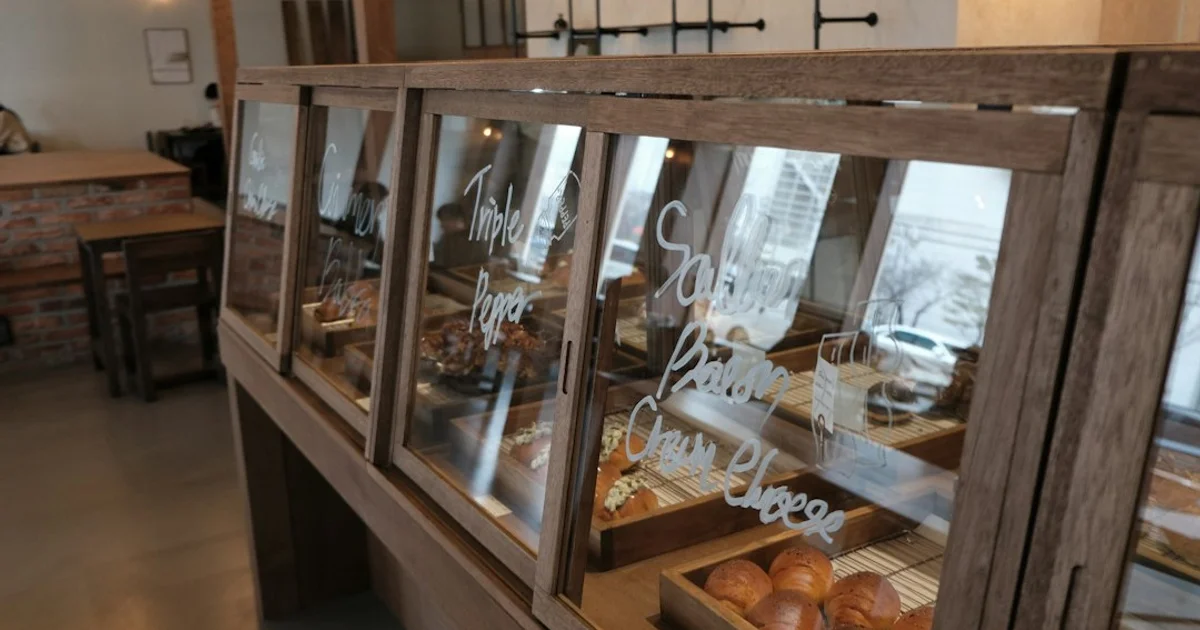
For years Paris Baguette’s Singapore stores told Muslim customers “no pork, no lard”. Helpful, honest, and not the same thing as certified. On 13 February 2026 the chain crossed that line: every outlet in Singapore holds a MUIS halal certificate, and the bread, sandwiches and pastries handled in those stores are covered by it.
Paris Baguette Singapore is halal: MUIS-certified across all outlets, per premises, since February 2026. Eight months later the company put a number on what that did for business, which is the other half of this story.
What changed in February 2026
MUIS (Majlis Ugama Islam Singapura) is the only body that can legally issue a halal certificate in Singapore, and its certification is per eating establishment, not per brand. When Time Out Singapore reported the news on 13 February 2026 it noted that a scroll through the MUIS halal directory showed every Paris Baguette store listed individually. That is the check that matters, and it is how any reader can verify a given branch today, as our guide to the MUIS database explains.
The company’s own halal page says its halal-certified products are available across all Paris Baguette outlets in Singapore, and acknowledges that its earlier messaging used “no pork, no lard” wording.
| Before 13 February 2026 | From 13 February 2026 | |
|---|---|---|
| Claim | ”No pork, no lard” | MUIS halal-certified |
| Who verified it | The company | MUIS, after audit |
| Scope | Ingredient statement | Ingredients, handling and preparation in store |
| Checkable? | No | Yes, per store, in the MUIS directory |
| Covers alcohol, gelatine, enzymes, cross-contact? | Not addressed | Within the MUIS standard |
The last row is why “no pork, no lard” was never enough for a bakery. Bread and pastry raise questions that have nothing to do with pork: gelatine in glazes and fillings, alcohol in flavourings and some fruit preparations, E471 and E472e emulsifiers of undisclosed source in doughs and improvers, and shared equipment. A MUIS audit covers those. A sign about pork does not.
The Paran Label rollout and the sales figures
Paris Baguette launched Paran Label, its health-positioned bakery line, in South Korea in February 2025 and brought it to Singapore at the Paragon store in February 2026, the same month the MUIS certificates landed. By October 2026 the line was in all 28 Singapore stores, with seven products: five breads and two sandwiches, led by a smoked salmon ricotta sandwich, a roasted chicken ricotta sandwich and a multigrain rye.
On 7 October 2026 the company reported, via Seoul Economic Daily:
- average loaf-bread sales over the previous 30 days up 57% on the May–July average;
- sandwich and salad sales up 10% over the same comparison;
- the drivers named were local demand for bread that is both healthy and good, and halal certification, which “created a basis for a wide range of customers, including Muslim consumers, to try Paran Label”.
Treat the numbers as what they are: a company’s own figures, for a category it chose, over a window it chose, not an audited result and not a controlled test of certification alone. The Paran Label launch and the certification arrived together, so the 57% cannot be attributed to either on its own. What the company is saying, and what is plausible in a market where Muslims are around one in six residents, is that certification removed a reason for a large group not to walk in.
What the certificate covers, and what to still check
Everything handled and prepared in a Singapore store is within scope, which is how MUIS certifies eating establishments. That includes the sandwiches made on site and the pastries finished there.
Per store. Certification can lapse or be suspended per premises. Search the branch you are in, not the brand. The MUIS directory is the register.
Not the overseas stores. Paris Baguette operates in South Korea, the United States, Malaysia, Vietnam and other markets. The Singapore certificate says nothing about them. Malaysian outlets would need JAKIM certification to be marked halal under Malaysian law; US outlets would need a US certifier. Our Korean bakery guide for Indonesia shows how differently the same Korean chains are positioned across Southeast Asian markets.
Not the packaged products sold elsewhere. A Paris Baguette product bought outside Singapore, or from a Korean import shop, was not made under the Singapore certificate.
Summary
| Question | Answer |
|---|---|
| Is Paris Baguette Singapore halal? | Yes; MUIS-certified, all outlets, from 13 February 2026 |
| What did it replace? | A “no pork, no lard” self-declaration |
| Is every store covered? | Each store is listed individually in the MUIS directory; check the branch you are in |
| Did certification lift sales? | The company says it contributed to a 57% rise in loaf-bread sales after the Paran Label rollout; its own figures, not independently verified |
| Are overseas Paris Baguette stores halal? | Not on this certificate; each market needs its own certifier |
| How do I verify? | Search the outlet in the MUIS halal establishments directory |
Look up any E-code from a bread or pastry label in the E-codes database.
To scan a full ingredient list for halal status in seconds, use the ingredient scanner.
For what to look for in any bakery, see our guide to halal bread and bakery ingredients, and for the emulsifier that matters most in dough, E471’s halal status.
How we reached this verdict
We checked the following Tier-1 sources before publishing:
- MUIS halal directory, as reported checked by Time Out Singapore on 13 February 2026: every Paris Baguette Singapore store listed individually. We have not re-run the per-store check ourselves on the day of writing; readers should search the branch they intend to visit.
- Paris Baguette Singapore, “Our Commitment to Customers” halal certification page: halal-certified products available across all Singapore outlets; acknowledgement of earlier “no pork, no lard” messaging.
- Time Out Singapore (13 February 2026) and QSR Media: MUIS certification secured as of 13 February 2026.
- Seoul Economic Daily (7 October 2026, AI-translated from Korean): Paran Label in all 28 Singapore stores; 57% and 10% sales figures; company attribution to local demand and MUIS certification; completion of MUIS certification for all Singapore stores in 2026.
- NTU / NIE (17 May 2026): 28 stores nationwide.
- Zabihah listings for individual branches showing MUIS verification, used only to corroborate the per-store pattern.
No school-divergent ruling is relied on. The verdict rests on a named certifier’s per-premises certification.
Ingredients change. Be first to know.
Brands reformulate without warning. We track every E-code update and halal certification — one short weekly email.
Related Articles
 Brand Guides
Tillamook's Halal Label: What It Certifies, and What the Boycott Got Wrong
Tillamook cheese carries a Certified Halal mark because it switched to fermentation-produced rennet in 2016. The label is not new, the recipe did not change, and one cheddar is excluded. Here is what the label covers.
 Brand Guides
Is KOI Thé Halal? Certified in Bangladesh, Not in Singapore or Malaysia
KOI Thé's halal status varies by country. Its Bangladesh outlets were certified by the Islamic Foundation on 1 October 2026; in Singapore KOI states it holds no MUIS certification, and in Malaysia it has said it has no JAKIM certificate. Country-by-country verdict.
 Brand Guides
Jaya Grocer's JS Meats Is Now JAKIM-Certified: What the Central Kitchen Certificate Adds
Jaya Grocer's in-house JS Meats range gained JAKIM halal certification in October 2026, covering cutting, handling and packing at its central kitchen. The meat was already sourced from certified suppliers; here is what the new layer verifies and what it still does not cover.