
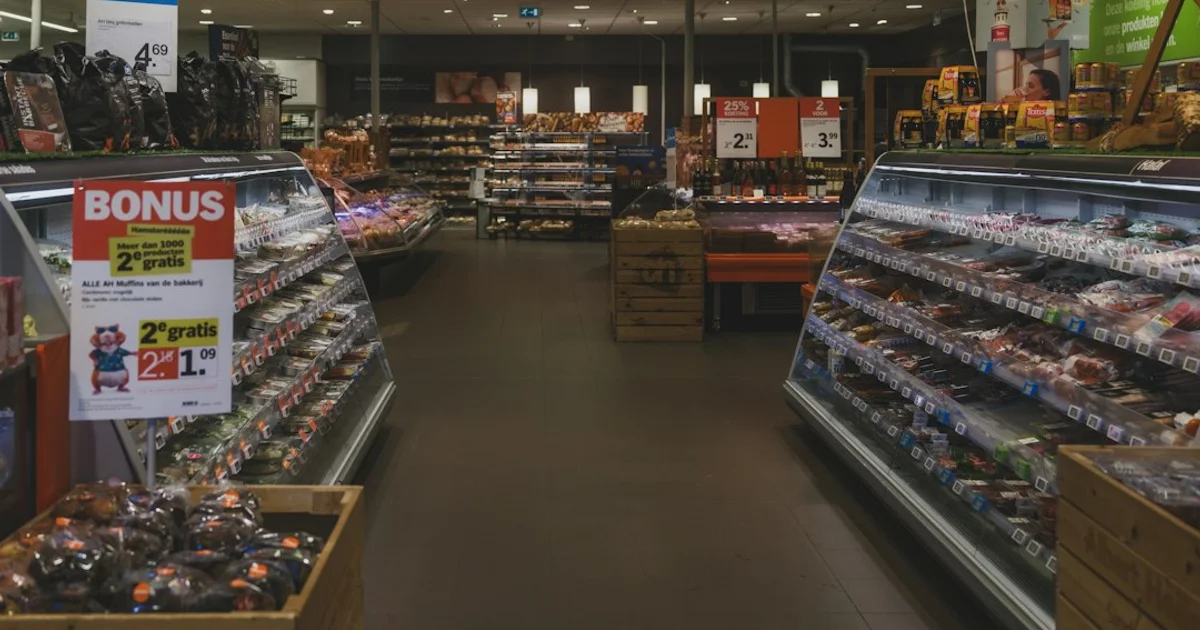
A steak sourced from a halal-certified abattoir can still be cut on a non-halal board. That single sentence is the reason retailers get their own kitchens certified, and it is what Jaya Grocer did for its JS Meats range in October 2026.
JS Meats is halal: JAKIM-certified at the point of processing, from suppliers that were already certified at the point of slaughter. The announcement is a useful one to unpack, because the gap it closes is the gap most shoppers never think about.
What was certified
Jaya Grocer announced on 13 October 2026 that it had secured halal certification from JAKIM (Jabatan Kemajuan Islam Malaysia, the Department of Islamic Development Malaysia) for its JS Meats range.
| Detail | What the announcement says |
|---|---|
| Certified range | JS Meats, under the Jaya Grocer Selection (JS Brand) private label |
| Scope | Preparation, cutting, handling and packing of JS Meats products at Jaya Grocer’s central kitchen |
| Range size | More than 150 products: steaks, sausages, patties and other cuts |
| Distribution | 63 Jaya Grocer outlets nationwide; selected products also on GrabMart |
| Preparation | 12 months of process reviews and alignment with halal requirements before certification |
| What came before | Meat sourced from halal-certified suppliers from the start of the JS Meats range |
The company’s chief executive, Daniel Teng, framed it as a second step: halal assurance began with sourcing from certified suppliers, and the new certificate “extends the assurance into our own processing and handling operations”. That is an accurate description of what a processing certificate does.
The gap the certificate closes
Meat passes through two kinds of halal risk. The first is at slaughter, and it is the one everybody knows: was the animal alive, was the slaughterman Muslim, was the name of God pronounced, was the blood drained. A certified supplier answers that, and JS Meats already had certified suppliers.
The second risk starts at the loading bay and is invisible on the pack. A retailer that cuts, minces, marinates, forms and packs meat on its own premises introduces its own equipment, its own staff, its own cleaning regime and its own storage. In a store that also sells pork, the questions are concrete:
- Are the boards, knives, mincers and sausage fillers dedicated or shared?
- Are halal and non-halal lines physically separated in the chiller and on the bench?
- Is the cleaning between batches validated, or assumed?
- Can a pack of patties be traced back to the batch and the supplier it came from?
- Are the people handling halal meat trained in what segregation requires?
JAKIM’s certification of a processing facility audits exactly these, against the MS 1500 standard, and it is why the certificate took a year of preparation. Our JAKIM guide explains the standard; our UK supermarket meat guide shows what the same gap looks like in a market where retailer kitchens are rarely certified at all.
What the certificate does not cover
Non-halal sections. Jaya Grocer sells pork and other non-halal lines in segregated areas. The JS Meats certificate is about the JS Meats line and the central kitchen that prepares it, not a declaration about the store. The segregation of the non-halal section is a separate control, and a shopper who wants to avoid any shared-store exposure is making a different, personal choice that a product certificate does not address.
Third-party branded meat. Imported or branded meat sold under other labels relies on its own supplier’s certification. The JAKIM logo on a JS Meats pack does not transfer to the pack beside it.
In-store cutting. The certificate names the central kitchen. Jaya Grocer also describes a master butcher who trains staff at selected outlets in cutting and handling. Whether in-store cutting at a given branch falls within the certificate’s scope is not stated in the announcement. If you buy meat cut at the counter rather than pre-packed, ask the branch whether that counter is within the certified scope.
The wagyu question. The promotional cuts named in the announcement include Japanese A5 wagyu and Australian grain-fed beef. Imported beef’s halal status rests on the exporting country’s certifier being recognised by JAKIM; Australia’s and Japan’s bodies are the two largest groups on JAKIM’s recognised list, which is consistent with the sourcing, but the specific supplier is not named. The certificate covers Jaya Grocer’s handling of it; the slaughter certification is the supplier’s.
How to read a JS Meats pack
- Look for the JS Meats or Jaya Grocer Selection label. The certificate is for this range.
- Look for the JAKIM halal logo with a certificate reference on the pack or at the counter.
- Check it on the Halal Malaysia portal if you want the registry entry; certified premises and products are searchable.
- For counter-cut meat, ask the scope. Pre-packed central-kitchen product is within it; branch counters may or may not be.
Summary
| Question | Answer |
|---|---|
| Is JS Meats halal? | Yes; JAKIM-certified processing from October 2026, with certified suppliers before that |
| What does the new certificate cover? | Preparation, cutting, handling and packing at Jaya Grocer’s central kitchen |
| What did it add? | Audited segregation, equipment, cleaning, training and traceability after the meat leaves the supplier |
| Does it cover the whole store? | No; non-halal sections and third-party brands are outside it |
| Does it cover counter-cut meat in branches? | Not stated; ask the branch |
| How many products and stores? | 150+ products, 63 outlets, selected lines on GrabMart |
Look up any E-code from a sausage or patty label in the E-codes database.
To scan a full ingredient list for halal status in seconds, use the ingredient scanner.
For the wider Malaysian picture, our complete Malaysia halal food guide and JAKIM E-codes guide.
How we reached this verdict
We checked the following sources before publishing:
- Jaya Grocer announcement via The Stoly / Newswav (13–15 October 2026): JAKIM certification secured for the JS Meats range; scope of preparation, cutting, handling and packing at the central kitchen; prior sourcing from halal-certified suppliers; 150+ SKUs across 63 outlets; 12 months of preparation; CEO Daniel Teng’s statements; presence of JAKIM’s Halal Hub advocacy division at the announcement.
- JAKIM / Halal Malaysia — the MS 1500 standard that processing certification is audited against; the recognised foreign certification bodies list effective 21 August 2026, on which Australian and Japanese bodies form the two largest national groups.
- Jaya Grocer’s own stated position that it sells non-halal lines in segregated sections, which bounds the certificate’s scope.
- Certification registry check: at the time of writing we have not located the JS Meats entry on the Halal Malaysia portal ourselves; the verdict rests on the announcement and JAKIM’s participation in it. Readers wanting the registry entry should search the portal for the certified premises.
Slaughter is school-divergent on stunning, and JAKIM’s MS 1500 standard sets Malaysia’s position; readers following a different standard should apply it to the supplier’s certification, which this announcement does not change.
Ingredients change. Be first to know.
Brands reformulate without warning. We track every E-code update and halal certification — one short weekly email.
Related Articles
 Shopping Guides
Best Halal Meal Kits USA 2026 — Which Are Actually Certified
Most US halal meal kit brands claim 'zabiha halal' with no certifier named. We checked eight directly — one HMS-certified, one names Halal Watch World, the rest are unverified claims.
 Brand Guides
Is Knorr Halal? Bouillon Cubes, Stock Pots and E-Codes Checked (2026)
Knorr bouillon cubes contain E621, E627 and E631 — three flavour enhancers with Mushbooh status in uncertified products. Knorr Malaysia and Indonesia carry halal certification. UK products do not.
 Brand Guides
Is ESN Halal? 30 Products Are Certified, the Production Line Is Not
ESN says its production is not halal certified but 30 products are: selected Designer Whey and Designer Bar flavours, creatine, the Perfect range and the vitamin stack. Collagen Peptides is beef-derived and not on the list, so it is Mushbooh at best. Verdict: Varies by product.