
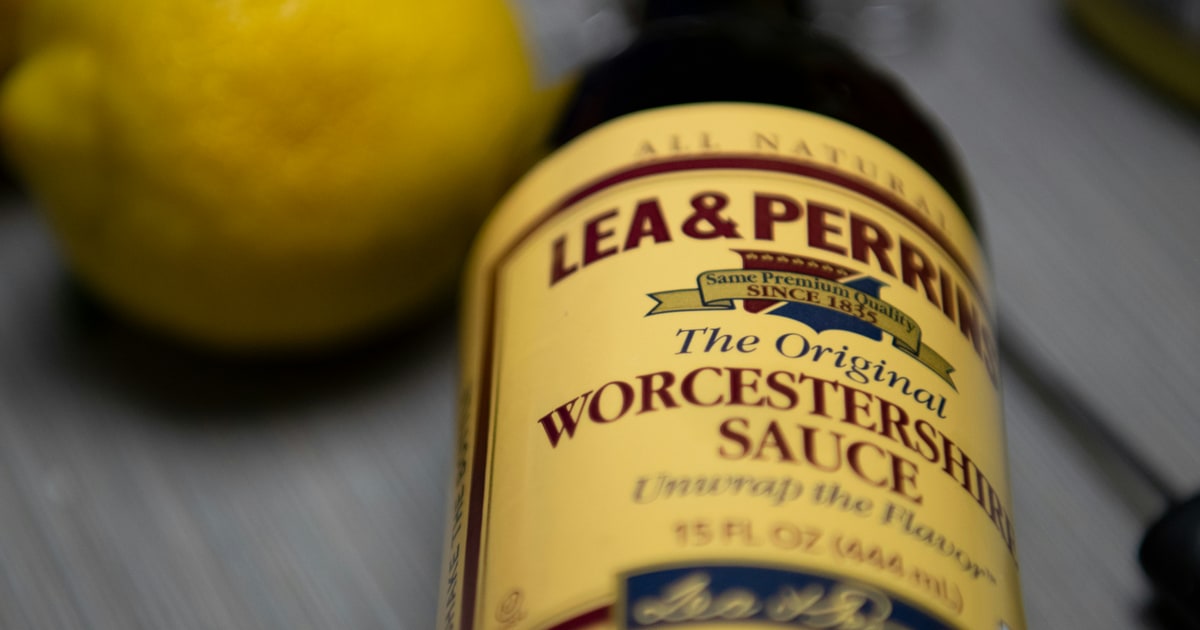
Worcestershire sauce — specifically Lea & Perrins, the original and most widely used variety — is considered halal by the majority of Islamic scholars. The two ingredients that typically raise questions (anchovies and malt vinegar) are, on analysis, both permissible. This verdict is held by Darul Ifta Birmingham, major UK Islamic bodies, and scholarly opinion across all four Sunni madhabs.
What Is Worcestershire Sauce Made From?
The Lea & Perrins recipe includes: malt vinegar, spirit vinegar, molasses, sugar, salt, anchovies, tamarind extract, onions, garlic, spice, and flavouring. The exact recipe is proprietary and the precise “spice and flavouring” components are not disclosed. The two ingredients most commonly queried by Muslim consumers are anchovies and malt vinegar.
Anchovies: Why Fish Is Not a Concern
Anchovies are a small saltwater fish. Fish are halal in Islamic dietary law without requiring zabiha slaughter — they are made permissible simply by being caught. This ruling is consistent across:
- Hanafi madhab: Fish with scales are halal; most scholars include anchovies.
- Maliki madhab: All seafood is generally permitted.
- Shafi’i madhab: Fish are halal.
- Hanbali madhab: Fish are halal.
The presence of anchovies in Worcestershire sauce is not a halal concern. The same logic applies to Caesar dressing and other condiments that use anchovy paste — the fish itself is permissible.
The anchovies in Worcestershire sauce also render it unsuitable for vegetarians and vegans, which is why vegetarian and vegan Worcestershire sauce variants exist (Henderson’s Relish is a common UK alternative). These vegan versions are also halal from an ingredient standpoint.
Malt Vinegar: The Istihalah Principle
Malt vinegar is the ingredient that generates the most scholarly discussion. Understanding why it is halal requires understanding the production process and the Islamic legal principle of istihalah.
How Malt Vinegar Is Made
- Barley is malted — barley grains are germinated to convert starch to sugars.
- Malted barley is fermented — yeast converts sugars to ethanol, producing a type of beer.
- The beer is further fermented with acetobacter bacteria — these bacteria consume the ethanol and produce acetic acid.
- The result is malt vinegar — which contains acetic acid, water, and trace flavour compounds, but no ethanol.
The final malt vinegar product contains no alcohol in any measurable quantity. The ethanol that existed at stage 2 has been completely converted to acetic acid through biological oxidation. This is the principle of istihalah — complete transformation of a substance into something chemically and functionally different.
What Islamic Scholars Say About Vinegar
The permissibility of vinegar is addressed directly in prophetic hadith. A hadith recorded in Sahih Muslim notes that the Prophet (peace be upon him) described vinegar as a good condiment (ni’mal idam al-khall). This hadith is widely cited by scholars to establish that vinegar — including vinegar made from wine — is halal.
The explicit scholarly reasoning is:
- Wine (khamr) is haram because it is intoxicating.
- Vinegar made from wine is halal because the intoxicating substance (ethanol) has been fully converted.
- The same principle applies to malt vinegar — the beer-stage is a transitional step, not the final product.
Scholarly consensus: Darul Ifta Birmingham, IslamQA (Hanafi), and the majority of UK Islamic bodies have issued rulings or guidance treating all vinegar — including malt vinegar and wine vinegar — as halal based on the istihalah principle. This position is confirmed by the Maliki, Shafi’i, and Hanbali madhabs as well.
Does Worcestershire Sauce Contain Alcohol?
Worcestershire sauce is not an alcoholic drink and is not intoxicating. The malt vinegar base contains no ethanol. The final product may contain trace compounds from the vinegar production process, but these are not alcohol and are not intoxicating.
Some versions of Worcestershire sauce also list “spirit vinegar” — this is distilled white vinegar, also halal by the same istihalah principle.
Vegetarian Alternatives: Are They Halal?
Henderson’s Relish (Sheffield-made, widely available in UK supermarkets) is the most popular vegetarian/vegan Worcestershire sauce alternative. It contains no anchovies and no animal products. Its ingredient list includes spirit vinegar, water, sugar, salt, caramel colour, and spices. Henderson’s Relish is halal.
Other vegan Worcestershire sauce brands (Biona, various supermarket own-brands) similarly contain no animal products and use plant-based vinegar. These are also halal.
Worcestershire Sauce in Cooking
Worcestershire sauce is used in many UK dishes and recipes:
- Bolognese — added to meat sauce
- Beef stew and casseroles — added for depth of flavour
- Bloody Mary — a cocktail (which itself is haram due to vodka content, but Worcestershire sauce’s presence in the recipe is sometimes cited as a concern)
- Cheese on toast / Welsh rarebit — common UK usage
- Marinades — for grilled meats
In all cooking applications, the sauce is permissible. The Bloody Mary point is worth clarifying: the vodka in a Bloody Mary makes the cocktail haram, not the Worcestershire sauce. The sauce itself in a permissible dish is fine.
Summary
| Factor | Detail |
|---|---|
| Anchovies | Fish — halal across all madhabs |
| Malt vinegar | Halal by istihalah — ethanol fully converted to acetic acid |
| Spirit vinegar | Halal by the same principle |
| Pork content | None |
| Alcohol in final product | None — not intoxicating |
| Verdict | Halal (majority scholarly position) |
| Vegan alternative (Henderson’s Relish) | Halal |
Check any E-code from a condiment label in the E-codes database. Scan a full ingredient list with the ingredient scanner.
How we reached this verdict
- Darul Ifta Birmingham: Specific rulings on malt vinegar and Worcestershire sauce reviewed.
- IslamQA Hanafi and Shafi’i sources: Istihalah principle and its application to vinegar confirmed.
- Sahih Muslim hadith: Prophetic ruling on vinegar reviewed.
- Lea & Perrins ingredient list: Reviewed for pork, haram additives, and alcohol.
Madhab note
All four Sunni madhabs hold that vinegar — including vinegar derived from wine or beer — is halal by the principle of istihalah (complete chemical transformation). This is one of the clearest cross-madhab consensus points in halal food jurisprudence. On anchovies: all four madhabs permit fish without zabiha slaughter. There is no dissenting scholarly opinion of substance on the halal status of Worcestershire sauce from a major madhab.
Ingredients change. Be first to know.
Brands reformulate without warning. We track every E-code update and halal certification — one short weekly email.
Related Articles
 Ingredient Guides
 Is Sriracha Halal? A Guide to Halal Hot Sauces
Is sriracha halal? Most sriracha sauces are plant-based and halal — but not all. Here's what to check and the best verified halal hot sauces to buy.
 Ingredient Guides
 Is Vinegar Halal? Malt, Wine, Balsamic & Rice Vinegar (2026)
All vinegars undergo complete transformation from alcohol to acetic acid through istihalah. Malt, wine, balsamic, and rice vinegar are all halal. Full scholarly analysis.
 Ingredient Guides
 Is Oyster Sauce Halal? Brands Checked & Halal Alternatives (2026)
Oysters are seafood — halal across all four Sunni madhabs. Lee Kum Kee has halal-certified variants. Most major brands offer halal options in Muslim-majority markets.