
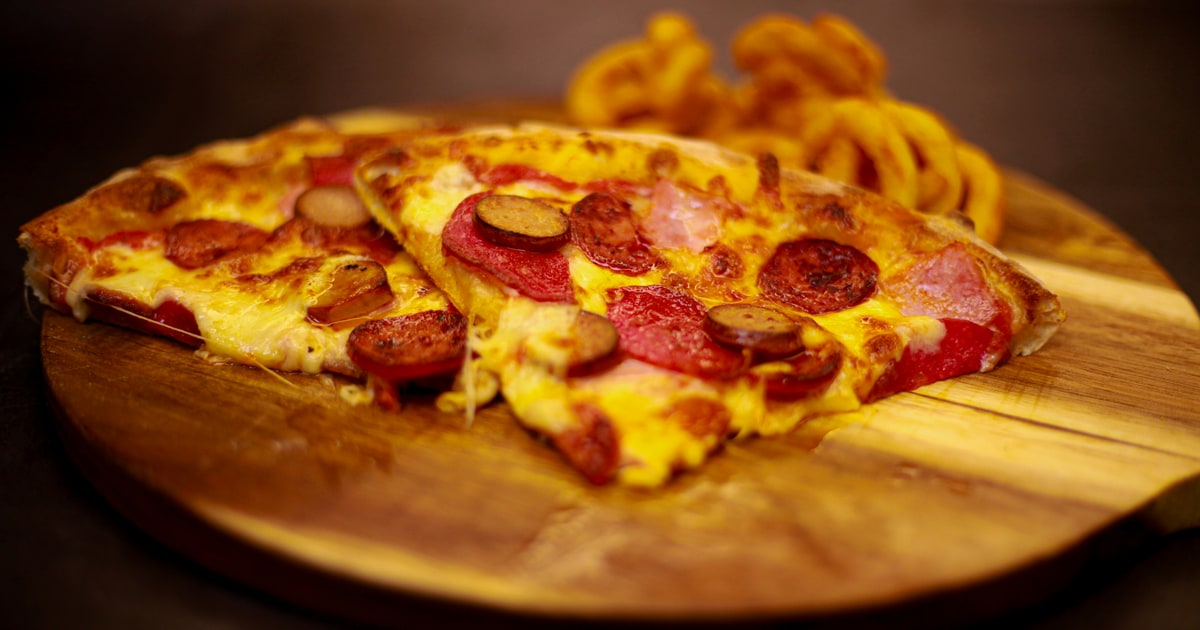
The verdict is straightforward: standard pepperoni is pork, and pork is haram. This is not a grey area — pepperoni originated as a cured pork product and the overwhelming majority of pepperoni sold in UK and US supermarkets and pizza chains is pork-based. Beef and turkey pepperoni exist as alternatives, but they must be halal-certified to be permissible, and most are not.
What Is Pepperoni Made From?
Pepperoni is an American-Italian cured sausage seasoned heavily with paprika and chili. The traditional recipe uses pork — typically a mixture of pork trimmings and pork fat. In both the UK and the US, most pepperoni sold at retail and used by pizza chains follows this same recipe.
The pork content is not incidental. Pork fat contributes to pepperoni’s distinctive greasy texture when it melts on a pizza. There is no process of transformation (istihalah) that can render pork-based pepperoni halal — the pork remains pork throughout curing, fermentation, and cooking.
Why Pizza Chain Pepperoni Is a Particular Problem
The pepperoni question becomes more complex at pizza chains because:
- The default topping is pork — chains source standard pepperoni at scale, and the default product is invariably pork.
- Cross-contamination — even where a branch stocks halal toppings, preparation on shared surfaces and with shared tools means non-halal contamination is a real risk.
- “Halal branch” claims vary — some chains designate certain branches as fully halal; others offer a “halal menu” without full kitchen segregation. These are very different things.
UK Chain Breakdown
| Chain | Default Pepperoni | Halal Options? |
|---|---|---|
| Domino’s | Pork — Haram | Selected halal branches only; confirm with branch |
| Pizza Hut | Pork — Haram | Selected halal menus; cross-contamination risk on shared lines |
| Papa John’s | Pork — Haram | No dedicated halal certification at most UK branches |
| Pizza Express | Pork — Haram | No halal pepperoni option in standard menu |
| Local halal pizza shops | Beef or chicken — check cert | Usually halal-certified; verify on site |
US Chain Breakdown
| Chain | Default Pepperoni | Halal Options? |
|---|---|---|
| Domino’s | Pork — Haram | Not halal-certified in the US |
| Pizza Hut | Pork — Haram | Not halal-certified in the US |
| Papa John’s | Pork — Haram | No halal certification in the US |
| Local halal pizza shops | Beef or chicken — check cert | Concentrated in cities with larger Muslim populations (Dearborn, Chicago, NYC, LA); verify on site |
US pizza chains do not carry blanket halal certification the way some Middle East or South Asia franchise locations do. Treat every US chain location as non-halal by default unless a specific branch states otherwise.
The safest option when eating pizza outside the home is a dedicated halal establishment where the entire kitchen operates under halal certification.
Supermarket Pepperoni: Reading the Label
In UK supermarkets — Tesco, Sainsbury’s, Asda, Morrisons — the vast majority of pepperoni products are pork. In US supermarkets — Walmart, Kroger, Whole Foods, Safeway, Trader Joe’s — the picture is the same: the label will list “pork” as the primary ingredient. There is no ambiguity: if pork is listed, the product is haram.
A minority of supermarkets now stock beef pepperoni. For these products:
- Check for pork additives — some beef pepperoni products include pork fat or pork-derived casings. The full ingredient list must be pork-free.
- Check for halal certification — beef is permissible only if slaughtered according to Islamic rites. A generic “beef pepperoni” label does not guarantee halal slaughter. Look for an HMC, HFA, JAKIM logo in the UK, or an IFANCA, ISNA, or ICNA-Halal logo in the US.
- Check the casing — traditional sausage casings are made from animal intestines. For halal pepperoni, the casing must be from a halal animal or be collagen/plant-based.
Halal Pepperoni Brands (UK & US)
Tahira (UK)
Tahira produces a range of halal-certified deli meats including beef pepperoni. The brand is widely distributed in UK halal supermarkets and some mainstream retailers in areas with significant Muslim populations. Products carry recognised UK halal certification. Check the pack for the current certifying body logo.
Midamar (US)
Midamar is a Cedar Rapids, Iowa producer founded in 1974, ISA-certified (Islamic Services of America) and USDA-inspected, and sells zabiha halal all-beef pepperoni (sliced and stick formats) online and in halal grocery stores nationwide.
Springer’s Meats (US)
Springer’s Meats produces IFANCA-certified all-beef pepperoni, sold through halal-focused retailers and foodservice suppliers.
Own-Brand Halal Deli Sections
Some larger Asda, Tesco, and Morrisons stores in the UK — and Whole Foods or independent halal markets in the US — stock halal-certified pepperoni alternatives in dedicated halal sections, separate from the main deli counter.
E-Codes and Additives in Pepperoni
Standard pepperoni may also contain:
- E250 (sodium nitrite) — a preservative used in cured meats. Sodium nitrite itself is a mineral salt — halal. The concern with pepperoni is the pork base, not the E250.
- E252 (potassium nitrate) — similarly a mineral preservative, halal in isolation.
- Pork casings — traditional pepperoni is sold in pork intestine casings. Even beef pepperoni can be cased in pork intestine unless specified otherwise. Always check.
- Natural flavourings — in pork pepperoni, flavourings may themselves be derived from pork. In certified halal products this is controlled.
Making Informed Choices
The simplest rule: never assume pepperoni is halal. Even in contexts where the rest of the food is halal, the pepperoni specifically must be verified.
When ordering pizza:
- Ask explicitly whether the pepperoni is pork or beef.
- Ask whether the branch holds halal certification (not just whether they “have halal options”).
- Ask whether preparation equipment is segregated.
When buying at retail:
- Read the full ingredient list — pork must not appear anywhere.
- Look for a halal certification logo from a recognised body.
- Contact the manufacturer if the casing material is not listed.
Summary
| Factor | Detail |
|---|---|
| Standard pepperoni | Pork — Haram |
| Beef pepperoni (uncertified) | Mushbooh — slaughter method unverified |
| Beef pepperoni (halal-certified) | Halal — verify certification logo |
| Pizza chain pepperoni | Pork — Haram at most major UK and US chains |
| Halal UK brands | Tahira |
| Halal US brands | Midamar, Springer’s Meats |
| Key check | Full ingredient list + certification logo on pack |
Use the E-codes database to look up any additives on a pepperoni label. Scan a full ingredient list instantly with the ingredient scanner.
How we reached this verdict
Sources consulted for this guide:
- UK halal certification bodies (HMC, HFA): Confirmed that standard pepperoni is pork-based and that beef pepperoni requires independent slaughter certification.
- US halal certification bodies (IFANCA, ISA): Confirmed Midamar’s ISA certification (Midamar FAQ, re-checked August 2026) and Springer’s Meats’ IFANCA certification for their respective beef pepperoni lines.
- Manufacturer labelling: UK and US supermarket pepperoni ingredient lists reviewed for pork content.
- Sunni fiqh consensus: Pork is haram across all four Sunni madhabs without exception. No istihalah argument applies to cured pork products.
Madhab note
All four Sunni madhabs — Hanafi, Maliki, Shafi’i, and Hanbali — are in complete agreement that pork is haram. There is no scholarly disagreement on this point. For beef pepperoni, the Hanafi mainstream and HMC/HMC-strict positions diverge only on the standard of certification required for the beef slaughter, not on whether certification is required at all.
Ingredients change. Be first to know.
Brands reformulate without warning. We track every E-code update and halal certification — one short weekly email.
Related Articles
 Ingredient Guides
 Is Salami Halal? Pork, Beef & Turkey Variants Explained (2026)
Traditional salami is pork and haram. Turkey and beef salami exist but must be halal-certified. Full UK supermarket guide with HMC, HFA and JAKIM certification advice.
 Ingredient Guides
 Is Pepperami Halal? Unilever UK Ingredients Checked (2026)
Pepperami contains pork salametti — it is haram. Made by Unilever. No halal version is available in the UK. Full ingredient analysis and halal snack alternatives.
 Ingredient Guides
 Is Cat Food Halal? What Muslim Cat Owners Need to Know
Cats don't have to eat halal — but buying cat food containing pork or carrion is where scholars differ. The full ruling, plus what's actually in the tin.