
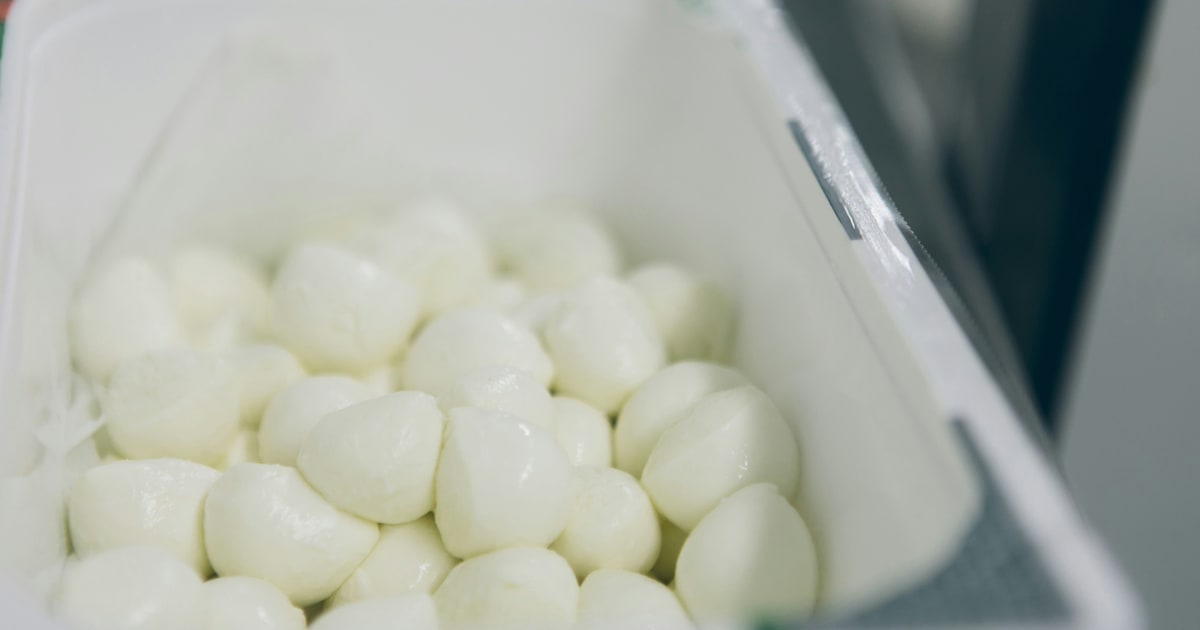
Mozzarella is one of the most widely consumed cheeses in the UK — on pizza, in salads, in wraps, melted in pasta. The halal question comes down to one ingredient: rennet. And for mozzarella, the answer is more accessible than for many hard cheeses, because the practical test is straightforward.
How Mozzarella Is Made
Mozzarella is a stretched-curd (pasta filata) cheese. Milk is coagulated using rennet, the curds are cut and heated, then stretched and shaped into balls or blocks.
The rennet used can be:
- Animal rennet (calf, kid, or lamb) — Mushbooh without zabiha verification
- Microbial rennet — halal
- Fermentation-produced chymosin (FPC) — halal (over 90% of commercial cheese in the UK now uses FPC)
For mozzarella produced in the UK or by mainstream European manufacturers, most commercially produced blocks and balls now use microbial or FPC rennet. The signal on the label is the vegetarian mark.
The Vegetarian Mark Rule
When mozzarella packaging says “suitable for vegetarians”, it means:
- The cheese was not made with calf, lamb, or pig rennet
- Rennet is microbial or FPC (both halal)
- The concern about animal rennet is resolved
This makes mozzarella one of the easier cheeses to assess in supermarkets — look for the vegetarian symbol, and you are done on the rennet question.
UK Supermarket Mozzarella
Tesco Mozzarella
Tesco own-brand mozzarella (both standard and light) typically carries a vegetarian mark. Verdict: Halal when vegetarian mark is present.
Sainsbury’s Mozzarella
Sainsbury’s own-brand mozzarella also carries a vegetarian mark across its standard range. Verdict: Halal when confirmed on current label.
ASDA Mozzarella
ASDA own-brand mozzarella — check the current label. Most lines carry vegetarian marks. Verdict: Halal if vegetarian-labelled.
Morrisons Mozzarella
Same position. Verify the current label for a vegetarian mark. Most standard lines are vegetarian-labelled.
Galbani Mozzarella (Lactalis)
Galbani is an Italian brand widely sold in UK supermarkets. Galbani Mozzarella carries a vegetarian mark on the UK-sold product, confirming microbial rennet. Verdict: Halal.
Galbani does not carry a halal certification mark but the vegetarian label resolves the rennet concern.
Buffalo Mozzarella: The More Complicated Case
Mozzarella di Bufala Campana is a PDO-protected cheese made from the milk of Italian water buffalo in the Campania region of Italy. Unlike Parmigiano-Reggiano, the PDO rules for Mozzarella di Bufala do not explicitly mandate animal rennet — but traditional production uses calf or kid rennet, and many producers continue this practice.
Some Mozzarella di Bufala producers have adopted microbial rennet. The way to identify these is: look for the vegetarian mark. If a buffalo mozzarella label carries “suitable for vegetarians,” the rennet is non-animal.
If there is no vegetarian mark on a premium or imported buffalo mozzarella, treat it as Mushbooh.
Buffalo mozzarella balls sold in UK supermarkets (Galbani Buffalo, Waitrose own-brand buffalo) often carry vegetarian marks — check the current label.
Pizza Mozzarella and Grated Mozzarella
Low-moisture mozzarella blocks and grated mozzarella used on pizza frequently contain:
- Rennet — apply vegetarian mark test
- E460 (microcrystalline cellulose) — anti-caking in grated products; plant-derived, halal
- E462 (ethyl cellulose) or similar anti-caking agents — generally halal
- Potato starch — used as an anti-clumping agent; halal
The rennet is still the primary halal concern. Grated mozzarella from Kraft, Tesco, and own-brands — check for vegetarian marks. Most mainstream grated mozzarella in UK supermarkets carries one.
Smoked Mozzarella (Scamorza)
Scamorza is a smoked stretched-curd cheese similar to mozzarella. Apply the same test — look for a vegetarian mark to confirm non-animal rennet. The smoking process itself is halal; the rennet question remains.
Vegan Mozzarella
Vegan mozzarella alternatives (Violife, Sheese, Mozzarisella) avoid all rennet concerns entirely. They are made from plant-based proteins and plant fats. No E471 from animal sources, no rennet.
Verdict: Halal for all vegan mozzarella, subject to a quick check that no other problematic additives are present.
Mozzarella on Restaurant Pizza
When ordering pizza, you cannot verify the rennet source of the mozzarella used. Most large pizza chains (Pizza Hut, Domino’s) use commercially produced mozzarella — which is likely microbial-rennet based in the UK, but not certified. For strict halal compliance, ordering from a halal-certified pizza restaurant is the only assured option. The same undisclosed-rennet question applies at the harder end of the cheese aisle too — see parmesan and the PDO Italian hard cheeses, where animal rennet is mandated by law.
For Domino’s specifically, see our dedicated post on Is Domino’s Pizza Halal?
E-Codes in Mozzarella
Standard fresh mozzarella has almost no additives. Processed pizza mozzarella may contain:
| Additive | Purpose | Halal status |
|---|---|---|
| E460 (microcrystalline cellulose) | Anti-caking | Halal |
| E1422 (acetylated distarch adipate) | Thickener | Halal |
| E415 (xanthan gum) | Stabiliser | Halal |
| Salt | Preservative | Halal |
The rennet is the only primary concern in standard mozzarella.
Summary Table
| Factor | Detail |
|---|---|
| Main concern | Animal rennet (calf or kid) |
| Practical test | ”Suitable for vegetarians” label = microbial/FPC rennet = halal |
| UK supermarket mozzarella | Generally halal — most carry vegetarian marks |
| Galbani | Carries vegetarian mark — halal |
| Buffalo mozzarella | Check for vegetarian mark; traditional production uses animal rennet |
| Vegan mozzarella | Halal — no rennet, plant-based |
| Verdict | Halal if vegetarian-labelled; Mushbooh if no vegetarian mark |
Check any mozzarella label with Verify Ingredients or search E-codes in the E-codes database. For the full guide on rennet, see Is Rennet Halal?
See this exact ambiguity play out on a real product in Is Michael Angelo’s Eggplant Parmesan Halal?, where three separate “enzymes” cheeses repeat the same undisclosed-rennet question.
Ingredients change. Be first to know.
Brands reformulate without warning. We track every E-code update and halal certification — one short weekly email.
Related Articles
 Ingredient Guides
 Is Processed Cheese Halal? Rennet, Emulsifying Salts and UK Brand Audit (2026)
Two separate issues: rennet source in the cheese itself, and emulsifying salts (E339, E450, E452) in processed slices. Dairylea, Kraft Singles, Philadelphia, Babybel — all checked.
 Ingredient Guides
 Is Parmesan Halal? PDO Rules & Rennet Explained (2026)
PDO Parmigiano-Reggiano must use animal rennet by Italian law — it is Mushbooh or Haram. Generic parmesan may use microbial rennet. The vegetarian mark is the test.
 Ingredient Guides
 Is Cheddar Cheese Halal? Rennet & UK Brands Checked (2026)
Cheddar cheese halal status depends on the rennet type. Cathedral City uses animal rennet. Pilgrim's Choice uses microbial. Here's how to check any brand.