
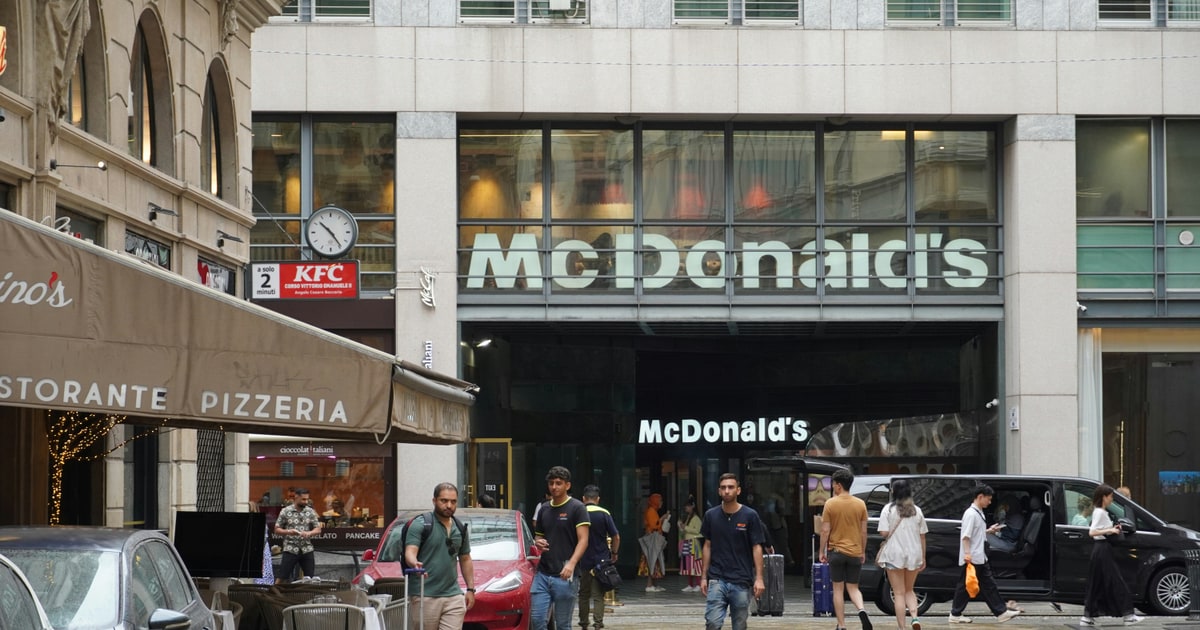
Is McDonald’s Halal?
McDonald’s is not halal certified in the United Kingdom, the United States, Canada, or Australia. The chicken, beef, and other meat products served at McDonald’s in these countries are not sourced from animals slaughtered according to Islamic dietary law. This is a firm position confirmed by McDonald’s UK itself, which has addressed the question directly on its website and customer service channels.
For Muslims living in Western countries, the conclusion is straightforward: standard McDonald’s restaurants are not a halal option. The absence of halal certification means there is no independent Islamic body verifying the slaughter method, supply chain, or cross-contamination controls.
McDonald’s UK Halal Status
McDonald’s UK has been unambiguous on this point. Their chicken and beef suppliers do not follow halal slaughter practices. The company has stated that their food is not suitable for customers who require halal meat.
There have been occasional rumours circulating on social media claiming that certain McDonald’s UK outlets serve halal meat, particularly in areas with large Muslim populations. These claims are false. McDonald’s UK operates a standardised supply chain and does not maintain halal-certified locations anywhere in Great Britain.
Additionaly, some non-meat ingredients — such as cheese, sauces, and bread — may contain E-codes or additives derived from animal sources that are not halal verified. The McFlurry and ice cream products use standard dairy with no halal assurance. Even the Filet-O-Fish, while using fish, is fried in shared fryers alongside non-halal meat products.
What to Order / What to Avoid
Avoid at McDonald’s UK:
- All beef burgers (Big Mac, Quarter Pounder, McDouble)
- All chicken products (McNuggets, McChicken Sandwich, McWings)
- Breakfast items with meat (McMuffins, sausage patties, bacon)
- Shared fryer items (fries are fried in vegetable oil but share kitchen space)
Potentially permissible (no halal guarantee):
- Vegetarian options like the McPlant (plant-based, no halal cert but no meat)
- Apple slices, fruit bags
- Bottled water and soft drinks
Even for plant-based options, note that McDonald’s does not certify these as halal or vegetarian-safe from cross-contamination, and kitchen practices vary by location.
McDonald’s Halal Status by Country
| Country | Halal Status |
|---|---|
| United Kingdom | Not halal certified |
| United States | Not halal certified |
| Canada | Not halal certified |
| Australia | Not halal certified |
| Saudi Arabia | Fully halal certified |
| UAE | Fully halal certified |
| Malaysia | Fully halal certified (JAKIM) |
| Indonesia | Fully halal certified (MUI) |
| Pakistan | Fully halal certified |
| Egypt | Fully halal certified |
| Turkey | Fully halal certified |
In Muslim-majority markets, McDonald’s typically operates under strict halal certification from local Islamic authorities. Pork is not served and the entire menu is halal compliant. If you are travelling to these countries, McDonald’s is a safe option.
Ingredients & E-Code Check
Several McDonald’s products contain food additives worth checking for Muslim consumers:
E471 (Mono- and diglycerides of fatty acids) — Found in McDonald’s buns and some sauces. This additive can be derived from animal fat. Without halal certification, the source cannot be confirmed as halal.
E472e (Diacetyl tartaric acid esters of mono- and diglycerides) — Used in some bakery products. Same concern as E471 regarding animal-derived sourcing.
E120 (Cochineal / Carmine) — A red colourant derived from insects, classified as haram by most Islamic scholars. Check if present in any sauces or dressings.
E631 (Disodium inosinate) — A flavour enhancer that may be derived from meat or fish. Requires halal sourcing to be permissible.
McDonald’s does not disclose halal status for individual additives in its UK products. The safest position for observant Muslims is to avoid McDonald’s in non-certified markets.
BDS / Boycott Status
McDonald’s has become a significant target of the Boycott, Divestment and Sanctions (BDS) movement among Muslim consumers, particularly following events in Gaza from late 2023 onward.
The key facts:
- McDonald’s Israel franchise (Alony-Hetz) operates hundreds of restaurants across Israel, including locations in disputed territories.
- In October 2023, McDonald’s Israel announced it was providing free meals to Israeli military personnel and first responders. This announcement was widely circulated and triggered a major consumer boycott campaign globally.
- McDonald’s Corporation later clarified that this was a decision by the Israeli franchisee, not corporate headquarters, and that the company supports all communities.
- Despite this clarification, the boycott campaign #BoycottMcDonalds gained significant traction on social media and affected McDonald’s sales figures, which the company acknowledged in its 2024 earnings calls.
- In some markets, McDonald’s reported noticeable sales declines attributed in part to the boycott among Muslim consumers.
The BDS boycott decision is a personal and religious choice for each Muslim consumer. Halal certification status and BDS boycott status are separate considerations — a restaurant can be halal certified but still be subject to a boycott, or vice versa.
For McDonald’s in Western markets, both factors point in the same direction: no halal certification and active BDS campaigning.
Summary
| Factor | Detail |
|---|---|
| Halal Certification (UK) | No — not certified |
| Halal Certification (US) | No — not certified |
| Halal Certification (Middle East/SE Asia) | Yes — fully certified |
| Meat Sourcing (UK) | Non-halal slaughter |
| Shared Fryers | Yes — cross-contamination risk |
| BDS Boycott | Active — Israel franchise controversy |
| Verdict (UK/US) | Not halal — avoid meat products |
| Verdict (Muslim-majority countries) | Halal certified — safe |
Bottom line: If you are in the UK, US, Canada, or Australia, McDonald’s is not halal. If you are in Saudi Arabia, Malaysia, Pakistan, or similar markets, McDonald’s is fully halal certified. Always verify locally, as certifications can change.
Ingredients change. Be first to know.
Brands reformulate without warning. We track every E-code update and halal certification — one short weekly email.
Related Articles
 Shopping Guides
 Best Halal Restaurant Chains USA 2026
We checked four US restaurant chains with multi-city presence. The Halal Guys names three certifiers directly — but a widely repeated certification claim about Dave's Hot Chicken doesn't hold up.
 Shopping Guides
 Best Halal Burgers in Chicago 2026
Ten halal burger spots in Chicago and its suburbs, sorted by proof: HMS registry, certificate on the wall, owner's word, or halal on request only.
 Shopping Guides
 Is Subway Halal? How to Find Halal Stores Worldwide (2026)
Some Subway UK locations are dedicated halal stores with certified meat. Learn how to find them, what's on the halal menu, and Subway's global halal status.