
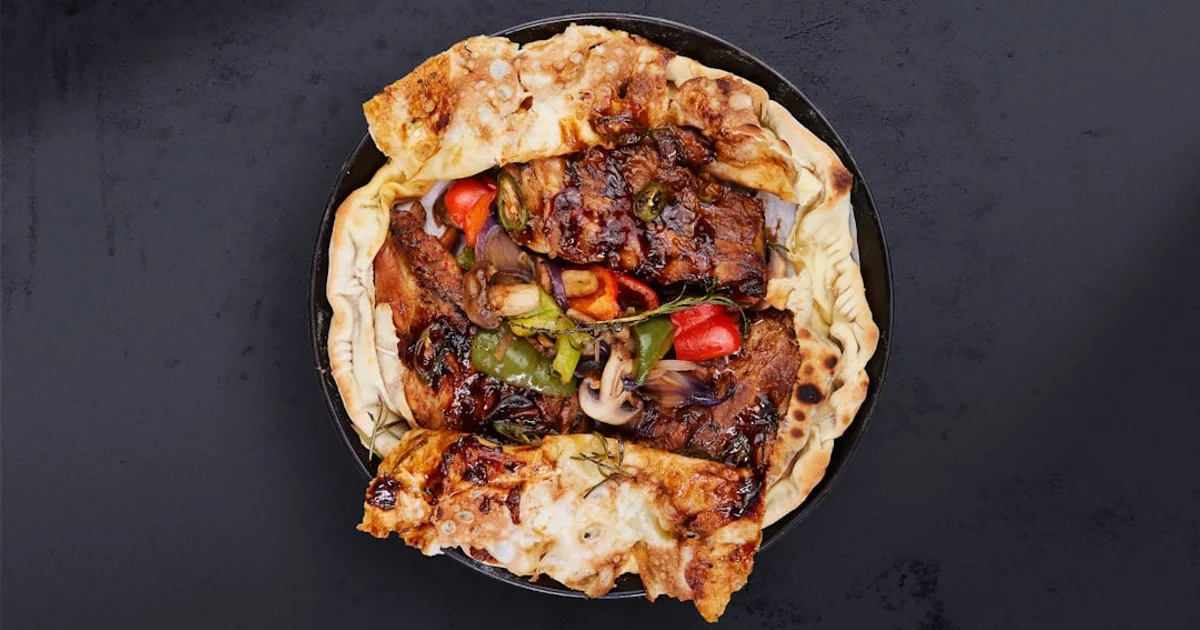
A halal certification claim for Dave’s Hot Chicken — a 700-plus-location national chain — shows up across half a dozen SEO listicle sites. None of them are Dave’s Hot Chicken’s own site. We checked four US restaurant chains with real multi-city presence directly against their own primary sources, not third-party listicles.
Why “Halal Fast Food Chain” Claims Need Extra Scrutiny
Restaurant halal claims are harder to verify than packaged food. A packaged product has one formulation and one label. A restaurant chain has franchisees, regional suppliers, and — often — locations that source meat differently from the corporate standard. A single certifying body named on a corporate site doesn’t always mean every location follows it uniformly, and the reverse is also true: a chain with zero corporate halal messaging can still have individual halal-focused locations.
That gap is exactly where SEO content farms fill in the blanks. Search “is [chain] halal” for almost any fast-food brand and you’ll find dozens of near-identical articles confidently naming a certifying body — sourced from nothing we could find on the brand’s own site. We checked four chains with real multi-city US footprints directly against their own pages.
What We Checked, and What We Found
Verified: names certifying bodies directly
The Halal Guys — the clearest case in this roundup. Its own site names three certifying bodies directly — Halal Food Council, ISNA Canada, and IFANCC — with certification documents linked from each certifier’s logo. Started as a single food cart in Manhattan, now operating in roughly 19 US states with the largest footprint in Texas. This is a genuinely national, verifiably certified chain.
Claimed but not certifier-named
Naz’s Halal — “halal” is in the brand name itself, and the chain has grown to more than 60 US locations coast-to-coast starting from a single cart in Queens. Its own site, however, does not name a specific certifying body anywhere we could find. That doesn’t mean the claim is false — a brand built entirely around “halal” as its identity has an obvious reputational incentive not to misrepresent it — but it’s a claim, not a verified certification the way The Halal Guys’ page is.
Unconfirmed on the brand’s own site
Elevation Burger — described in local reporting and location-review sites as sourcing halal-certified chicken at some locations, with a sticker some operators choose to display. This reads as a per-location or per-operator decision rather than a single corporate halal policy, and no certifying body is named anywhere we could confirm. Ask the specific location directly.
The claim that didn’t hold up
Dave’s Hot Chicken — a specific claim (certification through Halal Transactions of Omaha, at every US location) appears across multiple third-party listicle sites with near-identical wording. We checked Dave’s Hot Chicken’s own official site directly: no mention of halal certification, HTO, or halal status anywhere on it. We’re not saying no individual Dave’s Hot Chicken location ever sources halal chicken — only that the specific, confident, chain-wide certification claim circulating online does not trace back to anything the company itself states.
Comparison Table
Looking for independents rather than chains? Our Chicago halal burgers guide sorts ten local spots by certifier.
| Chain | Certification Status | What We Found |
|---|---|---|
| The Halal Guys | Certified — named on own site | Halal Food Council, ISNA Canada, IFANCC; certificates linked directly |
| Naz’s Halal | Claimed, no certifier named | 60+ US locations; “halal” in the brand name itself |
| Elevation Burger | Unconfirmed, inconsistent | Some locations claim halal sourcing; no company-wide certifying body found |
| Dave’s Hot Chicken | Not confirmed on own site | Widely repeated third-party certification claim doesn’t appear on the brand’s own site |
What to Ask Before Trusting a “Halal Chain” Claim
- Does the chain’s own site name a certifying body? Only The Halal Guys does, of the four checked here.
- Is the claim from the brand itself, or from a review/listicle site repeating a claim with no traceable source? The Dave’s Hot Chicken example in this guide shows how far an unsourced claim can spread.
- Is halal status uniform across all locations, or franchise/operator-dependent? Ask the specific location, especially for chains without a single named corporate certifier.
- Does “halal” in the brand name substitute for a certification? It’s a strong signal of intent, as with Naz’s Halal, but it isn’t the same as a named, checkable certifying body.
Summary
| Question | Answer |
|---|---|
| Which chain is genuinely certified and verifiable? | The Halal Guys — Halal Food Council, ISNA Canada, IFANCC named on its own site |
| Which chain claims halal without naming a certifier? | Naz’s Halal — 60+ US locations, “halal” in the name |
| Which chain’s certification claim online doesn’t check out? | Dave’s Hot Chicken — no halal mention on the brand’s own official site |
| Does halal status vary by location for any of these? | Elevation Burger appears to be per-location, not a uniform corporate policy |
To check any packaged sauce, side, or ingredient a restaurant chain uses, look it up in the E-codes database.
How we reached this verdict
We checked the following before publishing this guide:
- Each chain’s own official site, fetched directly (August 2026), specifically looking for a named certifying body, certificate, or explicit halal statement — not third-party listicle sites, several of which repeated a specific, confident Dave’s Hot Chicken certification claim that does not appear anywhere on the brand’s own domain.
- The Halal Guys’ dedicated certification page, which links certification documents directly from each named certifier’s logo.
- What we explicitly could not confirm: any named certifying body for Naz’s Halal or Elevation Burger, and the accuracy of the widely-circulated Dave’s Hot Chicken claim.
Madhab note
Restaurant certification in the US generally follows the same zabiha (hand slaughter with tasmiyah) standard covered in our US halal meat delivery guide — this is the standard IFANCC, ISNA Canada, and similar bodies certify against, and it is accepted across all four Sunni madhabs as the strictest and most widely recognised standard. None of the four chains in this guide disclose their kitchen-sharing or cross-contamination practices in the detail some UK chains do — ask directly at the specific location if that distinction matters to your standard.
Run a certified halal brand that belongs in this guide?
Get featured here and across HalalCodeCheck — reach shoppers at the moment they verify.
Ingredients change. Be first to know.
Brands reformulate without warning. We track every E-code update and halal certification — one short weekly email.
Related Articles
 Shopping Guides
 Best Halal Burgers in Chicago 2026
Ten halal burger spots in Chicago and its suburbs, sorted by proof: HMS registry, certificate on the wall, owner's word, or halal on request only.
 Shopping Guides
 Halal Food in Columbus (2026): Morse Road & WeGotMeat
Find halal food in Columbus across Morse Road, Northland and the OSU corridor, plus WeGotMeat, Somali restaurants, grocers and halal meat options.
 Shopping Guides
 Halal Food in Minneapolis (2026): Cedar-Riverside & Karmel Mall
Find halal food in Minneapolis across Cedar-Riverside, Karmel Mall and Central Avenue, plus Somali restaurants, certified grocers and halal meat options.