
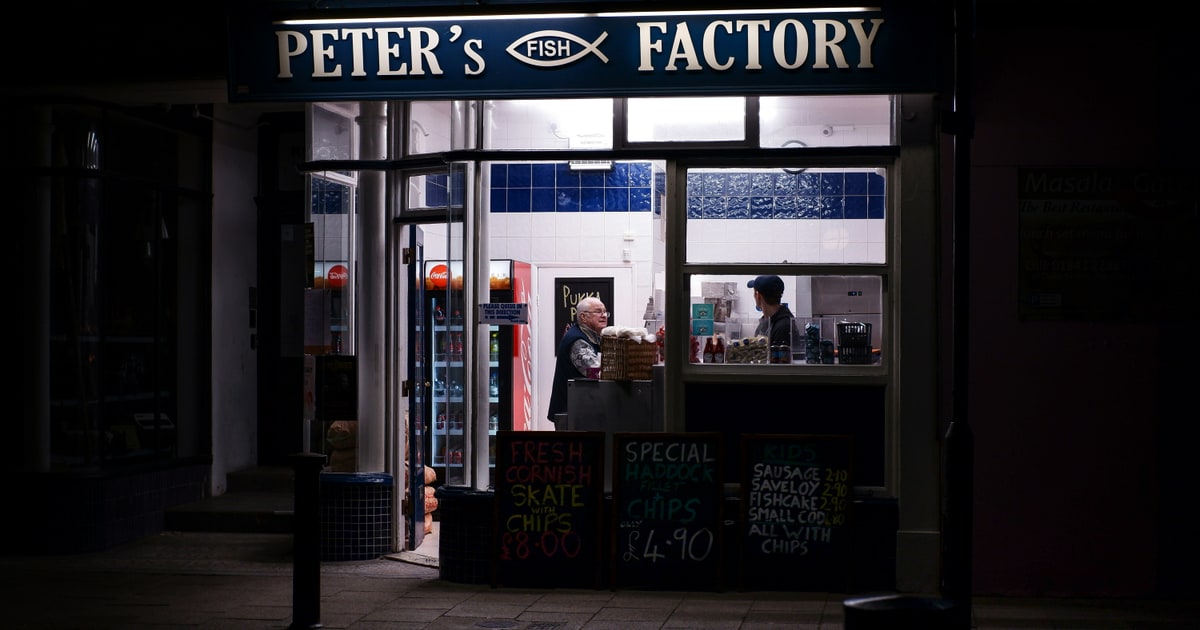
Fish is halal — but at most UK chip shops, it is not being served in a halal context. The fish itself (cod, haddock, plaice, pollock) is permissible across all schools of Islamic jurisprudence. The problem is what the fish is cooked in, what the batter contains, and what else shares the fryer. A piece of halal fish fried in oil that has cooked pork sausages and battered black pudding is no longer permissible for the overwhelming majority of scholars.
Why Fish Is Halal
Fish that live in water and have fins and scales are halal for all four Sunni madhabs. This covers the most common UK chip shop fish:
- Cod — halal
- Haddock — halal
- Plaice — halal
- Pollock — halal
- Skate — halal (a cartilaginous fish — some scholars note; but all four madhabs permit it)
- Rock salmon (dogfish) — halal
The Hanafi madhab, followed by most UK Muslims of South Asian background, permits all fish with scales and fins. The Maliki, Shafi’i, and Hanbali madhabs also permit fish broadly — with some madhab-specific notes on shellfish that do not apply to common chip shop fish.
Fish does not require zabiha slaughter. It is made permissible simply by being caught — no ritual slaughter is required.
The Shared Oil Problem
This is the central issue at standard UK chip shops. A typical chip shop fryer contains oil that is used to fry:
- Fish (halal ingredient)
- Chips (halal)
- Sausages (pork — haram)
- Battered chicken (may not be halal-slaughtered)
- Black pudding (pork blood — haram)
- Mushy peas (halal, but cooked in a shared context)
- Battered Mars bars (halal ingredients in isolation)
When pork sausages or black pudding are fried in the same oil as fish, that oil becomes contaminated with pork derivatives. Fish subsequently fried in that oil is impermissible. This is not a matter of physical visibility — it is a matter of what the oil has absorbed.
The majority scholarly position: oil that has cooked pork-based products is no longer pure (tahir), and food subsequently cooked in it is not permissible. This position is held across Hanafi, Shafi’i, and Hanbali scholarship. The Maliki position on oil contamination is somewhat more nuanced but reaches broadly the same practical conclusion for this scenario.
Beer Batter: The Second Risk
Many UK chip shops advertise “traditional beer batter.” Beer batter is made by mixing flour with actual beer — a haram alcoholic drink — to create a light, crispy coating. When beer is used as a batter ingredient:
- The alcohol does not fully evaporate during cooking. Studies on cooking and alcohol retention show that shallow-frying retains a meaningful percentage of added alcohol, and deep-frying at typical chip shop temperatures similarly retains some.
- Even if the alcohol evaporated completely, some scholars consider food prepared with alcohol (even if the alcohol is gone) to be impermissible because it was an ingredient at the point of preparation.
- Beer itself is haram; using it as a cooking ingredient is using a haram substance in food preparation.
Plain batter (flour, water, salt, sometimes vinegar) is permissible. Always ask chip shops whether they use beer batter or plain batter.
Chip Shops Without the Concerns: What to Ask
When visiting a chip shop, ask these specific questions:
- “Do you have a separate fryer for fish and chips?” — If yes, ask whether anything non-halal is ever fried in that fryer.
- “What is in your batter?” — If beer is in the batter, the fish is impermissible.
- “Do you fry sausages or black pudding in the same oil as the fish?” — This is the cross-contamination question.
- “Are you a halal-certified chip shop?” — A direct question that cuts through ambiguity.
Many chip shop owners are not aware of these concerns and will give honest answers. The answers will tell you whether the establishment can safely serve Muslim customers.
Dedicated Halal Fish and Chip Shops
Across the UK, particularly in cities with large Muslim communities, there are fish and chip shops that operate fully halal kitchens:
- Separate frying equipment for fish and chips
- No pork products on the premises
- Plain batter only (no beer)
- Often halal-certified by a local mosque or certification body
These establishments can usually be identified by:
- “Halal” signage prominently displayed
- “No pork, no alcohol” statements
- Word of mouth within local Muslim communities
- Listings in halal restaurant directories
In Bradford, Birmingham, Leicester, East London, and parts of Manchester and Luton, halal fish and chip shops are common enough to be a practical option for most residents.
Frozen Fish at Home: Supermarket Options
If making fish and chips at home, the question is simpler:
- Fish fillets: Fresh or frozen cod, haddock, and plaice from UK supermarkets are halal — fish does not require zabiha slaughter. The fish itself is permissible.
- Battered fish products: Check the batter ingredients. Most supermarket battered fish products (Birdseye, Young’s, own-brand) use wheat flour batter without alcohol — but check the specific product.
- Fish fingers: Standard fish fingers (Birdseye, own-brand) typically use plain breadcrumb coatings. Check for any flavouring additives.
- Cooking oil at home: Use a dedicated fryer or pan that has not been used for pork products.
Summary
| Factor | Detail |
|---|---|
| Fish (cod, haddock, plaice) | Halal |
| Chips (plain, fried in dedicated oil) | Halal |
| Shared frying oil (with pork sausages etc.) | Makes fish impermissible |
| Beer batter | Haram — contains alcohol |
| Plain batter | Halal |
| Standard UK chip shop | Mushbooh to Haram — shared oil, possible beer batter |
| Dedicated halal chip shop | Halal — verify segregated fryers and no beer batter |
| Supermarket fish at home | Halal — check batter ingredients |
Look up any batter additive in the E-codes database. Use the ingredient scanner to check packaged fish products instantly.
How we reached this verdict
- Hanafi and general Sunni fiqh on oil contamination: Reviewed scholarship on najas (impurity) and its transfer through cooking mediums. The position that oil contaminated with pork derivatives renders subsequent food impermissible is the mainstream position.
- Alcohol retention in cooking: Reviewed culinary science data on alcohol retention during deep-frying to assess beer batter claims.
- UK chip shop practices: Research into typical chip shop fryer usage and batter formulations.
Madhab note
All four madhabs permit fish as halal food without zabiha slaughter. On oil contamination from pork: Hanafi, Shafi’i, and Hanbali positions treat this as making the oil impure. On beer batter: alcohol in food preparation is considered haram across all four madhabs; the precise question of whether cooking evaporates alcohol sufficiently is discussed in Hanafi scholarship (the majority view requires avoidance), with Maliki scholarship similarly cautious. The safest practical course is to use dedicated halal chip shops or prepare fish at home.
Ingredients change. Be first to know.
Brands reformulate without warning. We track every E-code update and halal certification — one short weekly email.
Related Articles
 Ingredient Guides
 Is The Ordinary Multi-Peptide Eye Serum Halal? INCI Checked (2026)
The Ordinary's Multi-Peptide Eye Serum is PETA-certified vegan, alcohol-free, and its peptides are synthetic — permissible to use, though not halal-certified.
 Ingredient Guides
 Malaysia's Gummy Candy Ban and the Halal Gelatin Problem JAKIM Found
Malaysia banned eyeball-shaped gummy candy after a child's death, then JAKIM found pork DNA in most marshmallows tested. Here's how to check gummy candy is halal.
 Ingredient Guides
 Ferment Lactique: Halal or Haram? What It Actually Means (2026)
Ferment lactique (lactic ferment) on French food labels is a bacterial culture — halal. The ingredient to actually check for is présure (rennet). Full explainer.