
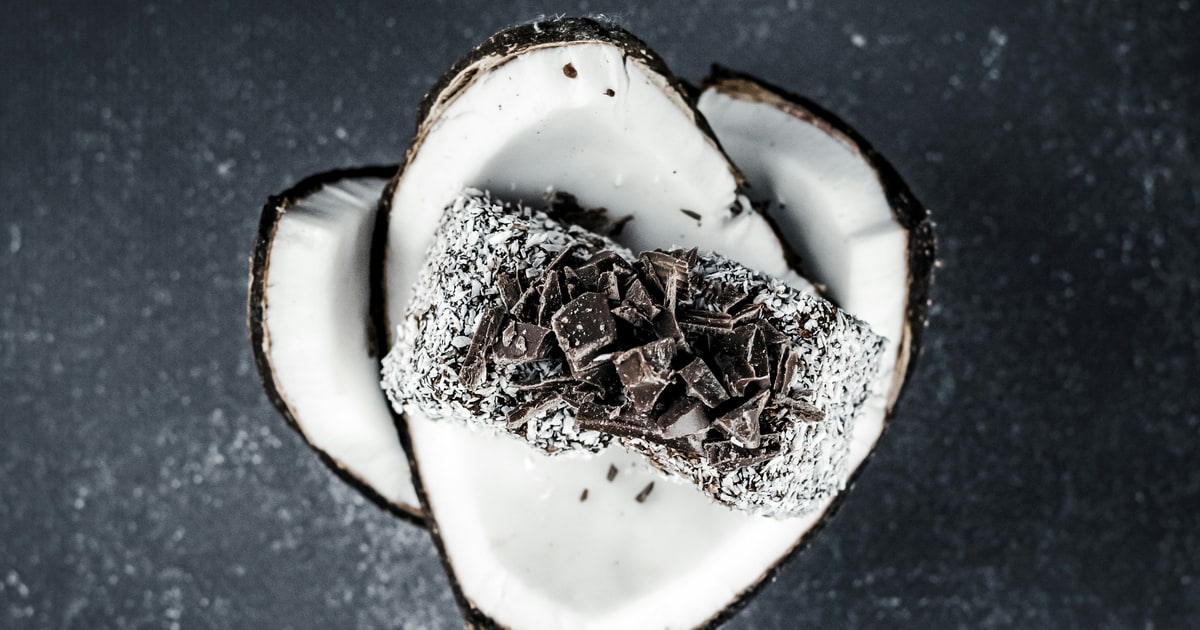
Is Bounty Halal?
Bounty — with its sweet coconut filling and chocolate coating — seems like it should be straightforward from a halal perspective. Coconut is halal. Chocolate is halal. Sugar is halal. So what’s the issue?
The issue, as with so many Mars products, is E471 — an emulsifier that can be derived from either plant or animal fats. Until Mars confirms the source or obtains halal certification, Bounty remains Mushbooh.
The verdict: Bounty (UK) is Mushbooh due to E471 and E476 with unconfirmed sourcing. No UK halal certification.
Ingredients Check
A standard Bounty bar contains: desiccated coconut, sugar, glucose syrup, cocoa butter, cocoa mass, skimmed milk powder, palm kernel oil, lactose (milk), whey powder (milk), emulsifiers (E471, E476), salt, flavourings.
E471 — Mono- and Diglycerides of Fatty Acids The primary concern. E471 is found in both the chocolate coating and the coconut filling of Bounty as an emulsifier. As discussed extensively across Mars products, E471 can be:
- Plant-derived (from palm, soy, sunflower oil) — Halal
- Animal-derived (from beef, pork fat) — Haram if from pork, or Mushbooh if from unspecified animal fat without halal slaughter
Mars does not specify the source of E471 in its UK Bounty formulation. The company has not voluntarily disclosed this information to the public, and the EU/UK food labelling regulations do not require the source of fatty acids to be listed beyond the E-number.
E476 — Polyglycerol Polyricinoleate (PGPR) E476 is present in many chocolate bars as a viscosity reducer, allowing less cocoa butter to be used while maintaining a smooth texture. PGPR is synthesised from glycerol (which can be plant or animal-derived) and ricinoleic acid (from castor oil, which is plant-derived).
The glycerol component of E476 has historically been the concern — in some manufacturing processes, glycerol is a by-product of soap-making using animal fats. In modern food-grade manufacturing, plant-derived glycerol is more common, but it is not always guaranteed.
Mars has not issued a public statement on the specific glycerol source used in E476 for Bounty UK.
E322 — Soy Lecithin Not typically listed in Bounty’s label (unlike some other Mars bars), but soy lecithin may appear in some formulations. Soy lecithin is halal.
Coconut filling Desiccated coconut, glucose syrup, sugar — all halal. The filling itself presents no halal concerns.
Palm kernel oil Halal. Used in the chocolate coating.
Dairy components (skimmed milk powder, lactose, whey) All halal when from cows, which is standard commercial practice.
Milk Chocolate vs Dark Chocolate Bounty
Bounty Milk Chocolate The standard version. Contains E471 and E476 as noted. Mushbooh.
Bounty Dark Chocolate Uses dark chocolate coating instead of milk chocolate. The emulsifier profile is the same. Dark chocolate reduces dairy content but does not resolve the E471 question. Mushbooh.
Bounty Minis Smaller format, same formulation. Mushbooh.
Bounty Ice Cream Bar A separate product (produced under licence for the ice cream market). The ice cream product may have a different formulation and different emulsifiers. Check the specific label. Ice cream products sometimes use different emulsifier blends (e.g., E471, E472b, E410) — all require the same source scrutiny.
The Pattern with Mars Products
Bounty, Twix, Snickers, Mars Bar, Galaxy — all Mars confectionery sold in the UK share the same fundamental halal challenge: E471 and sometimes E476, with no published confirmation of plant-based sourcing and no UK halal certification.
This is not unique to Mars. Most major UK confectionery brands use E471 without specifying source. The difference is that some brands — notably Cadbury under Mondelez — have obtained halal certification in certain markets with confirmed plant-based sourcing for emulsifiers.
Mars could resolve the halal ambiguity for all of its UK products by either:
- Obtaining third-party halal certification (HMC, HFA, or IFANCA)
- Publicly confirming that all E471 and E476 used in UK manufacturing is plant-derived
Until either of those happens, cautious Muslim consumers should treat Bounty as Mushbooh.
Is There a Halal-Certified Coconut Chocolate Bar?
Not a straightforward one, and it is worth being honest about that rather than sending you off with a list that doesn’t hold up.
- Raffaello by Ferrero is the obvious suggestion, and it is the wrong one. Our Ferrero verdict is Mushbooh — the same undisclosed-emulsifier problem that puts Bounty here. Swapping one Mushbooh coconut product for another gains you nothing.
- Turkish and Malaysian coconut chocolates are the most realistic route: many carry JAKIM or TSE marks. Buy on the mark on the pack, not on the brand name, and check per-SKU — certification in these markets is usually per-product, not brand-wide.
- Islamic confectionery brands in halal shops often stock coconut bars. Same rule: look for a named certifier on the pack.
- Make it yourself with a halal-certified chocolate block and desiccated coconut. Unsatisfying advice for a supermarket craving, but it is the only route where the whole chain is verified.
We do not currently have a certified coconut bar we can point you to by name. That is a genuine gap in the market, not a list being withheld.
Summary
| Factor | Detail |
|---|---|
| Status | Mushbooh |
| Main Concern | E471 and E476 — source unconfirmed (may be animal-derived) |
| Direct Pork/Gelatine | Not listed |
| Halal Certified | Not in UK |
| Coconut Filling | Halal on its own |
| Verdict | Avoid UK Bounty until Mars confirms plant-based emulsifier sourcing |
For the coconut craving specifically, the alternatives above are your best route. If you just want chocolate you don’t have to interrogate, our round-up of chocolate bars that arrive certified rather than assumed is worth a look — though it is milk chocolate and pistachio only, with no coconut and no dark bar on it, so treat it as a substitute for the habit rather than for the bar.
Ingredients change. Be first to know.
Brands reformulate without warning. We track every E-code update and halal certification — one short weekly email.
Related Articles
 Shopping Guides
 Halal Chocolate in Italy: Ferrero, Perugina and What to Check (2026)
Italy's biggest chocolate brands — Ferrero (Nutella, Rocher), Perugina (Baci), Kinder — carry no halal certification. E471 and dairy from uncertified supply chains are the main concerns. Here is the full guide.
 Shopping Guides
 Halal Chocolate in Belgium: Which Brands Are Safe? (2026)
Belgian chocolate is world-famous, but most major brands — Côte d'Or, Neuhaus, Godiva, Leonidas — carry no halal certification. Here is what Muslim consumers and tourists in Belgium need to check.
 Shopping Guides
 The Complete Guide to Halal Chocolate: Bars, Hot Chocolate, Baking and Spread (2026)
E476 (PGPR), E471, and vanilla extract with alcohol are the three chocolate concerns. Every format covered: chocolate bars, hot chocolate, baking, Nutella alternatives, and white chocolate.