
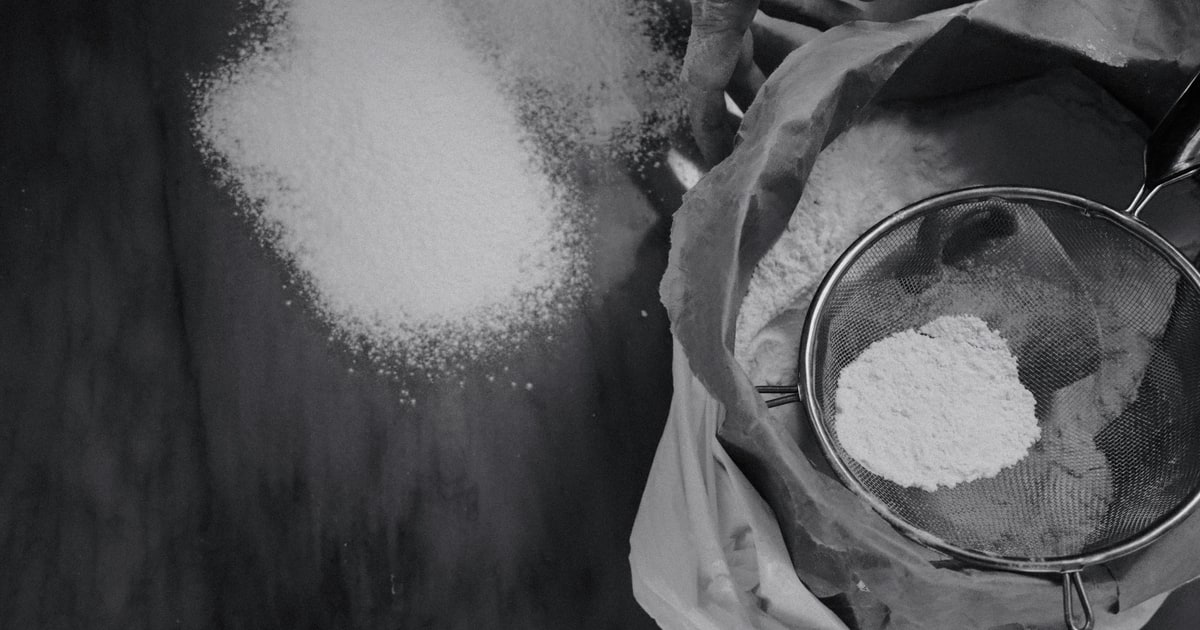
Baking powder is one of the most straightforward items to evaluate from a halal perspective — its ingredients are exclusively mineral and plant-derived. There are no animal products, no pork derivatives, no alcohol, and no gelatin involved in standard baking powder. The E-codes it contains are from mineral and carbohydrate sources. This is a clear and simple verdict: baking powder is halal.
What Baking Powder Does
Baking powder is a leavening agent that causes baked goods to rise. It works by producing carbon dioxide gas when it comes into contact with moisture and heat. The gas creates bubbles in the batter or dough, which expand during baking and create a light, airy texture.
The reaction that produces CO₂ requires both an acid and a base. Baking powder contains both — combined in a dry form with a starch to prevent premature reaction. This makes it a “complete” leavening agent, unlike baking soda alone (which requires an acid in the recipe) or yeast (which requires time and fermentation).
Ingredient-by-Ingredient Analysis
Sodium Bicarbonate (E500 / Baking Soda)
Sodium bicarbonate is the base component. It is produced from sodium carbonate (soda ash) through a carbonation process using CO₂. It is a mineral salt — no animal origin, no pork derivatives, no alcohol.
Halal status: Halal.
Cream of Tartar (E336 / Potassium Bitartrate)
Cream of tartar is the acid component used in many traditional baking powder formulations. It is a naturally occurring crystalline acid deposited on the inside of wine barrels during wine production. Despite its connection to wine production, cream of tartar itself is a purified potassium salt of tartaric acid — not wine, not alcohol. It is filtered and crystallised from the wine barrel sediment.
The question sometimes raised is whether cream of tartar’s origin in wine-barrel residue makes it problematic. The scholarly position: cream of tartar is a pure potassium salt (a mineral compound) that happens to be harvested from wine production. It contains no alcohol, no intoxicant, and no wine in the final form. By the principle of istihalah and the analysis of the final substance, cream of tartar is halal. It is used extensively in halal baking.
Halal status: Halal.
Sodium Acid Pyrophosphate (E450)
Many modern baking powders — including Dr. Oetker — use sodium acid pyrophosphate (SAPP) rather than cream of tartar. SAPP is a synthetic phosphate salt produced chemically from phosphoric acid and sodium hydroxide. It is entirely mineral-derived — no biological, animal, or plant origin.
Halal status: Halal.
Corn Starch / Wheat Starch (Filler)
Baking powder contains 20–30% starch to prevent the acid and base from reacting prematurely during storage. UK brands use either corn starch (maize starch) or wheat starch. Both are plant-derived carbohydrates.
Wheat starch is relevant for consumers with coeliac disease or gluten sensitivity, not for halal purposes. Both corn and wheat starch are halal.
Halal status: Halal.
UK Brand Breakdown
Dr. Oetker Baking Powder
The most widely available baking powder in UK supermarkets. Ingredients: corn starch, sodium acid pyrophosphate (E450), sodium bicarbonate (E500). No animal products, no alcohol. Widely used in halal baking across the UK.
Status: Halal.
Doves Farm Baking Powder
Doves Farm focuses on organic and free-from products. Their baking powder contains potassium bitartrate (cream of tartar, E336) and sodium bicarbonate — no starch filler. Suitable for coeliacs as it is gluten-free. Available in health food shops and some supermarkets.
Status: Halal.
Waitrose, Tesco, Sainsbury’s Own-Brand
UK supermarket own-brand baking powders typically contain sodium acid pyrophosphate or cream of tartar, sodium bicarbonate, and corn or wheat starch. Check the current label for any ingredient changes, but these products are generally halal.
Status: Halal (verify current label).
Baking Powder in Halal Countries
It is worth noting that baking powder is used extensively across Muslim-majority countries — in Pakistani, Turkish, Malaysian, and Middle Eastern baking traditions. There is no scholarly concern about baking powder as a category; the ingredient profile is universally recognised as permissible.
What About Baking Powder in Cake Mixes?
Cake mixes and self-raising flour contain baking powder or baking soda as a component. The same analysis applies — the leavening agent itself is halal. The rest of the cake mix ingredients (dairy powder, egg powder, flavourings) should be checked for the specific product.
Baking Powder vs Baking Soda: Any Difference for Halal?
Baking soda (sodium bicarbonate alone) is even simpler than baking powder — it is a single mineral salt. Baking soda is halal without question. The same is true of cream of tartar when used separately as a leavening acid.
Summary
| Ingredient | Source | Halal Status |
|---|---|---|
| Sodium bicarbonate (E500) | Mineral | Halal |
| Cream of tartar (E336) | Wine barrel residue (purified salt) | Halal |
| Sodium acid pyrophosphate (E450) | Mineral/synthetic | Halal |
| Corn starch | Maize — plant | Halal |
| Wheat starch | Wheat — plant | Halal |
| Dr. Oetker baking powder | Mineral/plant ingredients | Halal |
| Doves Farm baking powder | Mineral/plant ingredients | Halal |
| Verdict | Halal |
Look up any E-code from a baking ingredient in the E-codes database. Scan a full ingredient list with the ingredient scanner.
How we reached this verdict
- Ingredient analysis: All components of standard baking powder reviewed for animal, pork, and alcohol origins — none found.
- E-code database: E336, E450, E500 all confirmed as mineral/plant-derived in the E-codes database.
- Scholarly context: No Islamic scholarly debate about baking powder as a category — ingredient profile is unambiguously permissible.
Madhab note
There is no madhab-specific concern about baking powder. All components are mineral or plant-derived and are permissible across Hanafi, Maliki, Shafi’i, and Hanbali schools. Cream of tartar (E336) may prompt a question about its wine-barrel origin, but as a purified mineral salt containing no wine or alcohol, its permissibility is clear under istihalah and general ingredient analysis.
Ingredients change. Be first to know.
Brands reformulate without warning. We track every E-code update and halal certification — one short weekly email.
Related Articles
 Ingredient Guides
 Halal Vanilla: Extract vs Powder — What's the Difference?
Vanilla extract contains alcohol — is it halal? Vanilla powder is the safer alternative. Here are the best halal-verified vanilla options for baking.
 Ingredient Guides
 Is Yeast Halal? Bread Yeast, Marmite & Vegemite (2026)
Yeast is a microorganism — halal. Bread yeast, nutritional yeast, Marmite, and Vegemite are all halal. Alcohol evaporates during processing. Full scholarly analysis.
 Ingredient Guides
 Is The Ordinary Multi-Peptide Eye Serum Halal? INCI Checked (2026)
The Ordinary's Multi-Peptide Eye Serum is PETA-certified vegan, alcohol-free, and its peptides are synthetic — permissible to use, though not halal-certified.