
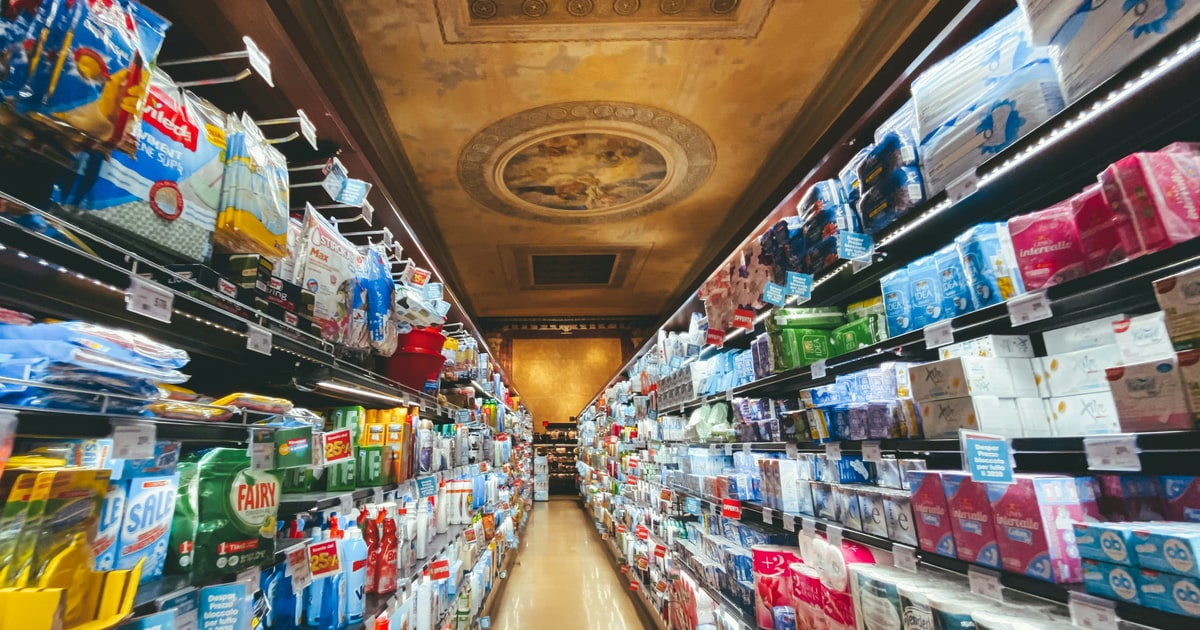
Aldi UK has become a firm fixture in British grocery shopping, offering consistently low prices across a well-structured own-brand range. For Muslim shoppers, navigating Aldi follows a similar pattern to Lidl — the meat department is a hard no, but large sections of the store are genuinely halal-friendly. Here is what to expect, aisle by aisle.
Meat Department: Not Halal Certified
Aldi UK does not hold halal certification for any of its meat products. There are no halal butcher counters, no halal-labelled fresh chicken, and no halal-certified packaged meat anywhere in the standard UK Aldi range.
2026 update: Aldi’s published policy remains that it sells no certified halal meat and that all animals used for own-label meat and poultry are pre-stunned. In February 2026 Aldi stated it was trialling halal goods “in a few select stores” — but as of July 2026 it has not confirmed which stores, which products, or any certifier, and reports suggest the trial may have been seasonal around Ramadan. The practical rule is unchanged: unless the pack in front of you carries a named certifier’s logo (HMC or HFA), treat all meat at Aldi as non-halal. For the chains that do stock certified meat, see which UK supermarkets sell halal meat.
The no-certification baseline applies to:
- All fresh chicken products (Ashfields brand)
- All beef and lamb products
- All pork products (avoid entirely — haram)
- Aldi own-brand burgers, sausages, and processed meats
- Aldi chilled meat-based ready meals
If your weekly shop includes meat, Aldi is not the right store for that category. This is a hard limit, not a grey area.
Fish Section: Halal by Default
Fish is where Aldi genuinely delivers for halal shoppers. Under Islamic rulings accepted by the majority of scholars, all sea creatures with fins and scales are halal without requiring slaughter certification. This makes Aldi’s substantial fish range freely available:
Fresh fish counter (where available): Whole fish, fillets, and sides are halal by default.
Chilled packaged fish:
- Salmon fillets and sides (Ocean Rise brand)
- Smoked salmon and trout
- Cod and haddock fillets
- Mixed fish and seafood selections (check shellfish for your madhab’s ruling)
Frozen fish:
- Plain frozen fish fillets — halal
- Breaded fish products — check the coating ingredients for E471 or E472e
- Aldi fish fingers and fish cakes — check for non-halal binders or flavour enhancers
Tinned fish: Aldi tinned tuna, sardines, and mackerel (in brine, spring water, or sunflower oil) are halal.
One note on shellfish: prawns, mussels, and calamari are considered halal by the Shafi’i and Hanbali schools but problematic under the Hanafi school. Aldi stocks a range of frozen prawns and seafood mixes — factor in your own scholarly position when deciding.
Dairy Aisle
Milk: All fresh Aldi milk (Cowbelle brand) is halal.
Yoghurt: Aldi’s plain and Greek yoghurts are generally halal-safe. Aldi Cowbelle fruit yoghurts — particularly strawberry and raspberry varieties — should be checked for E120 (carmine), an insect-derived red colourant that is haram. The label will list it as “E120” or “carmine” or “cochineal extract.”
Cheese: This requires label-checking. Aldi’s Everyday Essentials mature Cheddar and standard hard cheeses often use animal rennet. The Aldi Specially Selected premium cheese range is inconsistent — some products carry vegetarian labels (microbial rennet, halal-safe), others do not. Look for the green ‘V’ vegetarian symbol.
Aldi stocks some continental cheeses in its regular rotation that may use vegetarian rennet — check each product individually. The Emporium range of specialty cheeses requires particular attention: traditional European protected designation of origin (PDO) cheeses like authentic Parmesan (Parmigiano Reggiano) are legally required to use animal rennet and are therefore not halal — the full PDO explanation is in Is Parmesan halal?, and Is Cheddar cheese halal? covers the rennet question for the everyday blocks.
Butter: Standard Cowbelle butter is halal. Flavoured butter products should be checked for alcohol-based flavourings.
Cereals and Breakfast Foods
Cereals are a frequent source of E471 in Aldi own-brand products. E471 (mono and diglycerides of fatty acids) is widely used in cereal manufacturing to improve texture and shelf life. When derived from animal sources it is not halal, but the label will rarely specify the source.
Aldi’s Harvest Morn cereal range — including cornflakes, bran flakes, muesli, and granola — should be individually checked. Some products in this range are E471-free; others contain it. The Harvest Morn Clusters granola and honey-coated varieties are more likely to include emulsifiers than plain flake cereals.
Porridge oats (plain) are halal. Aldi flavoured instant porridge sachets should be checked for E-codes.
Bakery Section
Aldi’s fresh in-store bakery operates similarly to Lidl’s — bread and pastries are baked from pre-formed frozen dough on-site. The European origin of many Aldi bakery recipes means E472e (diacetyl tartaric acid esters of mono and diglycerides of fatty acids) is common. This emulsifier can be animal or vegetable-derived.
Pre-packaged ambient bread products at Aldi carry full ingredient labels and are generally cleaner on E-codes than the in-store bakery items. Plain white and wholemeal sliced loaves are usually E471-free. Aldi’s own-brand wraps and flatbreads: check for E471 and E481 (sodium stearoyl lactylate — can be animal-derived).
The Aldi Specially Selected croissants and premium pastries should be treated with more caution — richer recipes, more complex emulsifier use.
Snacks and Crisps
Aldi’s snack range under the Snactastic and various own-brand labels requires E-code vigilance.
E631 (disodium inosinate): Frequently present in cheese-flavoured, BBQ, and prawn cocktail crisps. Often pork-derived. This is the most common problem E-code in the Aldi crisp aisle — our E627 and E631 guide explains how to read the flavour-enhancer pairing on any crisp label.
E635 (disodium 5’-ribonucleotides): A blended flavour enhancer that may include pork-derived components. Appears in some Aldi savoury snack products.
Plain crisps (ready salted, sea salt) are generally safe. All strongly-flavoured crisps should be checked.
Aldi chocolate and confectionery: Aldi has an extensive own-brand chocolate range (Moser Roth, Choceur) and a confectionery range. We rate Choceur as Mushbooh: the standard bars contain no gelatine and use soya lecithin (E322), which is halal — but Aldi holds no halal certification for the range and the vanilla flavouring source is undisclosed. The full breakdown is in our Choceur verdict; check Moser Roth labels on the same points. Gummy sweets, jelly products, and marshmallows should be checked for E441 (gelatine) — in Aldi UK products, this is typically pork gelatine unless otherwise specified. Aldi’s Fresh & Free chewing gum has its own write-up: Is Fresh & Free Kaugummi halal?
Plant-Based Range
Aldi’s plant-based range (marketed under various names and expanded significantly in recent years) offers excellent options for Muslim shoppers:
- No animal meat
- No gelatine
- Vegan standards exclude obvious non-halal ingredients
Products to look for include plant-based burgers, sausages, and mince alternatives. Check for alcohol-based flavourings in marinades and sauces. E120 in brightly-coloured plant-based products is rare but worth verifying.
Ambient Grocery
The ambient grocery section at Aldi — pasta, rice, tinned goods, oils, spices, condiments — is largely halal-safe:
- Pasta and rice: halal
- Tinned tomatoes, beans, lentils: halal
- Oils (sunflower, olive, vegetable): halal
- Aldi own-brand pasta sauces: generally halal — check creamy varieties for E471
- Biscuits: check for E471 and E476 (polyglycerol polyricinoleate) in chocolate-coated biscuits
When a label leaves you unsure, point the HalalCodeCheck scanner at the ingredient list — it flags every E-code in seconds — or look codes up one at a time in the E-codes database.
Halal Shopping Near You
Aldi wins on price, but for certified meat and the specialist shelf you will need an independent halal grocer. These are the cities where we keep checked listings:
- Birmingham’s independents cluster along Stratford Road and Alum Rock Road — certified meat counters plus the import ranges Aldi never stocks: halal grocers in Birmingham
- In Manchester, Rusholme’s Curry Mile and Cheetham Hill Road cover everything the discounters can’t — see the Manchester halal directory, or our Manchester halal food guide for the full corridor-by-corridor picture
- London’s halal grocers run from Whitechapel through East Ham to Southall — there is one near almost every Aldi: see the London halal directory
- Wolverhampton has a tight network of independents around the city centre: see the Wolverhampton halal directory
- In Milton Keynes, the Queensway parade in Bletchley is the destination: halal grocers in Milton Keynes
Shopping at Aldi in Ireland? The shelves look familiar, but no major chain in the Republic stocks halal meat — the certifier landscape is different too. Our halal shopping in Ireland guide explains what actually is available.
Summary
| Category | Verdict |
|---|---|
| Meat | No halal certification — avoid entirely |
| Fish (plain) | Halal by default |
| Breaded fish | Check for E471 in coating |
| Cheese | Vegetarian-labelled only — check each product |
| Yoghurt (fruit) | Check for E120 |
| Cereals | Check for E471 — varies by product |
| Bakery | Check for E471 and E472e |
| Crisps (flavoured) | Check for E631 |
| Confectionery / sweets | Check for E441 (pork gelatine) |
| Plant-based range | Generally halal — verify labels |
| Ambient grocery | Generally safe |
Ingredients change. Be first to know.
Brands reformulate without warning. We track every E-code update and halal certification — one short weekly email.
Related Articles
 Shopping Guides
 Best Halal Meal Kits UK 2026 — Which Are Actually Certified
Most UK halal meal kit brands don't name a certifying body. We checked six directly — one names HMC, one admits its kitchen isn't certified, the rest are unverified claims.
 Shopping Guides
 Best Halal Meat Delivery UK 2026 — Fresh, HMC-Certified Picks
Most halal meat delivery in the UK still ships frozen. These five HMC-certified butchers deliver fresh, chilled cuts nationwide — certification and delivery details checked directly.
 Shopping Guides
 Halal School Snacks UK: 3 Label Checks Before You Buy (2026)
Three label checks — E441 gelatine, E120 carmine, E471 emulsifiers — catch most haram risks in UK lunchbox snacks. Here is what to look for, aisle by aisle.