
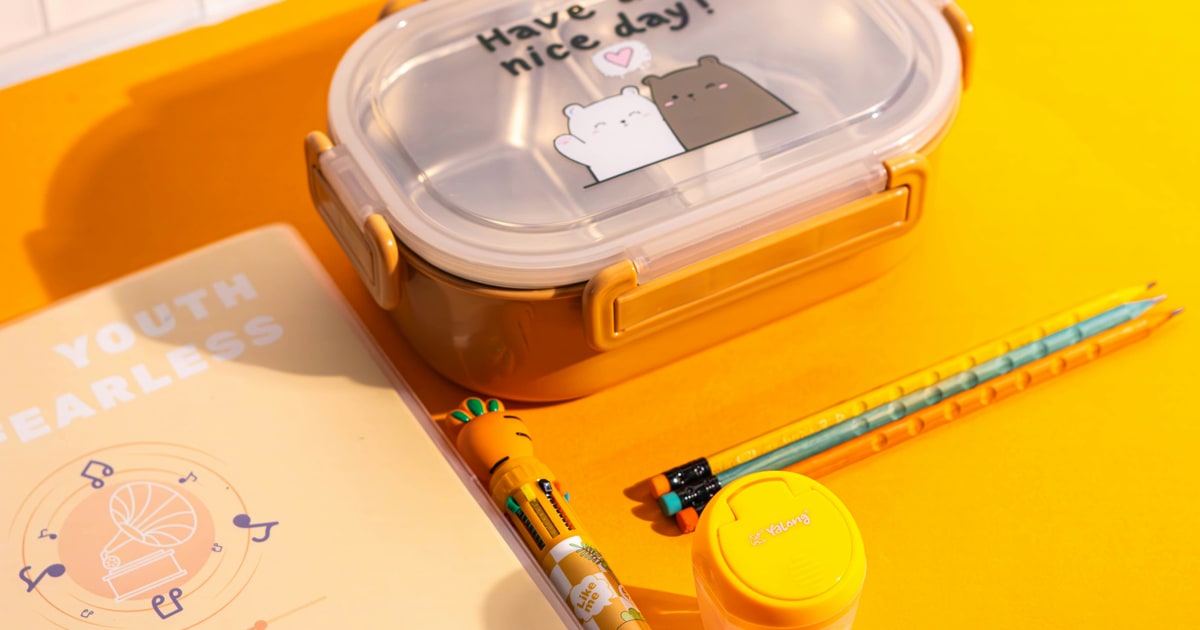
Packing a halal school lunch box every morning is one of those parenting tasks that sounds simple but turns out to require quite a bit of label knowledge. The bread, the crisps, the sweets, the yoghurt, the cheese — each category has its own potential concerns. And once you know what to look for, it becomes genuinely quick. This guide gives you the category-by-category knowledge to pack halal school lunches confidently, updated for the new school year.
Two companion guides go deeper on specific parts of this: the halal lunchbox guide has product-by-product tables per category and an age-by-age plan, and the school lunchbox snack label checks post covers the snack aisle’s three E-code checks in detail.
The Packed Lunch Categories: What to Check
Main: Sandwiches and Wraps
Meat fillings: The main concern. Any chicken, turkey, or beef filling must come from a halal-certified source. Ham, salami, pepperoni, and chorizo are pork products — clearly haram. Pre-packaged “halal chicken” sandwich fillers from supermarkets should carry a certification logo; check before buying.
Best approach: Prepare your own chicken or lamb filling from halal-certified meat cooked at home. This gives certainty and is often more economical than pre-packaged sandwich meat.
Egg mayonnaise: Eggs are halal. Most commercial mayonnaise contains eggs, vinegar, and oil — no halal concerns (check for any unusual additives on premium brands).
Tuna: Tuna is fish and halal. Standard tinned tuna in spring water or sunflower oil is halal — no concerns.
Hummus: All hummus is halal. Chickpeas, olive oil, tahini (sesame paste), lemon, garlic — all permissible.
Cheese: Look for “suitable for vegetarians” on the packaging, which confirms microbial rennet (not animal rennet from non-halal slaughter). Check the label per pack, not per brand — Cathedral City, for example, uses animal rennet in at least some varieties, so the brand name alone tells you nothing. The vegetarian label on the specific pack in your hand is the check that counts.
Bread
Most standard UK sliced bread contains no directly haram ingredient, but two additives need checking:
E471 (mono and diglycerides of fatty acids) — may be from animal fat including pork fat. This appears in some commercial breads as a texture improver. Hovis and Kingsmill loaves commonly list E471 with no source disclosed — treat those as Mushbooh unless the pack carries a halal or vegan mark. Warburtons labels some lines “halal suitable” (the manufacturer confirms no animal-derived ingredients in those); other Warburtons products contain E471 or E472e from undisclosed sources, so check the specific loaf.
E920 (L-cysteine) — a dough conditioner that can be derived from human hair, duck feathers, or hog hair. Haram if from pork. Less common in UK retail bread than in commercial bakery products, but it does appear in some Hovis lines.
Safe choices:
- Vegan-labelled bread (guarantees no animal-derived additives)
- Artisan or bakery bread (fewer additives generally)
- Sourdough (traditionally just flour, water, salt, starter)
- Pitta bread (typically halal — simple ingredients)
Crisps and Savoury Snacks
Most plain salted crisps are halal. The concerns arise with flavoured crisps:
Flavour additives to watch:
- E631 (disodium inosinate) — may be pork-derived; appears in some cheese and onion, BBQ, and prawn cocktail flavours
- E627 (disodium guanylate) — often paired with E631; same concern (full explainer: E627 and E631 in crisps)
- Cheese flavouring — typically dairy-based and halal, but check if the cheese itself would be vegetarian-certified
Safe crisp choices:
- Walkers Ready Salted — halal
- Tyrrells plain flavours — kettle-cooked in sunflower oil, simple ingredients, no E-codes of concern
- Pringles Original — no E631 in the Original recipe, but no halal certification on UK cans; flavoured varieties can contain E635 (a blend that includes E627/E631), so check each flavour
- Popchips plain varieties — no animal-derived additives, suitable for vegetarians
- Rice crackers — plain varieties have a short, clean ingredient list
Avoid:
- Imported or own-brand flavoured crisps listing E631/E627 without a vegetarian label
- Any limited-edition crisp with a meat name — check the label (a past Walkers Pulled Pork edition contained real pork)
(Note: the current Walkers core range, Prawn Cocktail included, lists no E621/E627/E631 and is vegetarian-labelled — verified August 2026.)
For a brand-by-brand, flavour-by-flavour breakdown of the whole crisps aisle, use the UK crisp flavour audit.
Yoghurt and Dairy
Plain yoghurt is halal. The concerns:
Gelatine: Some yoghurts (particularly layered or jelly-style yoghurts) contain gelatine as a thickener — this is E441 and typically porcine. Children’s “jelly” style yoghurts are a common culprit.
Safe choices:
- Yeo Valley plain yoghurt (no gelatine, no concerns)
- Muller Light plain (check specific varieties for gelatine)
- Fage Total plain Greek yoghurt
- Any yoghurt marked “suitable for vegetarians” (no gelatine)
Avoid:
- Any yoghurt containing “gelatine” or “E441” without halal cert
Cheese: As mentioned above — choose vegetarian-certified cheese.
Fromage frais: Plain varieties are fine — check for gelatine in any “jelly” children’s varieties.
Sweets and Confectionery
This is where most parents encounter the most surprises. Standard gummy sweets in the UK predominantly use porcine gelatine.
Certified halal (named certifier):
- Bebeto gummies — certified by the Turkish Standards Institution (TSE); halal beef gelatine, no pork gelatine; widely available in UK pound shops and Asian grocers
- Sweetzone jelly sweets, fruit chews, marshmallows — HMC-certified per Sweetzone’s own statement (those named ranges; check the pack for anything outside them)
Gelatine-free, permissible ingredients, no formal certification:
- Jelly Tots (Rowntree’s) — glucose syrup, sugar and fruit concentrates; no gelatine, suitable for vegetarians
- Fruit Pastilles (Rowntree’s) — gelatine-free in the current UK recipe; check the pack stays that way
- Polo mints — no gelatine; Nestlé UK states the E471 is plant-derived
- Skittles (UK) — gelatine-free since 2009 and E120-free; labelled vegan/suitable for vegetarians. No formal UK halal certification
- Starburst (UK pack) — reformulated in 2020 to remove gelatine; labelled suitable for vegetarians. US-import Starburst still contains pork gelatine, so check where the pack was made
Check the label first:
- Chewits — look for gelatine on the ingredient list of the specific variety
- Any sweet sold in a “halal version” (some Barratt classics, for example) — only trust packs that carry a halal mark, and read which certifier is named on it
Avoid:
- Haribo (all varieties in standard UK packaging use porcine gelatine)
- Standard gummy bears, jelly snakes, foam bananas at pick-and-mix without halal labelling
- Millions sweets (check — gelatine varies by flavour)
- Wine gums (the clue is in the name — also typically porcine gelatine)
Our UK halal gummy sweets audit checks every certified brand we could verify, if you want the full picture of this aisle.
Chocolate — harder than most parents expect:
Most mainstream UK chocolate bars are Mushbooh, not halal. KitKat contains E476 from an unverified source; Maltesers contain E471 and E476, source unconfirmed by Mars; Cadbury Dairy Milk contains E442 and E476; Smarties are vegetarian-labelled but Nestlé’s plant-origin claim for the E471 has not been independently audited. None of these carries UK halal certification. If your child wants chocolate in the lunchbox, the lower-risk route is a plain dark chocolate with a short ingredient list and no E471/E476, or a bar that carries a named halal certifier’s mark.
Fruit and Vegetables
All fresh fruit and vegetables are halal. Dried fruit (raisins, apricots, cranberries) is halal. Pre-cut supermarket fruit pots are halal.
Drinks
Water — halal. Fruit juice — halal. Smoothies — halal. Squash — check for additives; most standard UK squash is halal. Pure fruit juice — halal.
Avoid: Any drink containing alcohol (uncommon in children’s products but check kombucha-style drinks).
School Dinners: The Halal Option
Many UK state schools now provide halal school dinner options. The situation varies significantly by local authority and school:
London: Many London schools — particularly in Tower Hamlets, Newham, Waltham Forest, and similar boroughs — have moved to fully halal menus or provide substantial halal options. Some have all meals certified to HFA standards.
Birmingham, Bradford, Leicester: Similar picture — significant halal provision in areas with Muslim populations.
Smaller towns and rural areas: Less consistent. Some schools have no halal option; others have informal arrangements.
How to find out: Contact the school directly. Ask:
- Do they offer a halal meal option?
- Which certifier is used?
- Is the halal food prepared separately from non-halal food?
- Are the serving utensils and surfaces separated?
Cross-contamination is a legitimate concern in school kitchens serving both halal and non-halal food.
Quick-Reference Shopping List
Always safe to buy:
- Tuna, hummus, egg mayo filling
- Vegetarian-labelled cheese (check each pack)
- Plain salted crisps (most brands)
- Bebeto or Sweetzone sweets (certified); Jelly Tots and Polo mints (gelatine-free, uncertified)
- Any fresh fruit
- Plain yoghurt (check for gelatine in children’s varieties)
- Vegan-labelled bread
Check before buying:
- Flavoured crisps (E631/E627)
- Sliced chicken/turkey (need halal cert)
- Bread with E471 (check source or buy vegan)
- Chocolate bars (most major UK bars contain E471/E476 from undisclosed sources — Mushbooh without a named certifier)
Always avoid:
- Ham, salami, pepperoni, chorizo, any pork product
- Haribo sweets
- Pick-and-mix without halal labelling
- Yoghurts containing gelatine (E441) without halal cert
Most of this list can be covered between the supermarket and one good independent — for a city-level example of where to buy each part, see halal shopping in Milton Keynes.
Summary
| Category | Safe | Check | Avoid |
|---|---|---|---|
| Sandwich filling | Tuna, egg, hummus, halal chicken | Pre-packed halal chicken cert | Ham, pepperoni, pork products |
| Bread | Vegan-labelled, sourdough, pitta | E471 in standard sliced bread | Bread with E920 from pork |
| Cheese | Vegetarian-certified | Rennet source | Cheese without vegetarian label |
| Crisps | Plain salted most brands | Flavoured crisps with E631/E627 | BBQ/prawn with pork-derived E631 |
| Sweets | Bebeto, Sweetzone (certified); Jelly Tots, Polo (gelatine-free) | UK Skittles/Starburst (uncertified, veg-labelled) | Haribo, standard pick-and-mix |
| Yoghurt | Plain vegetarian-certified | Children’s jelly varieties | Yoghurt with E441/gelatine |
| Verdict | Stick to the safe list and check labels | Use HalalCodeCheck for E-numbers | When in doubt, leave it out |
How we reached these verdicts
- Brand verdicts follow HalalCodeCheck’s published brand pages, which are checked against HMC and HFA registries and manufacturer statements — see Bebeto and Sweetzone for the certified sweets named here.
- Certification claims: Bebeto states certification by the Turkish Standards Institution (TSE); Sweetzone states HMC certification for its jelly sweets, fruit chews, marshmallows, bubble gum and liquorice ranges. Neither Jelly Tots, Polo, UK Skittles nor UK Starburst carries formal UK halal certification — their basis is ingredient-verified (gelatine-free, vegetarian-labelled), which is a different level of assurance.
- Ingredient positions (E471, E476, E442, E920 as undisclosed-source Mushbooh; E441 pork gelatine as haram) follow the mainstream Sunni approach used across this site. UK labels re-checked July 2026.
Look up any additive in the E-codes database, or paste a full ingredient list into the ingredient scanner for an instant verdict on every E-code at once.
Ingredients change. Be first to know.
Brands reformulate without warning. We track every E-code update and halal certification — one short weekly email.
Related Articles
 Shopping Guides
 Halal Shopping at Coles: Aisle-by-Aisle Australia Guide (2026)
Coles stocks halal-certified meat from accredited abattoirs but own-brand packaged goods require E-code checking — here's what to look for in each aisle.
 Shopping Guides
 Halal Shopping at Carrefour: France, UAE & Turkey Guide (2026)
Carrefour's halal status varies by country — UAE stores stock certified halal products throughout, while French stores require label-by-label checking.
 Shopping Guides
 Halal Food in Malaysia: Beyond JAKIM — Full Supermarket & Brand Guide
JAKIM certification is Malaysia's gold standard but not every product on shelf is JAKIM-certified — here's how to shop confidently in Mydin, Giant, and Aeon.