
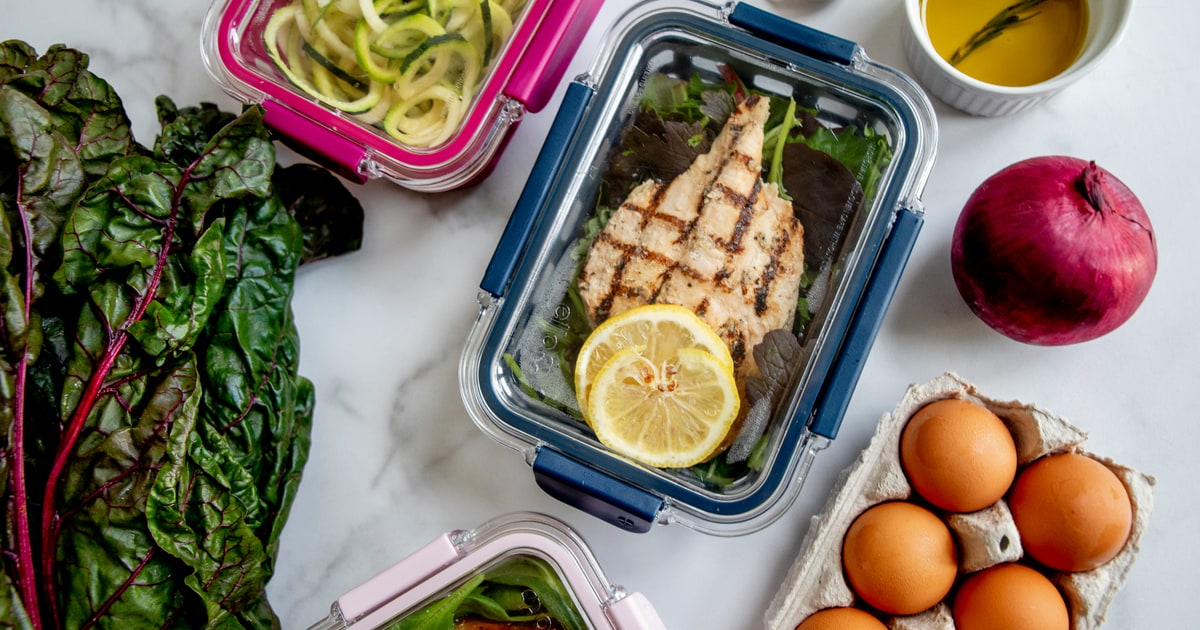
Halal meal prepping follows a clear logic: get the protein right, the dairy right, and scan the additives — everything else takes care of itself. The challenge for Muslim shoppers is not finding halal food, it is knowing which specific label signals to look for across multiple product categories in a single shopping trip. This guide gives you a systematic, step-by-step approach that works every week.
The Six-Step Halal Shopping System
Step 1: Protein — Start Here, Get It Right
The meat aisle is where halal shopping decisions carry the most weight. Everything else is label-reading; meat is about sourcing.
Option A (strictest): Shop at an HMC-certified halal butcher. Hand-slaughtered, unstunned, individually dedicated. Best for beef, lamb, whole chicken. Buy in bulk and freeze.
Option B (convenient): ASDA or Morrisons halal counter. HFA-certified. Wider availability, convenient alongside the rest of your shopping. Good for weekly fresh chicken and lamb.
Option C (online batch): Order from an online halal butcher (Ayah Halal, Tahira) for a monthly HMC-certified delivery. Freeze in meal-size portions.
Non-meat proteins that need no certification check:
- Eggs (always halal)
- Tinned tuna and salmon (fish — halal by default)
- Dried lentils, chickpeas, black beans, kidney beans (all plant-based — halal)
- Fresh fish and seafood from the fish counter (halal)
Step 2: Dairy — Look for the Vegetarian Label
The concern with dairy is rennet in cheese. Animal rennet in non-halal certified cheese comes from the stomach of non-halal slaughtered animals. The simple signal: cheese labelled “suitable for vegetarians” uses microbial or vegetable rennet — this is the halal-safe choice.
Buy with confidence:
- Any cheese labelled “suitable for vegetarians” — Cathedral City, Tesco own-brand vegetarian cheddar, Seriously Strong Cheddar Vegetarian
- Plain yoghurt (no gelatine concerns in natural yoghurt)
- Butter (halal — from milk, no slaughter concern)
- Milk (halal — from milk)
- Plain cream cheese (generally halal — check for gelatine in flavoured versions)
Check or avoid:
- Cheese without vegetarian label — contact the manufacturer
- Flavoured yoghurts with gelatine (E441)
- Ready-made cheesecakes or dairy desserts with gelatine
Step 3: Scan for Priority E-Codes
You do not need to memorise the entire E-code database. For weekly meal prep shopping, six E-codes cover the majority of halal concerns in packaged foods:
E120 — Carmine (cochineal) Red/pink colouring from crushed insects. Haram. Appears in: strawberry yoghurts, some red fruit drinks, some red sauces. Signal: any red or pink product with “carmine,” “E120,” “cochineal,” or “natural red colour” — check HalalCodeCheck.
E441 — Gelatine Typically porcine. Haram without halal cert. Appears in: gummy sweets, marshmallows, some yoghurts, cheesecakes, aspic. Signal: any “gelatine” in the ingredient list without a halal certification logo.
E471 — Mono and diglycerides of fatty acids May be from animal fat (including pork). Appears in: bread, biscuits, margarine, some ready meals. Signal: if the product is also labelled vegan, E471 is from plant sources. If not vegan, mushbooh.
E631 — Disodium inosinate / E627 — Disodium guanylate May be from pork or fish. Often used together as flavour enhancers. Appears in: flavoured crisps, instant noodles, some ready meal sauces. Signal: if the product also says “suitable for vegetarians” — these are from plant or yeast sources. If not vegetarian-labelled, mushbooh.
E920 — L-cysteine Dough conditioner. May be from human hair, duck feathers, or hog hair. Haram if from pork source. Signal: appears mainly in commercial bread. Artisan and vegan bread avoids it.
Step 4: Natural Flavourings — When to Investigate
“Natural flavourings” is a legally vague catch-all term. It can include animal-derived compounds. For most mainstream UK products in regulated categories, natural flavourings are unlikely to include controversial sources — but the uncertainty exists.
When to investigate further:
- If the product has animal imagery or is heavily meat-flavoured
- If it is not vegetarian or vegan certified and contains no E-codes you can verify
How to investigate: Email the manufacturer using this template:
“Could you please confirm whether the ‘natural flavourings’ listed in [product name] are from animal or plant sources? Specifically, are any derived from pork, alcohol, or insect extracts? I am checking for halal compliance.”
Most UK manufacturers respond within a few days. Many will confirm that flavourings are plant or yeast-derived.
Step 5: Scan for Halal Certification Logos
Make this a habit — glance at the front and back of any packaged food product for a recognised halal logo:
- HMC (green crescent with HMC text)
- HFA (green HFA)
- JAKIM (Malaysian government)
- SANHA (South African)
- MUI (Indonesian)
- IFANCA (American; seen on imported US products)
If you see a recognised certification logo, you can skip most of the E-code checking for that product.
Step 6: Condiments and Sauces — The Hidden Concerns
Ready-made sauces, spice mixes, and condiments often contain E-codes. Apply the Step 3 scan. Specific areas to watch:
Worcestershire sauce: Traditional Worcestershire contains anchovies (fish — halal) and tamarind. Generally halal. Vegan Worcestershire is also available.
Soy sauce: No halal concerns — fermented from soybean and wheat. All major brands are halal.
Stock cubes and bouillon: Check for E621 (MSG — halal), E631/E627. Standard Knorr chicken stock cubes are Mushbooh — they contain chicken fat and extract with no specified slaughter method and no halal certification — so choose stock cubes from certified halal manufacturers instead (and check Maggi for E-code sourcing).
Hot sauce (Tabasco, Sriracha): Generally halal — vinegar, chilli, salt. Check specific product ingredient lists.
Ready-made curry sauces: Most mainstream UK curry sauces are halal — check for E120 in any red-coloured varieties.
The Weekly Halal Meal Prep Template
Use this as your starting point each week:
Sunday Prep Session (2-3 hours)
Proteins (batch cook):
- 8 halal chicken thighs — roast with olive oil, garlic, cumin, paprika at 180°C for 45 min. Slice and store.
- 500g halal beef mince — cook with onion, tomatoes, spices for bolognese/taco base. Divide into 4 portions.
- 400g tin chickpeas + 400g tin lentils — rinse and store (no cooking required).
Grains:
- 500g basmati rice — cook and cool; refrigerate in portions.
- 500g wholemeal pasta — cook al dente; toss in olive oil; refrigerate.
Vegetables:
- Roast a tray of mixed vegetables (courgette, pepper, red onion, sweet potato) with olive oil and herbs.
- Chop raw salad vegetables (cucumber, tomato, lettuce) and refrigerate in a container.
Snacks:
- Divide nuts and dried fruit into daily portions.
- Prepare hummus portion pots with carrot sticks.
- Portion halal-certified yoghurt (plain, with honey to add fresh).
Dairy:
- Slice vegetarian-certified cheese for the week.
- Portion yoghurt.
Weekly Halal Meal Plan Example
| Meal | Mon | Tue | Wed | Thu | Fri |
|---|---|---|---|---|---|
| Lunch | Chicken + rice + roast veg | Bolognese pasta | Chickpea salad | Tuna + rice | Chicken wrap |
| Dinner | Chicken curry | Beef + lentil dahl | Fish + veg | Pasta bolognese | Halal takeaway |
| Snacks | Nuts + yoghurt | Hummus + carrots | Apple + cheese | Jelly Tots + fruit | Rice cakes |
The Essential Halal Meal Prep Shopping List
Proteins:
- Halal chicken thighs (from halal butcher or supermarket halal counter)
- Halal beef mince
- Tinned tuna (x4)
- Eggs (x12)
- Lentils (dried or tinned)
- Chickpeas (tinned x2)
Dairy:
- Plain yoghurt (large pot — check no gelatine)
- Vegetarian-certified cheddar
- Butter
Grains/Carbs:
- Basmati rice (1kg)
- Wholemeal pasta (500g)
- Pitta bread (halal — check label)
- Oats (plain rolled — always halal)
Vegetables/Fruit:
- Sweet potato x4
- Courgettes x2
- Peppers x4
- Carrots (bag)
- Cucumber, tomatoes, lettuce
- Seasonal fruit
Condiments/Sauces:
- Olive oil
- Tinned tomatoes (x4)
- Soy sauce (halal)
- Spice mixes (check E-codes on flavoured blends)
- Hummus (all halal)
Summary
| Step | Action | Key Signal |
|---|---|---|
| 1 | Source halal meat | HMC/HFA cert or halal butcher |
| 2 | Dairy check | ”Suitable for vegetarians” label on cheese |
| 3 | Scan E-codes | Watch E120, E441, E471, E631, E627, E920 |
| 4 | Natural flavourings | Email manufacturer if product is animal-flavoured |
| 5 | Certification logos | HMC, HFA, JAKIM, SANHA, MUI |
| 6 | Condiments | Check sauces for E631/E627; most are fine |
| Verdict | Systematic prep | 2-3 hour Sunday prep = halal meals all week |
Ingredients change. Be first to know.
Brands reformulate without warning. We track every E-code update and halal certification — one short weekly email.
Related Articles
 How-To Guides
 How to Identify Halal Certified Products: Logos, E-Codes & Labels (2026)
Look for HMC, HFA, JAKIM or IFANCA logos on the pack. If there's no logo, check E-codes. A step-by-step system covering 95% of halal concerns in 60 seconds.
 How-To Guides
 GB Establishment Number Lookup — Check Any UK Meat Code Free
The GB number on UK meat packaging identifies the exact slaughterhouse. Type it into our free lookup to see if it is HMC certified, handles pork, or unverified.
 How-To Guides
 Vet-Prescribed Cat Food Contains Pork — What Does Islam Say?
When a prescription diet your cat medically needs contains pork by-products, necessity (darura) enters the ruling. The conditions, the checklist, and the alternatives.