
Travelling through Europe as a Muslim opens up some of the world’s most spectacular food cultures — but knowing which countries and cities make halal eating straightforward, and which require more planning, makes the difference between a stressful trip and a genuinely enjoyable one. This country-by-country guide covers the practical reality on the ground in 2026.
Before You Arrive: Essential Tools
Zabihah.com remains the most complete global halal restaurant database. Search by city before you arrive, save a shortlist of restaurants near your accommodation, and look for user reviews from Muslim travellers confirming the halal status.
HalalCodeCheck for supermarket shopping — scanning E-codes on packaged food works regardless of which country you are in. Use the voice search or manual search when you encounter an unfamiliar additive on a foreign-language label.
Google Translate app with camera — point your phone at an ingredient list in German, French, or Italian and read it in English in real time. Useful when you cannot parse a foreign-language label.
The universal fallback: Fish and seafood prepared simply (grilled, baked, steamed) is halal everywhere in Europe without certification. Fresh vegetables are halal everywhere. Eggs are halal everywhere. Knowing this removes anxiety when you cannot find a halal restaurant — a well-cooked piece of sea bass or a plate of grilled prawns with salad is available in virtually every European coastal country.
France
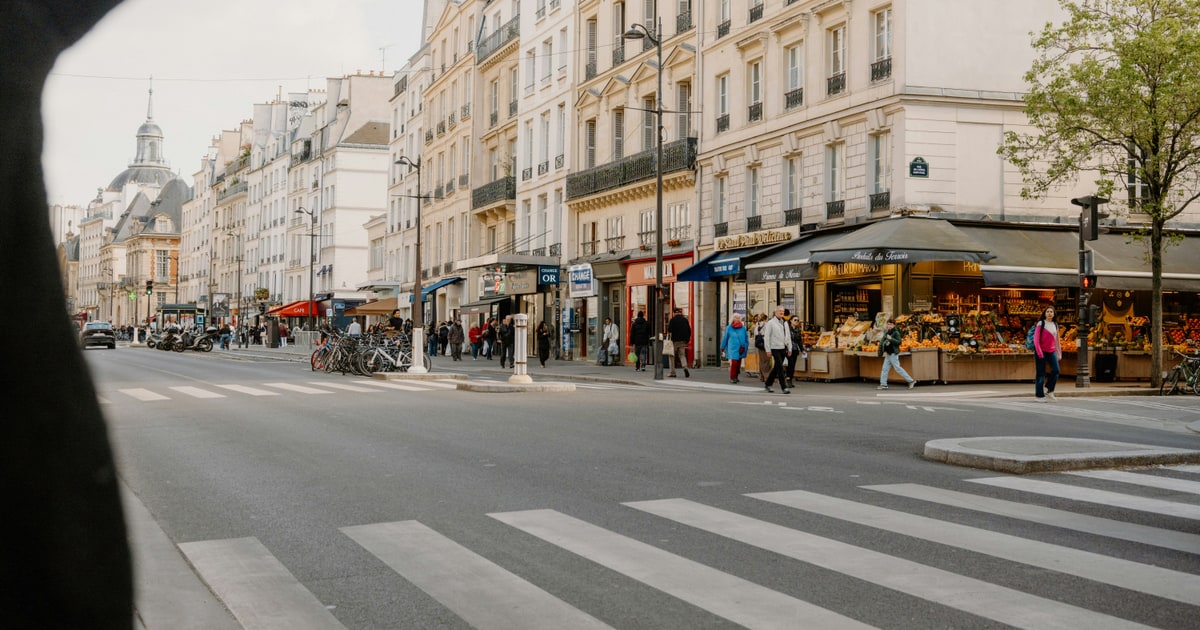
France is the most Muslim-friendly Western European country for halal food infrastructure. With an estimated 5-6 million Muslim residents — the largest Muslim population in Western Europe — the halal food market is substantial and well-developed.
Paris
Best areas:
- Barbès and La Chapelle (18th arrondissement): The historical heart of North African Muslim life in Paris. Halal butchers, Moroccan bakeries, Algerian pastry shops, and halal grocery stores line the streets. The Marché de la Chapelle has halal meat. Completely unpretentious and excellent.
- Belleville (20th arrondissement): Mixed North African and Tunisian community. Good halal restaurants.
- Seine-Saint-Denis suburbs (Saint-Denis, Aubervilliers): Extensive halal infrastructure — halal butchers, Algerian and Moroccan restaurants, halal supermarkets.
Supermarkets with halal sections:
- Casino: Major French supermarket chain; many Paris stores have dedicated halal sections (Rayon Hallal). Look for the section signs.
- Carrefour: Similar; halal sections in larger stores, particularly in Paris suburbs.
- Franprix: Some locations stock halal chicken products.
French halal certification: Look for AVS (Association de Vétérinaires pour la Surveillance des Abattoirs) or mosque association logos. France does not have a single national standard — multiple regional certifiers operate.
Lyon, Marseille, Toulouse
All major French cities have significant Muslim populations and good halal restaurant access. Marseille — with its historically strong Algerian community — has excellent North African food. Use Zabihah.com for specific restaurant recommendations.
Germany
Germany’s Turkish community (approximately 3-4 million) is the foundation of excellent halal food availability across the country. Turkish butcher shops (called Fleischerei or Metzgerei in German, or simply türkischer Metzger) are present in virtually every German city.
Berlin
Best areas:
- Kreuzberg (SO36 area): Kottbusser Tor is the centre of Turkish life in Berlin. Multiple halal butchers, Turkish supermarkets, döner kebab shops, and shawarma restaurants within a few minutes’ walk.
- Neukölln: Large Arab and Turkish community; excellent halal food, particularly Middle Eastern restaurants.
- Wedding: North African community presence; more Moroccan and Tunisian food options.
The Türkischer Markt (Turkish Market) on Maybachufer operates on Tuesdays and Fridays and has excellent fresh halal food stalls.
Munich
Less concentrated halal provision than Berlin, but accessible. Schwabing, Maxvorstadt, and the area around the central Hauptbahnhof have halal restaurants. Pasinger Markt has Turkish food vendors.
Frankfurt and Cologne
Both have strong Turkish communities. Frankfurt’s Sachsenhausen area and the central Konstablerwache have halal options. Cologne’s Ehrenfeld neighbourhood has a visible Muslim community with halal food.
German Supermarkets
Rewe and Aldi carry limited halal products. Turkish supermarket chains — Berrak, Hayat, Migros (the Turkish brand, different from Swiss Migros) — operate in German cities and carry a wide halal range including certified fresh meat, yoghurt, and packaged goods. If you can find one of these Turkish supermarkets, you have access to a full halal grocery shop.
Netherlands
The Netherlands has a Muslim population of approximately 1 million, concentrated in Amsterdam, Rotterdam, The Hague, and Utrecht — primarily Moroccan and Turkish communities.
Amsterdam
Best areas:
- Bijlmer (Amsterdam Zuidoost): Large Surinamese and Ghanaian Muslim community; halal butchers and restaurants.
- De Baarsjes and Bos en Lommer (west Amsterdam): Moroccan community concentration; halal butchers on Kinkerstraat and surrounding streets.
- Albert Cuyp Market: Daily open-air market in De Pijp; halal food stalls including fresh meat and Middle Eastern food.
Rotterdam
Rotterdam has a large Moroccan community and strong halal food access. Feijenoord, Delfshaven, and Hillegersberg areas have halal butchers and Moroccan restaurants.
Belgium
Brussels has a significant Moroccan and Turkish population. The Molenbeek and Schaerbeek municipalities have good halal infrastructure. Matongé is the African quarter with halal food options. Antwerp also has a Moroccan and Turkish community with accessible halal food.
Spain
Spain is harder for halal food than France or Germany, but manageable with the right strategy.
Barcelona
Best areas:
- El Raval: Central Barcelona neighbourhood with the largest Pakistani and Bangladeshi community. Multiple halal butchers and restaurants, particularly on Carrer de Sant Pau and surrounding streets.
- Badalona (suburb): North African community; more halal options than central Barcelona.
- Gracia: Some Middle Eastern restaurants.
Seafood strategy: Catalonia is one of the best regions in the world for fresh fish. Grilled or baked fish (lubina — sea bass, dorada — sea bream, merluza — hake) is available in almost every restaurant, simply prepared with olive oil, garlic, and lemon. This is the reliable halal eating strategy in Spain.
Madrid
Lavapiés: The most diverse neighbourhood in Madrid; Pakistani, Bangladeshi, North African, and various African communities. Multiple halal butchers and South Asian restaurants on Calle de Lavapiés, Calle del Ave María, and surrounding streets.
Paella and tapas: Most traditional Spanish dishes contain pork (jamón, chorizo, morcilla). Be explicit when ordering: “sin cerdo, sin jamón” (without pork, without ham). Seafood tapas (gambas al ajillo — garlic prawns, boquerones — anchovies, calamar — squid) are generally safe. Avoid any dish containing chorizo or jamón.
Italy
Rome
Best areas:
- Esquilino (around Piazza Vittorio Emanuele II): The most diverse neighbourhood in Rome. Pakistani, Bangladeshi, and North African communities with halal butchers and restaurants. Via Buonarroti has several halal options.
- Pigneto: Some Middle Eastern restaurants.
Italian food strategy: Italy’s fish and seafood culture provides excellent halal options. Fresh pasta (check for egg — halal), grilled fish, risotto with seafood, and simple vegetable dishes are widely available. Avoid anything with prosciutto, pancetta, guanciale, or salame (all pork). Most pizza toppings (margherita, marinara, vegetables, seafood) are halal — avoid any with pork.
Milan
Via Padova and Viale Monza areas have North African and Pakistani communities with halal food options. Viale Jenner area also has some halal restaurants.
Scandinavia and Northern Europe
Norway, Sweden, Denmark, and Finland all have Muslim minorities with halal butchers in major cities. Oslo’s Grønland neighbourhood, Stockholm’s Rinkeby suburb, and Copenhagen’s Nørrebro area all have halal food access. Less extensive than France or Germany but accessible.
Greece
Athens has a small Muslim community and some halal restaurants. Seafood is the reliable strategy — Greek seafood (grilled octopus, fresh fish, seafood saganaki) is excellent and widely available. Avoid dishes with lamb or chicken that is not specifically halal-certified.
Practical Tips for All European Travel
- Book hotels near Muslim neighbourhoods — this puts halal food within walking distance
- Search Zabihah.com before you arrive — save 5-10 restaurant options near your accommodation
- Learn the local “no pork” phrase:
- French: “sans porc” / “pas de porc”
- German: “ohne Schwein” / “kein Schweinefleisch”
- Spanish: “sin cerdo” / “sin jamón”
- Italian: “senza maiale” / “senza prosciutto”
- Seafood first — in any coastal European country, fresh fish is your safest and often best option
- Turkish restaurants — found across Western Europe, almost always halal; a reliable fallback in any major city
Summary
| Country | Ease Rating | Best City for Halal | Key Strategy |
|---|---|---|---|
| France | Excellent | Paris (Barbès) | Moroccan/North African restaurants; Casino halal section |
| Germany | Excellent | Berlin (Kreuzberg) | Turkish butchers and supermarkets nationwide |
| Netherlands | Good | Amsterdam | Moroccan/Turkish butchers; Albert Cuyp market |
| Belgium | Good | Brussels (Molenbeek) | Moroccan community areas |
| Spain | Moderate | Barcelona (El Raval) | Seafood + Pakistani/North African areas |
| Italy | Moderate | Rome (Esquilino) | Seafood + diverse neighbourhood areas |
| Scandinavia | Moderate | Oslo/Stockholm/Copenhagen | Specific Muslim neighbourhoods; seafood |
| Greece | Moderate | Athens | Seafood primarily |
| Verdict | Plan ahead | Use Zabihah.com | Seafood is the universal European fallback |
Ingredients change. Be first to know.
Brands reformulate without warning. We track every E-code update and halal certification — one short weekly email.
Related Articles
 Shopping Guides
 Halal Snacks in Turkey: Why Ülker Has No Logo and Lay's Türkiye Has No Certificate (2026)
In Turkey halal is the default, not a label — so most domestic snacks carry no helal mark and are still fine. The exceptions worth checking: Frito-Lay's Turkish-made Lay's and Doritos publish no product-level certificate, and imported European snacks bring pork and gelatine with them.
 Shopping Guides
 Halal Ice Cream and Dairy in Hong Kong: Kowloon Dairy, Trappist, Vitasoy and What to Trust (2026)
Hong Kong's only halal certifier publishes a restaurant list, not a packaged-goods register. Kowloon Dairy's ice cream cone lists gelatine and E471; Trappist milk drinks list E471; Vitasoy's halal claim is Philippines-market. Here is how to buy dairy in Hong Kong without a local certificate to lean on.
 Shopping Guides
 Halal Sweets, Candy and Bakery in Japan: Reading ショートニング and 乳化剤 (2026)
No major Japanese snack or bread maker certifies its domestic products. Most konbini bread uses shortening and emulsifiers of undisclosed origin; only two Tokyo bakeries are fully certified. Here is the two-word label rule, the Muslim-friendly snack shortlist, and which candy is out.