
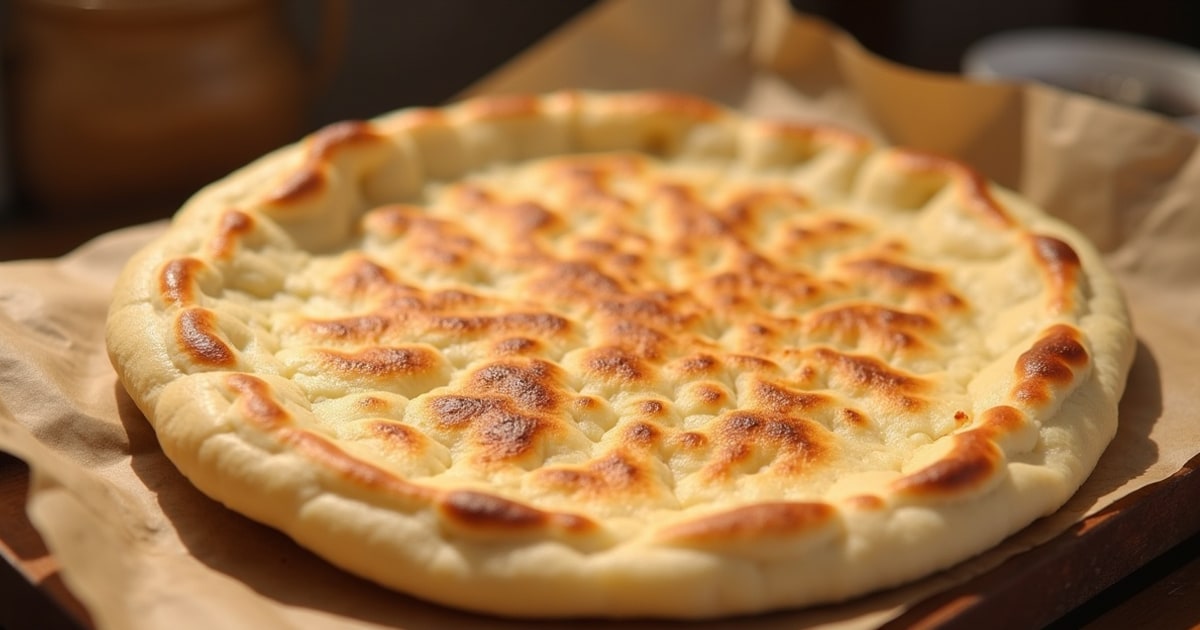
The E471 Problem in Commercial Bread
Bread seems simple. Flour, water, yeast, salt. For millennia, that is all bread was. The problem is that modern commercial bread production has introduced a class of additives that make bread softer, longer-lasting, and more uniform at industrial scale — and some of these additives are derived from animal fat that may be porcine in origin.
The primary concern is E471 — mono and diglycerides of fatty acids. This e-code appears on the ingredient lists of a significant proportion of commercially produced bread in the UK and US, including many pita breads and flatbreads. E471 can be derived from pork fat — which makes it Haram if porcine in origin.
This guide explains the issue, tells you exactly what to check, and ranks the best halal, E471-free pita breads available to buy online.
Understanding E471 in Bread
E471 is a broad category of emulsifier produced by reacting glycerol with fatty acids. Those fatty acids can be derived from:
- Vegetable oils (palm oil, sunflower oil, soya oil) — these are halal
- Animal fats, including lard (pig fat) — these are Haram
The problem for consumers is that the ingredient label simply says “E471” or “mono and diglycerides of fatty acids” — it does not specify the source. Without that information, or without halal certification confirming a plant source, E471 is Mushbooh — of doubtful status.
Commercial bakers use E471 because it:
- Softens the bread crumb and improves texture
- Extends shelf life by retaining moisture
- Improves dough stability during high-speed production
- Creates a more consistent product at industrial scale
Artisan and home-baked breads typically do not use E471. Most supermarket-branded pita breads do.
Other Emulsifiers to Watch in Bread
E471 is not the only emulsifier concern in commercial bread:
E481 — Sodium Stearoyl-2-Lactylate (SSL) Another common bread emulsifier. Can be derived from animal fats (including pork). Same Mushbooh status as E471 without source confirmation.
E472e — Mono and Diacetyl Tartaric Acid Esters of Mono and Diglycerides (DATEM) Used as a dough strengthener. The “mono and diglycerides” component again may be pork-derived. Mushbooh without certification.
E920 — L-Cysteine A flour improving agent sometimes used in bread. Historically derived from human hair or pig bristle; now primarily synthetic or from duck/chicken feathers. Mushbooh without source confirmation.
When reading a commercial pita bread label, scan for all of these. Halal-certified pita bread will either be free of these additives or will have used plant-sourced equivalents verified by a certification body.
Why Pita Bread Specifically Is a Concern
Pita bread occupies an interesting position in the halal consumer’s pantry. It is strongly associated with Middle Eastern and Muslim cuisine — shawarma wraps, mezze dipping, falafel pockets. Many Muslim consumers assume pita bread is automatically halal because of its cultural associations.
That assumption is wrong. The pita bread you find on the shelf at a mainstream UK or US supermarket is produced at industrial scale using commercial bread manufacturing processes, which almost universally involve emulsifiers. The cultural origin of the food type is irrelevant to the halal status of the specific commercial product.
The safest pita breads are those produced by Middle Eastern food brands with strong Islamic food tradition — brands like Libanais and Phoenicia that are built around authentic Lebanese and Arabic bread recipes and halal certification. Their traditional recipes do not require synthetic emulsifiers, and their certification confirms the halal status of everything in the product.
Top Halal Pita Bread Picks Ranked
1. Libanais Pita Bread 30-Pack (US)
Libanais is the strongest halal pita bread pick for US buyers. This is authentic Lebanese-style pita bread, produced with halal certification and formulated without E471 — the traditional Lebanese recipe reaches its texture through dough structure and baking, so the emulsifier is never needed in the first place. The 30-pack is well-suited to households that use pita regularly — for weeknight shawarma, lunchbox wraps, or dipping with hummus and mezze.
The pita itself is thin, soft, and pliable — it opens cleanly without tearing, which is essential for stuffing. The absence of emulsifiers means a slightly shorter shelf life than heavily processed commercial pita, but the trade-off is a significantly better product with clean ingredients.
Halal certified. E471-free. Available on Amazon US.
Verdict: Excellent. Best halal pita pick for US buyers.
2. Libanais Lebanese Pita 18-Pack (US)
The 18-pack variant from Libanais for buyers who want a smaller quantity. Same product, same clean ingredient profile, and covered by the same halal certification and E471-free formulation we verified for the 30-pack. The 18-pack is a practical starting point if you are trying the brand for the first time before committing to the 30-pack.
Verdict: Excellent. Same as the 30-pack; smaller quantity.
3. Phoenicia White Arabic Pita Bread (US)
Phoenicia is a Lebanese-American food brand producing Arabic pita bread with halal certification. Their white Arabic pita is a classic format — soft, slightly thicker than some Middle Eastern styles, excellent for stuffing and wrapping.
Phoenicia has a strong reputation in the US Middle Eastern grocery market. Their products are produced with traditional formulations that do not rely on synthetic emulsifiers. Halal certified.
Available on Amazon US. A reliable alternative to Libanais for US buyers, with slightly different texture and thickness.
Verdict: Very Good. Solid halal-certified alternative with authentic Arabic pita profile.
4. Terranean Sea Salt Pita Chips 3-Pack (US)
Not a full pita bread, but worth including for consumers who use pita in snacking contexts. Terranean produces halal-certified pita chips — baked, crispy, and seasoned with sea salt. The 3-pack format is well-suited to families or for stocking as a regular snack.
Pita chips serve shawarma sauce, hummus dipping, and mezze spreads in a convenient, shelf-stable format. The halal certification on Terranean pita chips addresses the same emulsifier concern — commercial chip production can also use E471.
Verdict: Good. Not a bread replacement, but a solid halal pita chip option for snacking.
Product Comparison Table
| Brand | Pack Size | E471 Free | Halal Certified | Style |
|---|---|---|---|---|
| Libanais Pita Bread | 30-pack | Yes | Yes | Lebanese pita |
| Libanais Lebanese Pita | 18-pack | Yes | Yes | Lebanese pita |
| Phoenicia Arabic Pita | Variable | Yes | Yes | Arabic white pita |
| Terranean Pita Chips | 3-pack | Yes | Yes | Baked pita chips |
How to Use Halal Pita Bread
Halal pita bread is a genuinely versatile product — far more than just a wrap or flatbread:
Shawarma and wraps. The classic use — fill with chicken shawarma, garlic sauce, pickles, and salad. The pocket structure of pita allows generous fillings without the contents falling out.
Mezze and dipping. Tear into pieces and dip with hummus, baba ganoush, labneh, or olive oil and za’atar. Fresh pita is far superior to crackers for mezze service.
School lunches. Halal-certified pita with cream cheese, halal deli meat, or falafel makes an excellent lunchbox option for Muslim children — an alternative to standard sandwich bread that may contain E471.
Pizza base. Individual pita rounds make excellent single-serve pizza bases — top with tomato sauce, mozzarella, and vegetables, then bake for 8 minutes.
Pita toast. Slice open, drizzle with olive oil, season, and bake until crisp. A simple snack that requires no additional processing.
Label Reading Checklist for Commercial Pita Bread
When buying any commercial pita bread — online or in-store — check the ingredients list for:
| Additive | Concern Level |
|---|---|
| E471 (mono and diglycerides of fatty acids) | Mushbooh — Haram if pork-derived |
| E481 (sodium stearoyl-2-lactylate) | Mushbooh — Haram if pork-derived |
| E472e (DATEM) | Mushbooh — check source |
| E920 (L-cysteine) | Mushbooh — check source |
| Lard / animal shortening | Haram — clearly pork-derived |
If any of these appear without halal certification confirming plant sources, treat the product as Mushbooh. Choose a halal-certified alternative.
What to look for instead:
- “Emulsifier: E471 (from plant sources)” — acceptable, but certification preferred
- A halal logo from a recognised body (HMC, HFA, IFANCA, JAKIM, MUI)
- A completely emulsifier-free ingredient list (flour, water, yeast, salt)
Making Your Own Pita — The Guaranteed Halal Option
For consumers who want absolute certainty, homemade pita bread is simple and requires no emulsifiers:
Basic ingredients:
- 500g strong white flour
- 7g fast-action yeast
- 1 tsp salt
- 300ml warm water
- 2 tbsp olive oil
Mix, knead for 8 minutes, rest for 1 hour, roll into rounds, and bake at 230°C (fan 210°C) for 5-6 minutes. Each round will puff and form the characteristic pocket. No additives, no E471, no Mushbooh concerns.
Homemade pita is also significantly cheaper per unit than commercial pita — a practical consideration for families. The time investment is approximately 90 minutes including proving time, and a batch of 8-10 pita breads freezes well.
Summary
E471 in commercial pita bread is a genuine concern — not a theoretical one. The emulsifier is widespread in commercial bread production and its source is rarely disclosed on the label. Muslim consumers who want certainty need halal-certified pita bread from brands that confirm E471-free formulations.
For US buyers, Libanais is the clear first choice — authentic Lebanese pita with halal certification and clean ingredients. Phoenicia is the strong alternative. For consumers in other markets, seek out Middle Eastern bakeries with halal certification, or make your own — the traditional recipe requires nothing that is Mushbooh or Haram.
The broader label-reading rule applies to all commercial bread: scan for E471, E481, E472e, and E920. Where any of these appear without halal certification, choose a certified alternative or bake your own.
Run a certified halal brand that belongs in this guide?
Get featured here and across HalalCodeCheck — reach shoppers at the moment they verify.
Ingredients change. Be first to know.
Brands reformulate without warning. We track every E-code update and halal certification — one short weekly email.
Related Articles
 Shopping Guides
 Halal Bakery and Bread in the Philippines: Gardenia Is Certified, But Not by JAKIM
Gardenia Philippines holds product-level IDCP certification with identity numbers you can check. The JAKIM certificate people cite belongs to a different company in Malaysia. And one Filipino maker uses vegetable shortening in its bread and lard in its piaya.
 Shopping Guides
 Halal Bakery and Bread in New Zealand: Two Different Companies Called Tip Top
New Zealand's leading halal certifier does not list a single packaged bakery brand, and its processed food directory returns zero companies. Meanwhile the Tip Top on your bread bag and the Tip Top in your freezer are different businesses with different answers.
 Shopping Guides
 Halal Bakery & Cakes in the UAE: Brand-by-Brand Guide (2026)
Bahlsen is HQC-certified for UAE-stocked lines, Mr Kipling is Haram (carmine), and McVitie's Jaffa Cakes stay Mushbooh — even Dubai's own Modern Bakery has no public halal certificate. Full brand audit.