
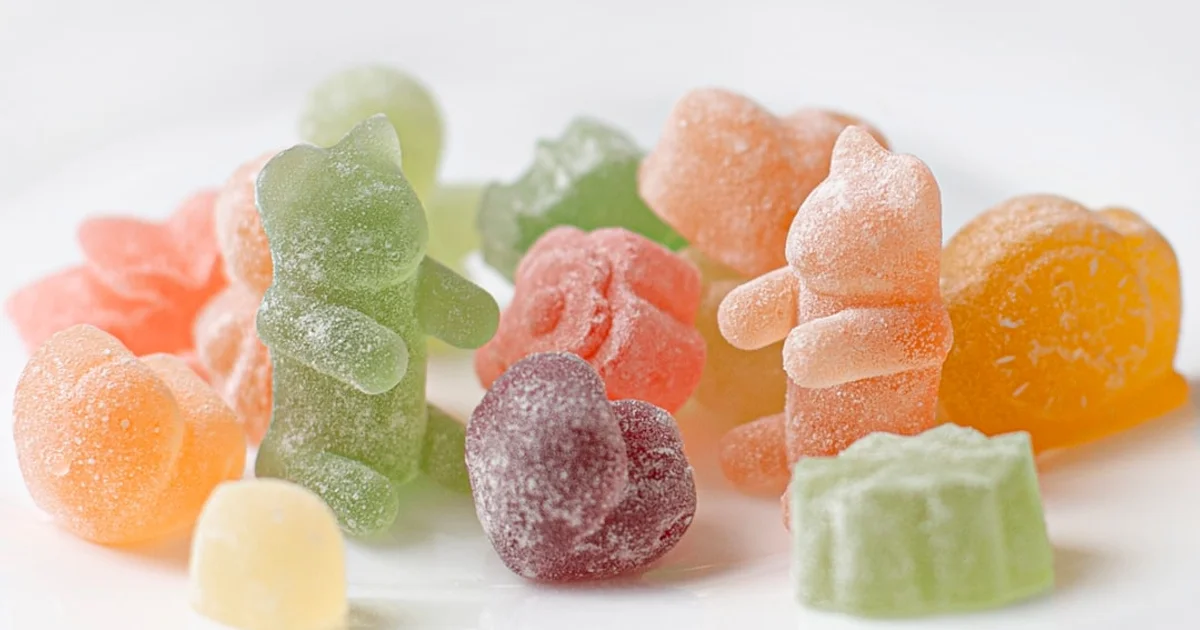
You’ve found Peelerz gummy candy at Checkers — mango or lychee flavour, the kind you peel apart before eating. Somewhere online you’ve seen someone claim it’s halal. Somewhere else you’ve seen someone say it isn’t. Both are right, depending on which Peelerz they mean.
The direct verdict: the Peelerz sold in South Africa is the standard Amos Sweets range, made with pork gelatine. It is not halal. A genuinely halal-certified Peelerz exists — but it’s a different product, made for Malaysia.
Two Products, One Name
Amos Sweets Co., the Thai manufacturer behind Peelerz, runs two distinct production lines:
- Standard range — 12 flavours (mango, lychee, peach, orange, banana, tangerine among them), made with pork gelatine. This is the range confirmed sold at South African Checkers under names like “Amos Gummy Mango Peelerz.”
- Malaysian range — 9 flavours, made with beef gelatine and, in some formulations, pectin and carrageenan instead. This range carries halal certification for the Malaysian market and uses coconut oil rather than palm oil in places.
These aren’t the same recipe rebranded — they’re formulated differently, gelatine source included, specifically because one is built to pass halal certification and the other isn’t.
Full Ingredient List (Standard Range)
Glucose syrup (corn), sugar, water, concentrated fruit juice, gelatin, glycerol, high fructose corn syrup, citric acid, artificial flavour, carrageenan, sodium citrate, titanium dioxide, malic acid, palm oil, potassium citrate, modified corn starch, carnauba wax, colours (including FD&C Yellow 5, FD&C Yellow 6), ascorbic acid, pectin, beta-carotene.
The gelatine here is unspecified by species on the pack in the way most gummy candy is — but Amos’s own product documentation and independent halal-product-safety checks confirm the standard-range gelatine is pork-derived.
Why the Confusion Happens
Gummy candy from smaller international manufacturers is a common source of this exact problem: one factory, two formulations, aimed at different markets, sold under overlapping branding. A shopper who’s seen “Peelerz — halal certified” mentioned somewhere online has usually seen a reference to the Malaysian line, not the one on their local shelf. Without a halal logo actually printed on the South African pack, there’s no way to tell the two apart just from the flavour name.
How to Check Your Specific Pack
- Look for a halal certification logo — SANHA, MJC, or a Malaysian halal mark (JAKIM) printed directly on the pack
- Check the gelatine wording — if it just says “gelatin” with no species and no logo, treat it as pork
- Don’t rely on the flavour name matching a “certified” list you’ve seen online — certification is range-specific, not flavour-specific
- When in doubt, choose a certified alternative — SANHA-certified confectionery is widely stocked in South African supermarkets
Halal Alternatives
South Africa’s SANHA and MJC certification bodies list a wide range of certified confectionery. Look for:
- SANHA-certified gummy sweets — check the confectionery category on SANHA’s certified-establishment listings
- Pectin- or agar-based gummies — gelatine-free by design, sidesteps the sourcing question entirely
- White Rabbit Candy — a separate verdict, check the linked guide for its own gelatine-free status
As an Amazon Associate, HalalCodeCheck earns from qualifying purchases.
Summary
| Question | Answer |
|---|---|
| Is Peelerz halal in South Africa? | No — the SA-market range uses pork gelatine |
| Is there a halal Peelerz? | Yes — a separate Malaysian range with beef gelatine |
| Is that halal range sold in South Africa? | No confirmed distribution |
| What to check on the pack | A visible SANHA, MJC, or JAKIM halal logo |
| Best halal alternative | SANHA-certified or pectin-based gummy sweets |
Look up gelatine and every other additive in the E-codes database.
To scan a full ingredient list for halal status in seconds, use the ingredient scanner.
How we reached this verdict
We checked the following Tier-1 sources before publishing this verdict:
- Halal certification bodies (SANHA, MJC, NIHT — South Africa; JAKIM — Malaysia): no SANHA or MJC certified-establishment listing exists for Peelerz or Amos Sweets in South Africa. Amos’s Malaysian range carries JAKIM-recognised halal certification, confirming the company can and does produce a genuinely halal formulation elsewhere.
- Manufacturer statements: Amos Sweets’ own product specifications for both ranges, distinguishing pork gelatine (standard) from beef gelatine (Malaysian range).
- Independent halal-product-safety checks: cross-referenced against consumer halal-product databases that flag the standard Peelerz range as containing pork gelatine.
- Sunni fatwa scholarship across the four madhabs:
- Hanafi-leaning bodies: IslamQA Hanafi, Darul Iftaa Birmingham, AskImam.org, Daruliftaa.com (Mufti Taqi Usmani), Wifaqul Ulama, Darul Iftaa New York.
- Shafi’i / Maliki-leaning bodies: NU (Nahdlatul Ulama, Indonesia), Dar al-Ifta al-Misriyyah (Egypt), e-fatwa.com (UAE), al-Azhar.
- Hanbali / Saudi-Salafi-leaning bodies: Saudi Permanent Committee for Scholarly Research, IslamQA Saudi.
Madhab note
The four Sunni madhabs broadly converge on the rules applied in this guide:
- Pork-derived gelatine — Haram across all four madhabs, with no exception for processing or dilution.
- Beef gelatine from a zabiha-slaughtered animal — Halal by consensus, which is the basis for the Malaysian range’s certification.
- Unlabelled or unspecified gelatine source — treated as a red flag requiring verification across all four madhabs; the cautious default in the absence of certification is to assume porcine origin, consistent with HalalCodeCheck’s general gelatine guidance.
- Istihāla (transformation) — some scholars, particularly within the Hanafi school, discuss whether gelatine’s chemical transformation from bone/skin collagen changes its ruling; this reasoning is contested and does not override a confirmed pork source, which remains haram regardless of processing.
If your madhab differs on a specific ruling, the relevant section above flags the school-specific position. For binding rulings on borderline products, consult a competent scholar in your tradition.
Ingredients change. Be first to know.
Brands reformulate without warning. We track every E-code update and halal certification — one short weekly email.
Related Articles
 Shopping Guides
 Is Roshen Yummi Gummi Twists Halal? Gelatine Confirmed, No Label (2026)
Roshen Yummi Gummi Twists contain gelatine with no source disclosed and no halal label — unlike Roshen's certified dark chocolate and Crabs Caramel. Avoid per the brand's own labelling rule.
 Shopping Guides
 Is Copains Copines Bonbon Tendre Halal? Pork Gelatine Confirmed (2026)
Copains Copines Bonbon Tendre (E.Leclerc's own-brand French gummy candy) contains pork gelatine — confirmed haram. Full ingredient breakdown and halal alternatives.
 Shopping Guides
 Halal Bakery, Cakes and Gummies in South Africa: Albany, Woolworths, Beacon (2026)
South Africa is the easiest country in this series: Albany's bakeries sit on SANHA's public register, Sasko is certified for flour, and Woolworths prints the SANHA logo on what its certified suppliers make. Beacon Jelly Tots are starch-set with no gelatine; Beacon's gelatine lines say 'bovine'. Here is the logo rule.