
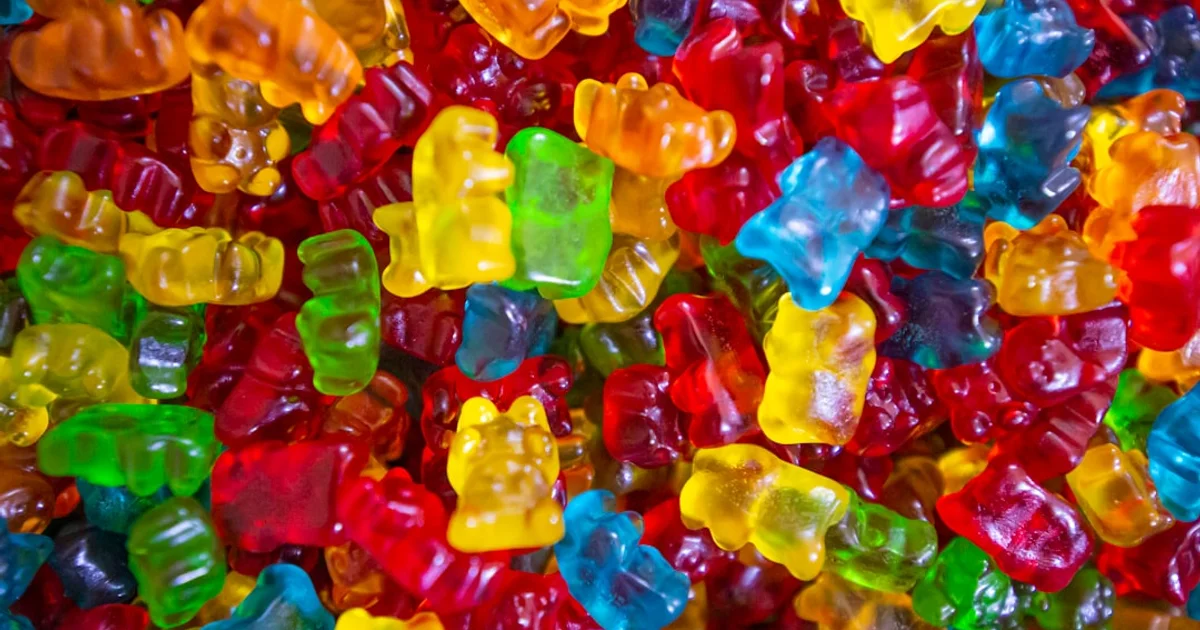
You’re in a French E.Leclerc, looking at a bag of Copains Copines Bonbon Tendre — soft gummy sweets in the store’s own confectionery range. This one has a direct answer, not a nuanced one.
The direct verdict: not halal. The ingredient panel lists pork gelatine explicitly.
Full Ingredient List (Gélifiés Fraises / Strawberry variant)
Sugar, glucose syrup, water, corn starch, pork gelatine, citric acid (acidulant), natural flavouring, colourants: curcumin (E100), carmine (E120), carotenoids (E160), anthocyanins (E163), potato starch, wheat starch.
There’s no ambiguity to resolve here the way there is with unlabelled E471 or undisclosed gelatine species — the pack states “gélatine de porc” directly. That single ingredient settles the verdict regardless of everything else on the list.
The Colourants, for Completeness
Even setting the gelatine aside, E120 (carmine/cochineal), the red-pink colourant, is insect-derived and itself a debated ingredient among Islamic scholars — some treat small insects as a lesser category than mammalian haram sources, others don’t. It’s academic here, since the pork gelatine alone is decisive, but worth knowing if you’re checking other Copains Copines flavours where the colourant profile might differ.
Who Makes This
Copains Copines is a private-label brand from Scamark, the manufacturer behind E.Leclerc’s Marque Repère own-brand range in France. Own-brand supermarket confectionery in Europe follows the same sourcing patterns as branded gummy candy — pork gelatine remains the default in conventional (non-halal-certified) production unless a product is specifically formulated and labelled otherwise.
Halal Alternatives
- Haribo Halal range (where available) — explicitly certified, beef-gelatine or pectin-based
- Pectin- or agar-based French gummy sweets — check the ingredient panel for “pectine” or “agar-agar” instead of “gélatine”
- Halal-certified confectionery from French Islamic grocers — carries AVS, ARGML, or Ecocert Halal certification directly on pack
As an Amazon Associate, HalalCodeCheck earns from qualifying purchases.
Summary
| Question | Answer |
|---|---|
| Is Copains Copines Bonbon Tendre halal? | No |
| What makes it haram? | Pork gelatine, stated directly on the label |
| Who makes it? | Scamark, for E.Leclerc’s Marque Repère range |
| Any other concerns? | E120 (carmine) — debated among scholars, moot given the gelatine |
| Best halal alternative | Pectin- or agar-based gummy sweets, or certified halal confectionery |
Look up gelatine and every other additive in the E-codes database.
To scan a full ingredient list for halal status in seconds, use the ingredient scanner.
How we reached this verdict
We checked the following Tier-1 sources before publishing this verdict:
- Manufacturer statements: the product’s own ingredient panel, confirmed via Open Food Facts and E.Leclerc’s own retailer listing, explicitly states “gélatine de porc” (pork gelatine).
- Halal certification bodies (AVS, ARGML, Ecocert Halal — the French-market certifiers): no certified listing exists for this product, which is expected given the confirmed pork content.
- Sunni fatwa scholarship across the four madhabs:
- Hanafi-leaning bodies: IslamQA Hanafi, Darul Iftaa Birmingham, AskImam.org, Daruliftaa.com (Mufti Taqi Usmani), Wifaqul Ulama, Darul Iftaa New York.
- Shafi’i / Maliki-leaning bodies: NU (Nahdlatul Ulama, Indonesia), Dar al-Ifta al-Misriyyah (Egypt), e-fatwa.com (UAE), al-Azhar.
- Hanbali / Saudi-Salafi-leaning bodies: Saudi Permanent Committee for Scholarly Research, IslamQA Saudi.
Madhab note
The four Sunni madhabs broadly converge on the rules applied in this guide:
- Pork-derived gelatine — Haram across all four madhabs, with no exception for processing or dilution — consensus, not a school-specific ruling.
- Insect-derived dyes (E120 cochineal/carmine) — Hanafi, Shafi’i, and Hanbali generally treat as haram; some Maliki scholars permit small insects. Not the deciding factor here, but relevant if checking other Copains Copines flavours.
If your madhab differs on a specific ruling, the relevant section above flags the school-specific position. For binding rulings on borderline products, consult a competent scholar in your tradition.
Ingredients change. Be first to know.
Brands reformulate without warning. We track every E-code update and halal certification — one short weekly email.
Related Articles
 Shopping Guides
 Is Roshen Yummi Gummi Twists Halal? Gelatine Confirmed, No Label (2026)
Roshen Yummi Gummi Twists contain gelatine with no source disclosed and no halal label — unlike Roshen's certified dark chocolate and Crabs Caramel. Avoid per the brand's own labelling rule.
 Shopping Guides
 Is Peelerz Halal? The South African Gummy Candy Has Two Different Recipes
Peelerz sold at South African Checkers uses pork gelatine. A separate Malaysian-certified halal range with beef gelatine exists but isn't the one on SA shelves. Full breakdown.
 Shopping Guides
 Halal Bakery, Cakes and Gummies in South Africa: Albany, Woolworths, Beacon (2026)
South Africa is the easiest country in this series: Albany's bakeries sit on SANHA's public register, Sasko is certified for flour, and Woolworths prints the SANHA logo on what its certified suppliers make. Beacon Jelly Tots are starch-set with no gelatine; Beacon's gelatine lines say 'bovine'. Here is the logo rule.