
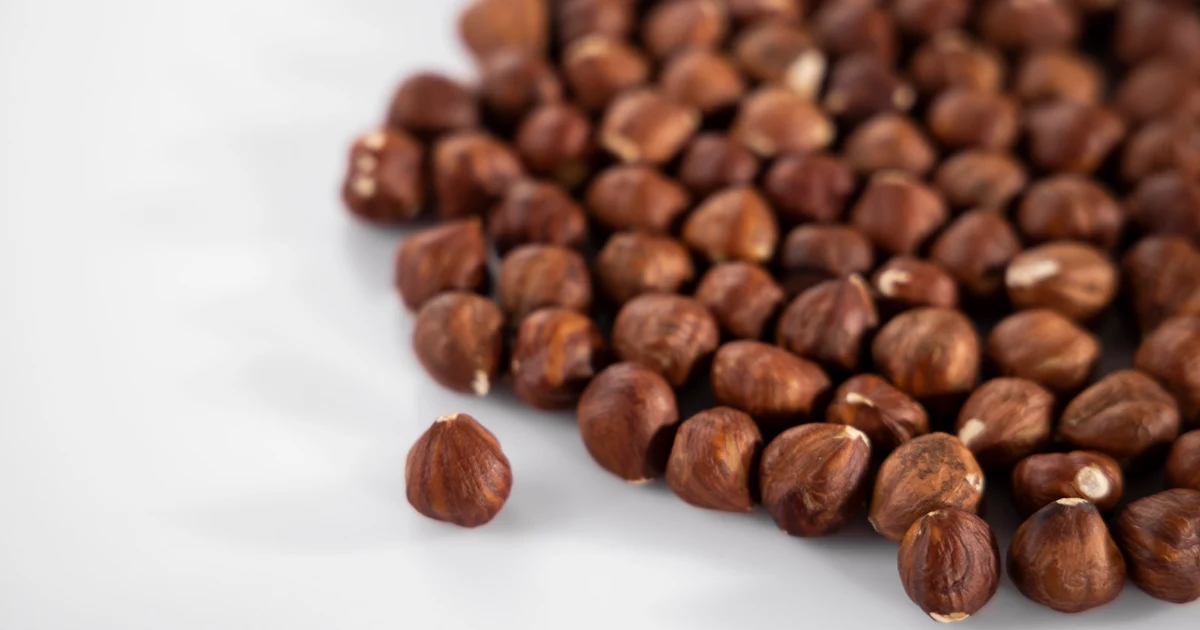
The verdict: Nutella is Mushbooh in the UK and EU — no pork, no alcohol, but no halal certification either.
Nutella is the world’s best-selling hazelnut spread, consumed in over 160 countries. For Muslim consumers in the UK and US, the question of its halal status comes up repeatedly — and the answer requires looking at each ingredient individually rather than accepting a blanket yes or no.
What Is in Nutella?
The ingredients for standard UK Nutella are:
- Sugar
- Palm oil
- Hazelnuts (13%)
- Skimmed milk powder
- Fat-reduced cocoa
- Whey powder (milk)
- Emulsifier: soya lecithin (E322)
- Vanillin
Let’s go through the ingredients that matter for halal compliance.
Soya Lecithin (E322) — Halal
E322 (lecithin) is the emulsifier used in Nutella. Ferrero explicitly states it is derived from soya beans — a plant source. Soya lecithin is universally accepted as halal.
This is an important distinction. Some chocolate products use E471 (mono and diglycerides of fatty acids), which can be animal-derived and is classified as Mushbooh. Nutella does not use E471. The only emulsifier is E322, and Ferrero confirms it is plant-based.
Verdict on E322: Halal.
Vanillin — Not Vanilla Extract
Nutella contains vanillin, not vanilla extract. This distinction is critical and frequently misunderstood.
- Vanilla extract is made by soaking vanilla beans in ethanol (alcohol). The alcohol acts as a solvent. This raises halal concerns for strict observers.
- Vanillin is the chemical compound responsible for the vanilla flavour. It is produced synthetically — most commonly from petroleum derivatives or lignin from wood pulp — without any alcohol in the final product.
Nutella uses synthetic vanillin. There is no alcohol in Nutella’s flavouring. This is not a halal concern.
Verdict on vanillin: Halal.
Whey Powder — The Unverified Ingredient
Nutella contains whey powder derived from milk. Whey itself is not haram — it is a dairy by-product. However, the whey in standard UK/EU Nutella comes from non-halal-certified dairy supply chains. For strict halal observers who require full supply chain certification, this is a concern.
The issue here is not the ingredient itself but the absence of a halal audit covering its sourcing.
Verdict on whey: Mushbooh — not haram, but unverified.
No Pork, No Gelatine, No Alcohol
To be direct about what Nutella does not contain:
- No pork ingredients
- No pork-derived gelatine
- No E471 (the frequently questioned mono & diglycerides)
- No E120 (cochineal/carmine)
- No alcohol (vanillin ≠ vanilla extract)
- No meat-derived flavourings
Ferrero’s official position confirms this. The company has responded to consumer questions by stating that Nutella contains no ingredients of animal origin apart from skimmed milk powder and whey (both dairy). The emulsifier is confirmed as vegetable-origin.
Why Nutella Is Still Mushbooh (Not Halal-Certified)
Ferrero does not hold halal certification for Nutella sold in the UK or EU.
This is the core issue. A brand’s own statement — however accurate — is not equivalent to independent halal certification. Halal certifying bodies (such as HMC, HFA, IFANCA, and JAKIM) conduct:
- Audits of all raw material suppliers
- Verification of manufacturing processes and hygiene controls
- Checks for cross-contamination in shared production lines
- Independent confirmation of all E-code sources
Ferrero has specifically confirmed that UK/EU Nutella products do not carry halal certification. For consumers who require certified products rather than brand assurances, Nutella does not qualify.
Practical position for UK consumers: Nutella contains no overt haram ingredients. However, it is not halal-certified. Scholars and consumer groups differ — some accept Ferrero’s vegetable-origin statement for E322 and the absence of pork as sufficient; others require independent certification. This is a Mushbooh call that each person must make according to their own standard.
Regional Breakdown
| Market | Halal Status | Details |
|---|---|---|
| UK / EU | Mushbooh | No halal certification. No pork, no alcohol. Whey unverified. |
| US / Canada | Mushbooh | Same position as UK — no certification. |
| Malaysia | Halal | JAKIM-certified production for Malaysian market. |
| Indonesia | Halal | MUI-certified for Indonesian market. |
| Turkey | Halal | Produced under Turkish Diyanet certification for local market. |
| UAE / Saudi Arabia | Halal | Local halal-certified production for Middle Eastern markets. |
Important: Regional halal certification does not carry over to products purchased in the UK. Always check the specific pack in your hand.
The Ferrero Brand — Wider Context
For a full breakdown of all Ferrero products — including Ferrero Rocher, Kinder, Raffaello, and Tic Tac — see the Ferrero brand guide.
Nutella is the Ferrero product with the strongest case for acceptability among Mushbooh products (due to confirmed plant-derived E322 and no alcohol), but it remains uncertified alongside the rest of the standard UK/EU Ferrero range.
Is Nutella B-ready Halal?
Nutella B-ready — the individually wrapped wafer-and-hazelnut-cream bar in the red box — is a different case entirely. It’s the one product in the whole Ferrero range where the company drops the ambiguity.
The UK ingredient list: hazelnut spread with cocoa 81.5% (sugar, palm oil, hazelnuts, skimmed milk powder, fat-reduced cocoa, emulsifier: lecithin (soya), vanillin), wheat flour, baker’s yeast, powdered barley malt extract, salt, skimmed milk powder, emulsifier: lecithin (soya), wheat proteins, whey proteins (milk), water. The only emulsifier is soya lecithin (E322) — same as standard Nutella spread. No E471, no gelatine, no alcohol.
What’s different is Ferrero’s own position. On its US FAQ page covering B-ready and Biscuits, Ferrero states directly: “Is it halal certified? — Yes, Nutella B-ready is halal certified.” It’s also listed as kosher certified on the same page. Ferrero doesn’t name which certifying body or which markets that covers, so treat it as a manufacturer statement rather than an independently verifiable audit trail — but it’s a stronger position than Ferrero takes for the standard spread, where no such claim is made at all.
Verdict on Nutella B-ready: Halal (manufacturer-affirmed). Clean ingredients, and Ferrero directly claims certification — a claim it does not extend to the rest of its range.
Is Nutella Biscuits Halal?
Nutella Biscuits — the round sandwich biscuit with a Nutella filling — sits right next to B-ready on Ferrero’s own FAQ page. The two products get very different treatment.
The UK ingredient list: Nutella filling (40%: sugar, palm oil, hazelnuts, skimmed milk powder, fat-reduced cocoa, emulsifier: lecithins (soya), vanillin); biscuit (wheat flour, vegetable fats — palm, palm kernel, cane sugar, lactose (milk), wheat bran, milk powder, honey, raising agents: disodium diphosphate, sodium bicarbonate, ammonium bicarbonate, malted barley flour, fat-reduced cocoa, salt, barley-maize malt extract, wheat starch, emulsifier: lecithins (soya), vanillin).
Every E-code present — E322 (soya lecithin), E450 (disodium diphosphate), E500 (sodium bicarbonate), E503 (ammonium bicarbonate) — is plant or mineral-derived and uncontroversial. No E471, no gelatine, no alcohol. Honey and milk are both permissible.
Here’s the gap: Ferrero’s FAQ page addresses Nutella Biscuits’ vegetarian and vegan status directly (“suitable for ovo-lacto vegetarians”; “not vegan — contains milk and honey”) but says nothing at all about halal status — the same question it answers explicitly, three lines up, for B-ready. That silence is worth taking seriously rather than assuming it’s an oversight. The milk and whey components’ rennet source also isn’t disclosed, which is standard EU labelling practice and not unique to this product, but it means the ingredient list alone can’t close the loop the way it can for B-ready.
Verdict on Nutella Biscuits: halal by ingredient composition, unconfirmed by certification. Don’t assume Biscuits inherit B-ready’s halal claim just because they’re on the same shelf, in the same red-and-white packaging family — Ferrero itself doesn’t make that claim.
What to Check on the Label
- Emulsifier listed: Should read “soya lecithin” — not E471 or any unspecified emulsifier
- Flavouring: “Vanillin” — not “vanilla extract”
- Halal certification logo: Currently absent from all standard UK Nutella jars
- Country of origin: UK/EU jars are not certified; Asian/Middle Eastern markets may be
E-Code Summary for Nutella
| E-code | Name | Status | Notes |
|---|---|---|---|
| E322 | Soya Lecithin | Halal | Ferrero confirms soya-derived |
No other E-codes are present in standard UK Nutella. The vanillin and whey are listed as named ingredients, not E-coded additives.
Summary
Nutella contains no pork, no gelatine, no alcohol, and no animal-derived E-codes. The emulsifier is confirmed as plant-based soya lecithin. Vanillin is synthetic and does not involve alcohol.
The reason it sits in the Mushbooh category for UK consumers is straightforward: there is no independent halal certification. For consumers who require certification rather than brand statements, Nutella does not qualify. For consumers who accept verified vegetable-sourced ingredients without a formal halal stamp, Nutella presents no specific haram concern.
The decision is yours to make — but now you have all the facts.
If you’d rather not make that call at all, the certified route is far easier to find in bar form than in a jar — our ranked guide to halal-certified chocolate bars covers bars rather than spreads, but every product on it carries a certification stamp Nutella’s UK jars don’t.
- Check the full E-codes database — verify any additive on a label
- Scan your ingredients label — upload a photo for instant E-code extraction
- Ferrero brand guide — all Ferrero products, one page
How we reached this verdict
We checked the following Tier-1 sources before publishing this verdict:
- Halal certification bodies (HMC, HFA, JAKIM, MUI): Where the brand or ingredient appears in certified products, the certifying body’s audit covers source verification; where it appears in uncertified products, manufacturer disclosure is required.
- Manufacturer statements: Public ingredient lists, vegetarian / vegan suitability labels, customer-service correspondence on source disclosure.
- Sunni fatwa scholarship across the four madhabs:
- Hanafi-leaning bodies: IslamQA Hanafi, Darul Iftaa Birmingham, AskImam.org, Daruliftaa.com (Mufti Taqi Usmani), Wifaqul Ulama, Darul Iftaa New York.
- Shafi’i / Maliki-leaning bodies: NU (Nahdlatul Ulama, Indonesia), Dar al-Ifta al-Misriyyah (Egypt), e-fatwa.com (UAE), al-Azhar.
- Hanbali / Saudi-Salafi-leaning bodies: Saudi Permanent Committee for Scholarly Research, IslamQA Saudi.
Madhab note
The four Sunni madhabs broadly converge on the rules applied in this guide:
- Pork-derived sources — Haram across all four madhabs.
- Alcohol-based ingredients — Haram across all four madhabs.
- Source-ambiguous E-codes (E471, E476, E631, E627, E635, E920) — manufacturer plant-source disclosure (vegetarian-suitable label) is treated as sufficient under the Hanafi/Maliki/Shafi’i mainstream rule (Darul Ifta Birmingham, IslamQA case 245452); HMC-strict / Hanbali-leaning view requires formal independent certification.
- Istihāla (transformation) — Hanafi and Maliki accept istihāla strongly; spirit vinegar (alcohol → vinegar) is halal. Most Shafi’i scholars permit spirit vinegar specifically; some Hanbali scholars more cautious.
- Insect-derived dyes (E120 cochineal/carmine) — Hanafi, Shafi’i, and Hanbali generally treat as haram; some Maliki scholars permit small insects.
- Non-zabihah meat (Ahl al-Kitāb / People-of-the-Book slaughter) — Maliki and classical Shafi’i/Hanbali generally accept; Hanafi-Deobandi tradition more restrictive.
If your madhab differs on a specific ruling, the relevant section above flags the school-specific position. For binding rulings on borderline products, consult a competent scholar in your tradition.
Ingredients change. Be first to know.
Brands reformulate without warning. We track every E-code update and halal certification — one short weekly email.
Related Articles
 Shopping Guides
 Is Milka Chocolate Halal? Complete EU & UK Guide (2026)
Milka chocolate is Mushbooh — it contains E476 (PGPR) and E471 with undisclosed animal fat sources and no halal certification in UK or EU.
 Shopping Guides
 Is Biscolata Halal? Turkish Chocolate Brand Ingredients Checked
Biscolata is Mushbooh — the Turkish chocolate biscuit brand uses E471 with no halal certification for export markets, though Turkish production may meet local standards.
 Shopping Guides
 Is Terry's Chocolate Orange Halal? Ingredients Checked
Terry's Chocolate Orange is Mushbooh — it contains E476 (PGPR) with undisclosed glycerol source. No halal certification. The Dark version has the same concern.