
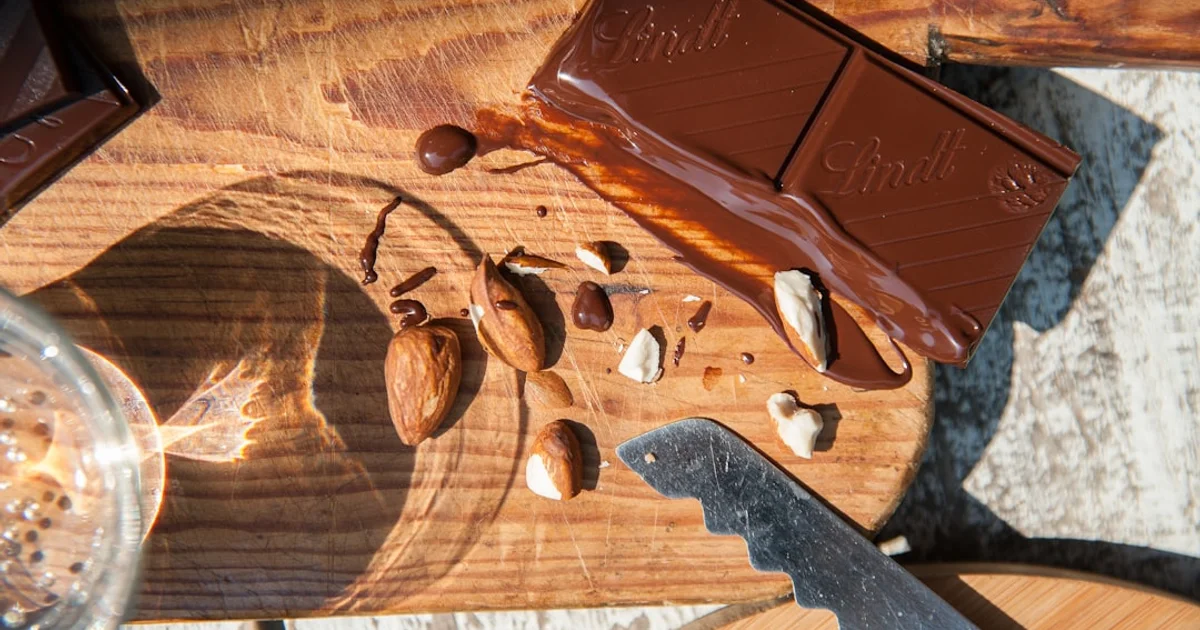
Standing in a New World or Countdown chocolate aisle, you are looking at one of the better halal situations in the English-speaking world — and one genuinely bad one. The good: New Zealand’s own Whittaker’s carries FIANZ accreditation across a named list of blocks, and the Cadbury range sold here publishes a certified-products list of its own. The bad: the country’s most nostalgic sweet, Pineapple Lumps, is a gelatine product.
This guide takes each in turn.
Whittaker’s: FIANZ-Accredited, Flavour by Flavour
Whittaker’s is a family-owned Porirua company, and every product is made in that one factory. Its FAQ states plainly that it has been granted halal accreditation by FIANZ — the Federation of Islamic Associations of New Zealand, the country’s main halal certifier — for many of its Classic and Specialty flavours.
Whittaker's, New Zealand's best-known chocolate maker, has pursued and secured genuine halal certification from FIANZ (the Federation of Islamic Associations of New Zealand) for many of its Classic and Specialty blocks — Almond Gold, Dark Almond, Dark Ghana, and a range of others, confirmed on Whittaker's own product filter. That's a real certification, not a marketing claim. It doesn't cover the entire range, so the verdict is Varies rather than a blanket Halal — check the specific block against Whittaker's halal-suitable list or the on-pack logo before buying.
Full Whittaker's brand guide →The verdict is Varies rather than Halal because the accreditation is per flavour, not brand-wide. Whittaker’s own “halal suitable” product filter lists, among others:
- Dark range: 50% Dark, 62% Dark Cacao, 72% Dark Ghana, 86% Extra Dark Ghana, 92% Intense Dark Ghana, 70% Samoan
- Dark with inclusions: Dark Almond, Almond & Cranberry, Dark Orange, 72% Dark Ghana Fruit & Nut, Ghana Peppermint
- Specialty: Wellington Roasted Supreme Coffee Dark, Kerikeri Ginger & Mandarin, NZ Black Plum & Almond
Notice the pattern: the filter leans heavily toward dark chocolate. Some milk blocks and the filled, caramel and biscuit lines are not on it. Don’t extend the accreditation to a flavour that isn’t listed — look for the halal mark on the specific block, or check the filter on Whittaker’s site before you buy a gift box.
Cadbury in New Zealand: An Australian Product With a Published List
Cadbury closed its Dunedin factory in 2018; New Zealand Cadbury has been Australian-made since. That matters because it puts NZ shelves under Cadbury’s Australia/New Zealand halal policy, not the UK one.
Cadbury UK holds no halal certification. Products contain E442 (ammonium phosphatides) and E476 (PGPR) - emulsifiers that can be derived from animal fat. Until Cadbury discloses the source or obtains certification, UK products are Mushbooh. Cadbury products sold in Pakistan, Malaysia, and Egypt are manufactured locally and may hold regional halal certification.
Full Cadbury brand guide →That standing verdict is for Cadbury UK, where no certification exists and E442/E476 sources are undisclosed. The AU/NZ picture is different: Cadbury’s Australian site publishes a halal page listing 43 products it describes as certified for “products manufactured for the Australian & New Zealand markets”, naming an Australian certifying body. The list runs through Dairy Milk variants, Dream, Caramilk, Old Gold, Flake, Twirl, Boost, Crunchie, Picnic, baking blocks, Freddo, Caramello Koala and seasonal lines, plus the equivalent minis in Favourites packs.
Two cautions. First, this is Cadbury’s statement; the certificate itself is not reproduced on the page, so we record it as a brand-published claim rather than a document we have inspected. Second, the list is product-specific: Cadbury-branded items not on it — imported UK lines occasionally stocked by discounters, and anything containing marshmallow or gelatine — are outside it.
Pascall Pineapple Lumps: The Gelatine Problem
Pineapple Lumps are chewy pineapple-flavoured centres in chocolate, made by Pascall (Mondelez). The ingredient list, as published on the pack: sugar, invert sugar, vegetable fat, glucose syrup, cocoa powder, milk solids, gelatine, maltodextrin, pineapple juice concentrate, emulsifiers (E492, soy lecithin, E476), colour (E100), flavours, cornstarch, tapioca starch.
Three problems, in order of seriousness:
- Gelatine, source undisclosed. No species, no slaughter method. Under all four madhabs gelatine is only halal from a halal-slaughtered animal (or, for Hanafi scholars who accept istihala, from a genuinely transformed source — a minority position not applied to undisclosed gelatine).
- E492 sorbitan tristearate — a fatty-acid ester whose stearic acid can be animal- or plant-derived. Undisclosed.
- E476 PGPR — same issue.
Verdict: not halal-safe. Pineapple Lumps are Haram-leaning Mushbooh at best, and we advise against them. The same applies to Pascall’s other gelatine sweets (Fruit Bursts, marshmallows).
Reading a New Zealand Chocolate Wrapper
New Zealand uses Australian-style additive numbering: 322 for lecithin, 476 for PGPR, 492 for sorbitan tristearate, 471 for mono- and diglycerides — the “E” is dropped but the numbers match the EU codes in our E-codes database. The three-line check:
- Gelatine anywhere in the list → not halal-safe unless the pack carries a halal mark.
- 471 / 476 / 492 without a halal mark → source undisclosed, Mushbooh.
- FIANZ mark or Cadbury’s listed product → certified for that specific item.
Summary
| Question | Answer |
|---|---|
| Is Whittaker’s halal? | FIANZ-accredited for a named list of flavours, mostly dark — Varies; check the block |
| Is Cadbury halal in NZ? | Cadbury publishes an AU/NZ certified-product list of 43 items — brand-published claim, product-specific |
| Are Pineapple Lumps halal? | No — undisclosed gelatine plus E492/E476 |
| Best quick pick | A Whittaker’s block from the halal-suitable list |
Look up any additive number from an NZ wrapper in the E-codes database, or scan the full list with the ingredient scanner.
How we reached this verdict
Sources checked September 2026:
- Whittaker’s: the company FAQ (“Whittaker’s have been granted Halal accreditation by FIANZ for many of our Classic and Specialty flavours”; “All of our products are made at our factory in Porirua, New Zealand”) and the halal-suitable product filter on whittakers.co.nz.
- Cadbury Australia/New Zealand: the halal page at cadbury.com.au (NZ section) listing 43 products for the AU & NZ markets and naming its certifier. Recorded as a brand-published claim; certificate not inspected.
- Pascall Pineapple Lumps: ingredient list as published (Open Food Facts transcription of the pack, cross-checked against retailer listings).
- FIANZ: New Zealand’s principal halal certification body, referenced in our Australia certification bodies coverage of the Australasian system.
- Existing HalalCodeCheck verdicts for Whittaker’s and Cadbury rendered from the brand pages above rather than re-derived.
Madhab note
- Gelatine of undisclosed source — not permissible under all four madhabs; only a halal-slaughtered bovine or fish source (or a certified product) clears it.
- Source-ambiguous emulsifiers (E471, E476, E492) — plant-source disclosure or certification is sufficient under the Hanafi/Maliki/Shafi’i mainstream; the HMC-strict / Hanbali-leaning view requires certification.
- Per-flavour certification — a certificate covers the products it names; scholars across the madhabs treat the uncertified flavours of a certified brand as unverified, not as covered.
For binding rulings on borderline products, consult a competent scholar in your tradition.
Ingredients change. Be first to know.
Brands reformulate without warning. We track every E-code update and halal certification — one short weekly email.
Related Articles
 Shopping Guides
 Halal Chocolate in South Korea: Lotte Ghana, Choco Pie's Two Recipes and KMF (2026)
Korea's own chocolate — Lotte Ghana, Crunky, ABC — is uncertified for the domestic market. Orion's Choco Pie exists in two recipes: pork gelatine in Korea, beef gelatine and JAKIM/MUI/GCC certification from Vietnam. Here is how to tell them apart on the shelf, and which Korean confectionery KMF actually certifies.
 Shopping Guides
 Halal Protein and Supplements in Canada: Optimum Nutrition Is Certified, But Read the Market It Covers
IFANCA certifies Optimum Nutrition Gold Standard whey, its creatine and its BCAA line, tagged for worldwide sale. Canada's own certifier lists no sports nutrition brand at all. The gap between those two facts is the whole story.
 Shopping Guides
 Halal Chocolate in Turkey: Why Ülker Has No GİMDES Certificate and What TSE Actually Means
Turkey has real halal certification infrastructure, and since June 2023 certifiers must be state-accredited. But two different bodies both brand themselves TSE, Ülker holds no GİMDES certificate, and Şölen's published certificate expired in July 2026.