
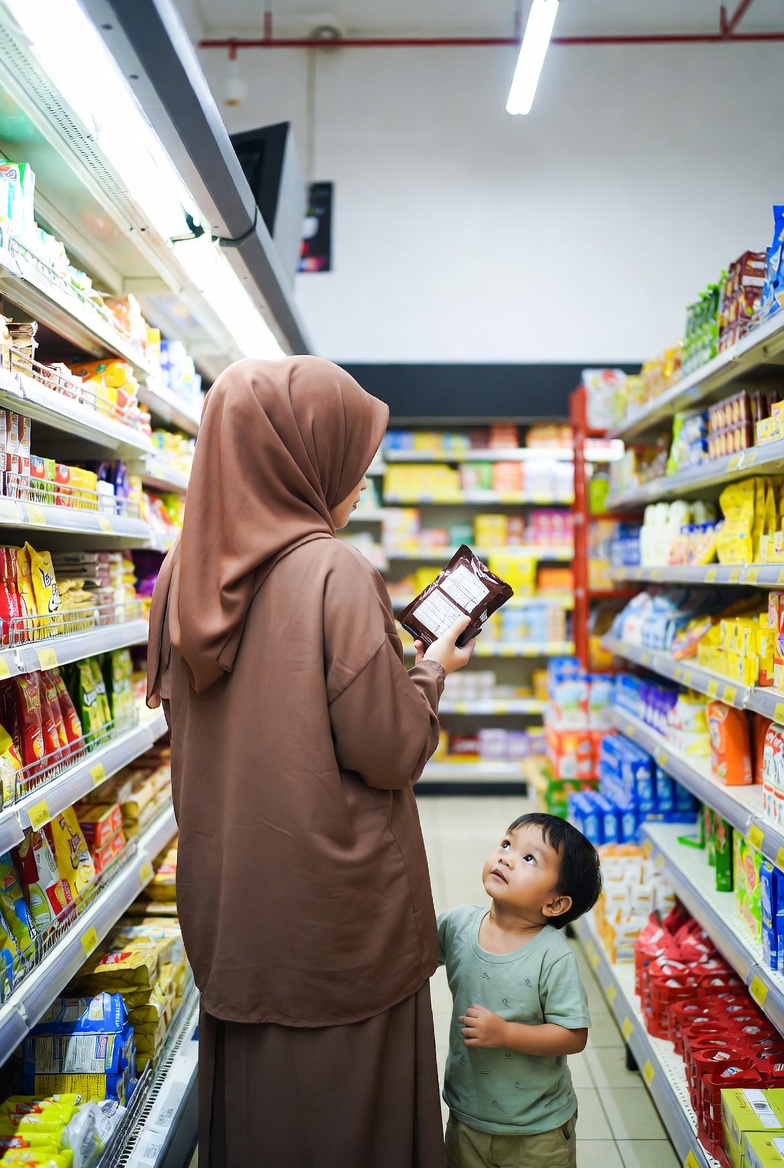
If you shop with kids, you already know the scene.
One child wants gummy bears. Another is pulling things off shelves. You’ve got 20 seconds to decide if that snack is halal - and zero patience for ingredient chemistry.
Good news: you don’t need a food science degree. You need a 5-minute system that works every single trip.

The Parent Reality: Speed Over Perfection
You don’t need to analyze every ingredient on every product. You need a fast decision framework:
- Green light - safe to buy right now
- Yellow light - needs a quick verification
- Red light - skip it immediately
The 5-Minute Label Method
Step 1: Look for halal certification (10 seconds)
Trusted halal logo on the package? You’re done - put it in the cart.
Step 2: Scan for red flags (30 seconds)
No halal logo? Check the ingredient list for these keywords:
- Gelatin or E441 - usually pork-derived
- Carmine/cochineal or E120 - from insects
- Lard or pork derivatives - obvious but sometimes hidden
If you see any of these without halal certification, skip the product.
Step 3: Check source-dependent additives (1 minute)
Some ingredients like E471 can be halal or haram depending on source. These need quick verification.
Step 4: Let your phone do the work (1 minute)
Open Verify Ingredients and scan the label. It checks every additive at once - faster than reading through the list yourself.
Step 5: Decide and move (30 seconds)
- Halal certified or verified clean → buy it
- Source unclear → grab an alternative now, research later
- Red flag ingredient → skip it
You can always do deeper research at home. In the store, speed and confidence matter most.
Build Your Family “Safe List”
The biggest time saver isn’t faster reading - it’s fewer repeated decisions.
Start a simple list organized by category:
- Lunchbox snacks - biscuits, fruit bars, crisps
- Breakfast staples - breakfast cereals, spreads, yogurts
- Desserts and treats - cookies, chocolate, ice cream
- On-the-go products - drinks, protein bars, travel snacks
Once you verify a product, you never need to check it again. After a few weeks, most of your regular shopping becomes automatic.
What to Teach Kids (Age-Appropriate)
Getting kids involved early builds a lifelong halal habit - and it makes shopping easier for you.
Ages 4-7
One simple rule: “We check labels before we buy.” They won’t understand the details yet, but they’ll learn the habit.
Ages 8+
Teach them a 3-step checklist they can do themselves:
- Halal logo? - If yes, it’s good
- Gelatin, E120, or E471? - If yes, ask a parent
- Not sure? - Scan it with the app before buying
You’ll be surprised how quickly kids pick this up. Many parents tell us their children now check labels on their own.
3 Mistakes Busy Parents Make
Trusting front-of-pack labels
“Natural,” “vegetarian,” and “clean” sound reassuring - but none of them mean halal. A product labeled “suitable for vegetarians” can still contain E471 from animal fat or alcohol-based flavorings. Read more: Why ‘Vegetarian’ doesn’t always mean halal.
Assuming familiar brands never change
Manufacturers reformulate products regularly. A product that was safe last year might have a different emulsifier now. Re-check your safe list every few months.
Trying to memorize everything
Your brain isn’t a database - and it doesn’t need to be. Use the app and a written safe list. Process beats memory every time, especially during a busy shop. For the full reference, see our E-codes guide.
Quick Parent FAQ
Do I need to avoid all E-codes?
No. Many E-codes are perfectly halal (like E300, which is just vitamin C). Focus your attention on the high-risk ones: E120, E441, E471. Our E-codes guide has the full breakdown.
What if I’m unsure and the kids are getting restless?
Grab a safer alternative now and verify the original product later at home. Protecting your standards doesn’t mean standing in the aisle for 10 minutes.
Can one app handle this whole workflow?
Yes. HalalCodeCheck is built specifically for fast in-aisle verification - scan, check, decide, move on.
Where can I browse additives at home?
The E-codes database has 370+ codes with halal status, source details, and common products they appear in.
What To Do Next
Halal shopping with kids doesn’t need to feel chaotic.
Start with the 5-step method above on your next trip. After 2-3 shopping trips, you’ll have a solid safe list and the whole process becomes automatic.
Try scanning your first product label - it takes less time than reading this sentence. Your kids will learn a strong halal habit just by watching you.
Ingredients change. Be first to know.
Brands reformulate without warning. We track every E-code update and halal certification — one short weekly email.
Related Articles
 How-To Guides
 How to Grocery Shop Halal in 10 Minutes (Step-by-Step System)
A practical 3-step system that lets you verify halal status on any product in under a minute - and build a trusted shopping list that gets easier every week.
 How-To Guides
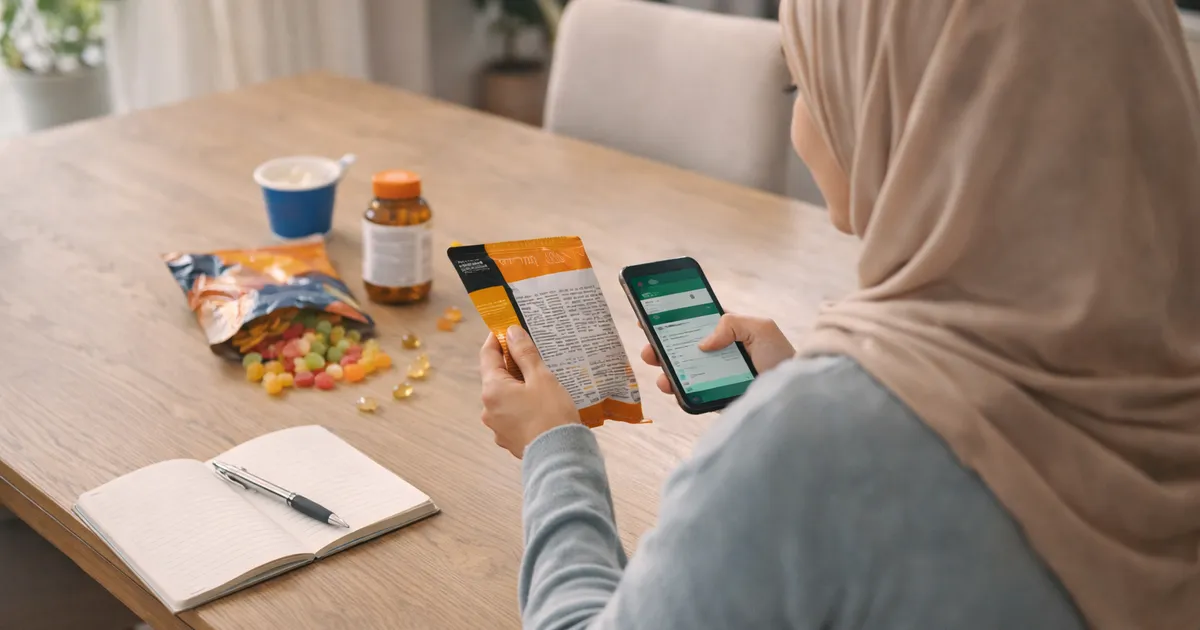
 The Most Searched Halal Food Questions, Answered Clearly
Straight answers to common halal food questions Muslims search for every week, from gelatin and E-codes to vegetarian labels and accidental mistakes.
 How-To Guides
 How to Identify Halal Products in Turkey: Migros, BİM & CarrefourSA Guide (2026)
How to identify halal products in Turkey — Diyanet, GIMDES, and TSE halal certification, Turkish label terms (jelatin, alkol, domuz), why 'Turkish = halal' is a dangerous assumption, and what to check at Migros, BİM, and CarrefourSA.