
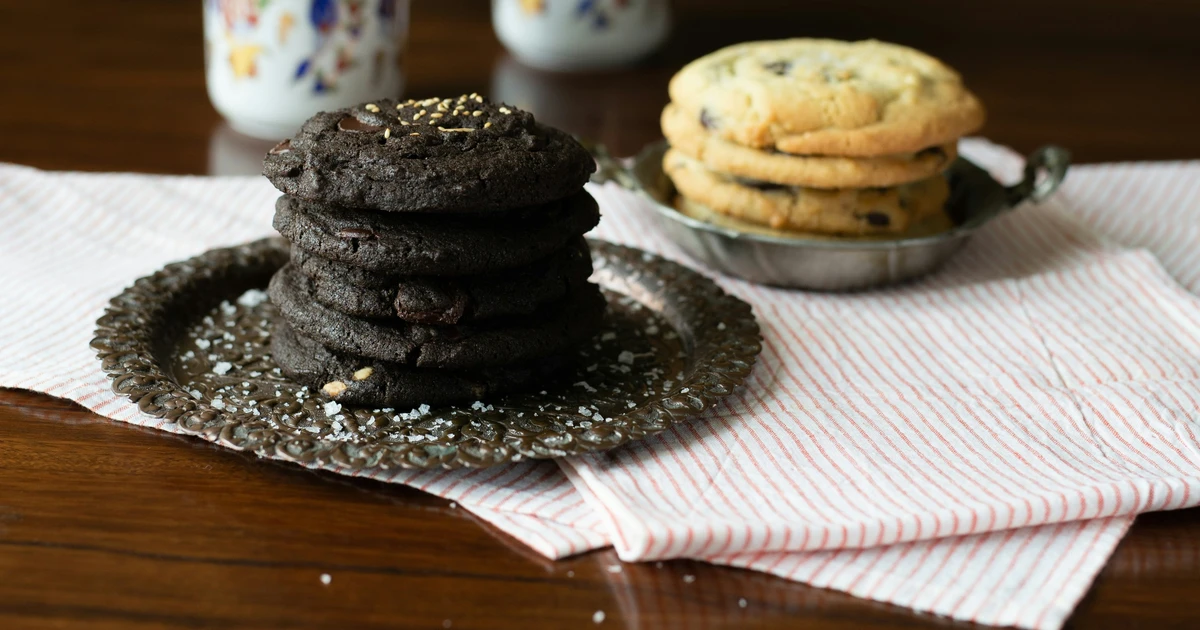
You’re standing in the biscuit aisle at Woolworths or Coles. You pick up a packet of Tim Tams. There’s no halal logo. Should you put it back?
The answer is yes. Tim Tams are not halal certified, and original varieties contain an emulsifier whose source is unverified. Some flavoured variants carry a stronger concern — the potential for E120 (cochineal/carmine), an insect-derived colouring that is Haram.
This guide breaks it down by variant so you know exactly what you’re looking at.
Is Tim Tams Halal? — Quick Answer
No. Tim Tams are not halal. Arnott’s has confirmed that its products are not halal certified. The primary concerns are:
- E471 — present in all variants, source (animal or vegetable) undisclosed → Mushbooh
- E120 — potential presence in red or pink flavoured variants → Haram
- No halal certification from any recognised Australian body (AFIC, ANIC, HCAOS)
Tim Tams Variants — Halal Status
| Variant | Status | Primary Concern |
|---|---|---|
| Original (Chocolate) | Mushbooh | E471 — source unconfirmed |
| Dark Chocolate | Mushbooh | E471 — source unconfirmed |
| White Chocolate | Mushbooh | E471 — source unconfirmed |
| Chewy Caramel | Mushbooh | E471 — source unconfirmed |
| Strawberry / Cheesecake | Mushbooh–Haram | E120 risk in pink/red coating or filling |
| Double Coat | Mushbooh | E471 — heavier chocolate coating, same concern |
| Tim Tam Slams | Mushbooh | E471 — source unconfirmed |
| Choc Mint | Mushbooh | E471 — source unconfirmed |
No variant of Tim Tams is halal certified. The minimum status across the entire range is Mushbooh.
Understanding the E-Codes
E471 — Mono and Diglycerides of Fatty Acids
Status: Mushbooh
E471 is an emulsifier that creates the smooth, even texture in Tim Tams’ biscuit base and chocolate coating. It is one of the most common food additives in biscuits and confectionery worldwide.
The problem: E471 can be made from plant oils (sunflower, palm, soybean — halal) or animal fat (including pork — haram). The label lists only “emulsifier (471)” — no source is given.
Most large manufacturers use plant-derived E471 for commercial reasons, but without halal certification, this cannot be verified. That is the definition of Mushbooh: the ingredient itself may be permissible, but the source is unknown.
For a deeper explanation, see the E471 full guide.
E120 — Cochineal / Carmine
Status: Haram
E120 is a red colouring produced by crushing cochineal insects (Dactylopius coccus). It is classified as Haram because it is derived from an insect that is not permissible to consume.
E120 is not present in plain chocolate Tim Tams — it has no role in standard dark or milk chocolate. However, it may appear in:
- Strawberry Tim Tams
- Cheesecake variants with pink filling
- Any Tim Tams product with red, pink, or raspberry-coloured elements
Rule: Check any Tim Tams variant with a red, pink, or berry-related colour specifically for E120 on the ingredients panel.
E322 — Lecithin
Status: Halal (usually)
Tim Tams also contain E322 (soy lecithin), which is plant-derived and widely accepted as halal. Its presence is not a concern — but it does not override the E471 issue.
What About the Cream Filling?
The cream filling in Tim Tams (the white layer between the two biscuits) typically contains:
- Sugar
- Vegetable fat (halal if from plant sources — no disclosure)
- Flavouring
The filling itself raises fewer concerns than the biscuit base — vegetable fat is generally stated. However, “flavouring” without specification leaves some ambiguity, and again, no halal certification exists.
Why Arnott’s Doesn’t Have Halal Certification
Arnott’s is owned by Campbell Soup Company (the US food giant that acquired it in 2019). Campbell’s does not pursue halal certification as standard across its brands — halal certification is market-specific and typically pursued when a significant portion of sales depend on Muslim consumer demand.
Australia’s Muslim population is around 3.2% — large enough to be commercially significant, but the mass-market biscuit category is not currently positioned by Arnott’s to serve Muslim shoppers specifically.
Halal-Certified Chocolate Biscuit Alternatives in Australia
There are no halal-certified Tim Tams. The following categories of products offer certified alternatives:
Imported certified brands (available in Asian grocery stores and some Woolworths/Coles):
- Malaysian-manufactured biscuits carrying JAKIM certification
- Indonesian biscuits carrying MUI (Majelis Ulama Indonesia) certification
- Turkish biscuits carrying Diyanet certification
What to look for on the label:
- AFIC logo (Australian Federation of Islamic Councils)
- ANIC logo (Australian National Imams Council)
- HCAOS logo (Halal Certification Authority)
- JAKIM logo (for Malaysian imports)
- MUI logo (for Indonesian imports)
How to check: If you find an E-code you don’t recognise on any biscuit label, use the HalalCodeCheck E-code search to get an instant verdict.
Label-Reading Checklist for Biscuits
When checking any biscuit in Australia, follow this order:
- Halal certification logo? — If yes on front or back, you’re done
- E120 present? — If yes, do not buy (Haram)
- E441 present? — If yes, do not buy unless specifically certified halal gelatine
- E471 present? — If yes and no certification, Mushbooh — your discretion
- E631 / E635 present? — In savoury biscuits, Mushbooh — may be meat or fish derived
- “Natural flavours” or “flavour” without specification? — Treat as Mushbooh
See our full guide on how to identify halal products for a complete label-reading method.
The Verdict
Tim Tams are one of Australia’s most loved biscuits — but they are not an option for Muslim shoppers seeking verified halal products. The E471 issue alone places the entire range in the Mushbooh category. For variants with pink or red coloured elements, the E120 risk adds a stronger reason to avoid.
Until Arnott’s pursues halal certification, the safest position is to find a certified alternative from an Asian grocery store, or to check our Arnott’s brand guide for a full product breakdown.
For the full Arnott’s halal product breakdown, see the Arnott’s brand guide. For a guide to halal shopping in Australian supermarkets, see our Woolworths Australia halal guide. For the E120 carmine question in full detail, see the E120 guide.
How we reached this verdict
We checked the following Tier-1 sources before publishing this verdict:
- Halal certification bodies (HMC, HFA, JAKIM, MUI): Where the brand or ingredient appears in certified products, the certifying body’s audit covers source verification; where it appears in uncertified products, manufacturer disclosure is required.
- Manufacturer statements: Public ingredient lists, vegetarian / vegan suitability labels, customer-service correspondence on source disclosure.
- Sunni fatwa scholarship across the four madhabs:
- Hanafi-leaning bodies: IslamQA Hanafi, Darul Iftaa Birmingham, AskImam.org, Daruliftaa.com (Mufti Taqi Usmani), Wifaqul Ulama, Darul Iftaa New York.
- Shafi’i / Maliki-leaning bodies: NU (Nahdlatul Ulama, Indonesia), Dar al-Ifta al-Misriyyah (Egypt), e-fatwa.com (UAE), al-Azhar.
- Hanbali / Saudi-Salafi-leaning bodies: Saudi Permanent Committee for Scholarly Research, IslamQA Saudi.
Madhab note
The four Sunni madhabs broadly converge on the rules applied in this guide:
- Pork-derived sources — Haram across all four madhabs.
- Alcohol-based ingredients — Haram across all four madhabs.
- Source-ambiguous E-codes (E471, E476, E631, E627, E635, E920) — manufacturer plant-source disclosure (vegetarian-suitable label) is treated as sufficient under the Hanafi/Maliki/Shafi’i mainstream rule (Darul Ifta Birmingham, IslamQA case 245452); HMC-strict / Hanbali-leaning view requires formal independent certification.
- Istihāla (transformation) — Hanafi and Maliki accept istihāla strongly; spirit vinegar (alcohol → vinegar) is halal. Most Shafi’i scholars permit spirit vinegar specifically; some Hanbali scholars more cautious.
- Insect-derived dyes (E120 cochineal/carmine) — Hanafi, Shafi’i, and Hanbali generally treat as haram; some Maliki scholars permit small insects.
- Non-zabihah meat (Ahl al-Kitāb / People-of-the-Book slaughter) — Maliki and classical Shafi’i/Hanbali generally accept; Hanafi-Deobandi tradition more restrictive.
If your madhab differs on a specific ruling, the relevant section above flags the school-specific position. For binding rulings on borderline products, consult a competent scholar in your tradition.
Ingredients change. Be first to know.
Brands reformulate without warning. We track every E-code update and halal certification — one short weekly email.
Related Articles
 Shopping Guides
 Is Ritz Crackers Halal? Nabisco Ingredients Checked (2026)
Ritz Original Crackers are Mushbooh — they contain E471 (mono and diglycerides) with no animal source disclosure and no halal certification.
 Shopping Guides
 Is Biscolata Halal? Turkish Chocolate Brand Ingredients Checked
Biscolata is Mushbooh — the Turkish chocolate biscuit brand uses E471 with no halal certification for export markets, though Turkish production may meet local standards.
 Shopping Guides
 Are Oreos Halal? UK, US & Global Verdict (2026)
Oreos are Mushbooh in the UK and US — no halal certification and milk cross-contact on shared lines. Current labels list soya lecithin, not E471. Full regional breakdown and halal biscuit alternatives.