
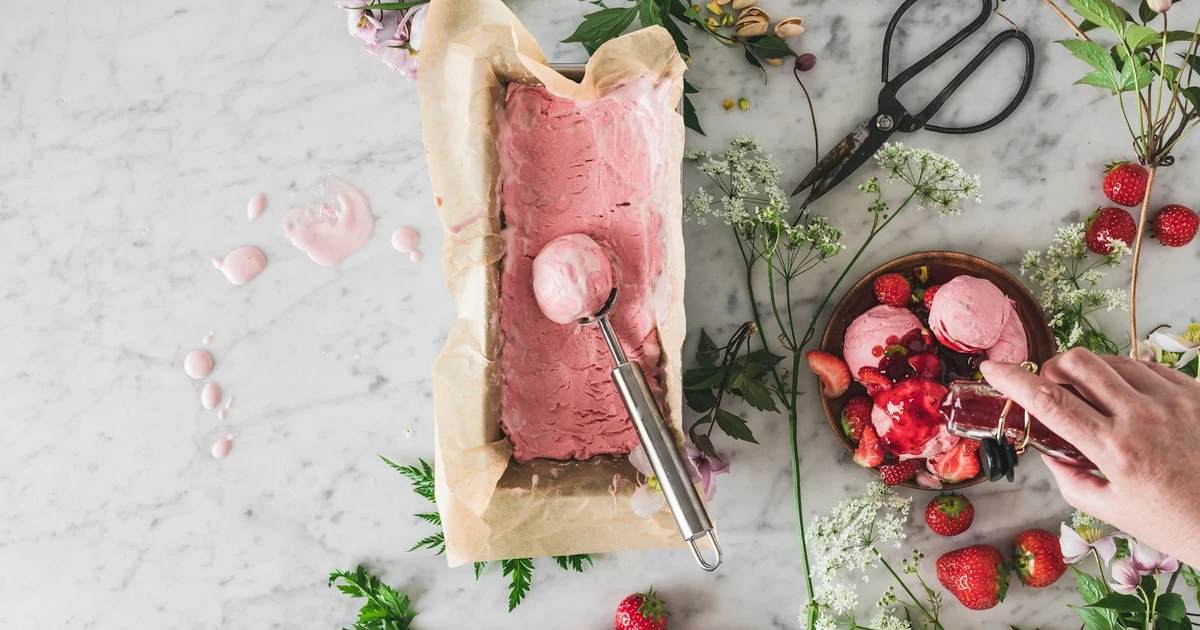
You pick up a strawberry yogurt for your child. It looks harmless. The front says “real fruit” and the colour is a cheerful pink. But the back of the pot tells a different story.
E120 is one of the most common hidden haram ingredients in fruit yogurts sold in UK supermarkets, and it is especially prevalent in the children’s varieties that appear most appealing.
What Is E120?
Key ingredients to check
E120 is cochineal, also known as carmine or carminic acid. It is a red dye extracted from the dried bodies of the cochineal insect (Dactylopius coccus), a scale insect that lives on cacti in South and Central America.
To produce one kilogram of carmine dye, approximately 70,000 to 100,000 insects are crushed and boiled.
The halal status of E120 is not a grey area. There is no scholarly disagreement on this point. Insects are not permissible to consume under Islamic dietary law unless explicitly permitted (such as locusts). The cochineal insect is not in that category. E120 is Haram.
It also appears on labels under several names:
- E120
- Cochineal
- Carmine
- Carminic acid
- Natural red 4
- “Natural colour” (when cochineal is the source — though this is often not specified)
Why It Appears in Fruit Yogurts
The red and pink shades that make strawberry, raspberry, cherry, and mixed berry yogurts look appealing are difficult and expensive to achieve with plant-based alternatives. E120 produces a vivid, stable red that does not fade in acidic dairy products the way some plant pigments do.
Manufacturers use it because it is effective, consistent across batches, and relatively cost-efficient. The fact that it comes from insects is not communicated clearly on most labels. “Natural colour (E120)” is the most common declaration, and many consumers assume “natural” means plant-based.
UK Brands Where E120 Has Appeared
The presence of E120 in specific products changes over time as manufacturers update recipes, so always check the current label. However, E120 has historically appeared in:
- Müller Corner — some strawberry and cherry corner variants
- Yoplait — some fruit variants in certain markets
- Own-brand supermarket fruit yogurts — Tesco, Asda, Morrisons, Sainsbury’s own-label fruit yogurts have all carried E120 in various products at various times
- Children’s yogurt tubes and pouches — particularly those with bright red or pink colours
This is not an exhaustive or current list. The only reliable method is to read the ingredients panel on the pot you are holding.
The Gelatine Issue in Yogurt
E120 is not the only concern. Many set yogurts and fruit yogurts also contain E441 (gelatine) as a stabiliser or thickener. Gelatine is derived from animal bones and connective tissue, most commonly pork-derived in European food manufacturing. Unless a yogurt is labelled vegetarian or halal-certified, the presence of gelatine should be assumed to be porcine.
Check for “gelatine” or “E441” in the ingredients list alongside your check for E120.
Safe Alternatives: What to Look For
Plant-based colourings are widely used in yogurts that avoid E120. The alternatives to look for on labels are:
E160a (beta-carotene) — extracted from carrots or synthesised from plant sources. Produces orange and yellow tones. When used in fruit yogurts it typically creates a softer pink or peach shade rather than a vivid red. This is a Halal ingredient and one of the clearest indicators that a yogurt has avoided cochineal.
E163 (anthocyanins) — extracted from fruits such as black carrots, bilberries, and red cabbage. Used in some premium and organic ranges to produce red and purple shades. Halal.
E162 (beetroot red / betanin) — from beetroot. Natural plant-derived red colouring. Halal.
“No artificial colours” on a label is not sufficient — E120 is classified as a natural colour. Look specifically for the absence of E120 and the presence of one of the plant-based alternatives above.
How to Check in Under 30 Seconds
- Turn the pot over and find the ingredients list.
- Scan for any of: E120, cochineal, carmine, carminic acid, natural red 4.
- If any of those appear, put it back.
- If you see E160a, E163, or E162, the red colour is plant-based.
- Also check for gelatine or E441 while you are there.
For children’s yogurts, several brands now explicitly state “no artificial colours” and use plant-based pigments. Organic ranges are more likely to avoid E120 due to organic certification requirements that restrict synthetic and insect-derived additives in some markets.
Summary
| Ingredient | Found in yogurt as | Halal status |
|---|---|---|
| E120 / Cochineal / Carmine | Red/pink colouring | Haram |
| E441 / Gelatine | Stabiliser / thickener | Mushbooh (likely pork) |
| E160a / Beta-carotene | Orange/yellow/pink colouring | Halal |
| E163 / Anthocyanins | Red/purple colouring | Halal |
| E162 / Beetroot red | Red colouring | Halal |
The label check takes less than a minute and protects your family from ingredients that have no place in a halal diet. The presence of the word “natural” in the colour description means nothing — always look for the E-number or the source name.
To look up any E-code immediately, use the E-codes database. To scan a full label from a photo, try Verify Ingredients.
How we reached this verdict
We checked the following Tier-1 sources before publishing this verdict:
- Halal certification bodies (HMC, HFA, JAKIM, MUI): Where the ingredient appears in certified products, the certifying body’s audit covers source verification; where it appears in uncertified products, manufacturer disclosure is required.
- Manufacturer statements: Public ingredient lists, vegetarian / vegan suitability labels, customer-service correspondence on source disclosure.
- Sunni fatwa scholarship across the four madhabs:
- Hanafi-leaning bodies: IslamQA Hanafi, Darul Iftaa Birmingham (Mufti Mohammed Haroon Hussain), AskImam.org (Mufti Ebrahim Desai), Daruliftaa.com (Mufti Taqi Usmani), Wifaqul Ulama, Darul Iftaa New York.
- Shafi’i / Maliki-leaning bodies: NU (Nahdlatul Ulama, Indonesia), Dar al-Ifta al-Misriyyah (Egypt), e-fatwa.com (UAE), al-Azhar.
- Hanbali / Saudi-Salafi-leaning bodies: Saudi Permanent Committee for Scholarly Research, IslamQA Saudi.
Madhab note
The four Sunni madhabs broadly converge on the rules applied in this guide:
- Pork-derived sources (pig fat, pig gelatine, pig-derived enzymes) — Haram across all four madhabs.
- Alcohol-based ingredients (intoxicants, residual fermentation alcohol that intoxicates) — Haram across all four madhabs.
- Source-ambiguous E-codes (E471, E476, E631, E627, E635, E920) — require source verification across all four schools; manufacturer plant-source disclosure (vegetarian-suitable label) is treated as sufficient under the Hanafi/Maliki/Shafi’i mainstream rule (Darul Ifta Birmingham, IslamQA case 245452); HMC-strict / Hanbali-leaning view requires formal independent certification.
- Istihāla (transformation) — Hanafi and Maliki accept istihāla strongly, so spirit vinegar (alcohol → vinegar) is halal. Most Shafi’i scholars permit spirit vinegar specifically. Some Hanbali scholars are more cautious on transformed haram products.
- Insect-derived dyes (E120 cochineal/carmine) — Hanafi, Shafi’i, and Hanbali generally treat as haram; some Maliki scholars permit small insects.
- Non-zabihah meat (Ahl al-Kitāb / People-of-the-Book slaughter) — Maliki and classical Shafi’i/Hanbali generally accept; Hanafi-Deobandi tradition more restrictive.
If your madhab differs on a specific ruling, the relevant section above flags the school-specific position. For binding rulings on borderline products, consult a competent scholar in your tradition.
Ingredients change. Be first to know.
Brands reformulate without warning. We track every E-code update and halal certification — one short weekly email.
Related Articles
 Ingredients
 Are Energy Drinks Halal? E120, Alcohol, and What to Check
Some flavoured energy drinks contain E120 (crushed insects) for colour. Others raise questions around trace alcohol and E621. Here's what to check on the label.
 Shopping Guides
 UK Yogurt Halal Audit: Gelatin, Carmine and E-Codes Checked (2026)
Gelatin in set-style yogurts and carmine (E120) in strawberry variants are the main risks. Full audit of Activia, Müller, Yeo Valley, Total Greek, Onken, Alpro and supermarket own-brand.
 Ingredients
 Is Catfish Halal or Haram? Hanafi vs Shafi'i Ruling Explained (2026)
Catfish is halal in mainstream Sunni jurisprudence across all four madhabs. We explain why some communities still avoid it, what the scaleless fish debate means, and what USDA food programs say about catfish for halal households.