
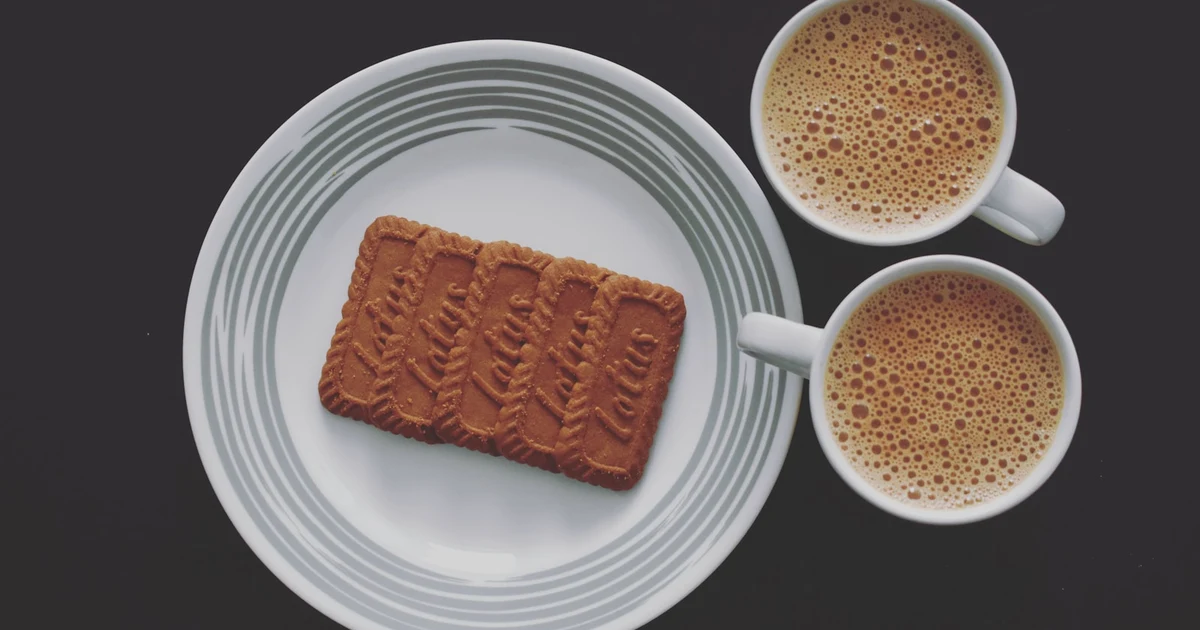
The direct answer: McVitie’s holds no UK halal certification from HMC, HFA, or any other recognised body. Most McVitie’s products containing chocolate coating are Mushbooh due to E471 (mono and diglycerides of fatty acids) with undisclosed sourcing. Plain biscuit varieties have cleaner ingredient profiles but remain uncertified.
McVitie’s is one of the UK’s most recognisable biscuit brands — Digestives, HobNobs, Jaffa Cakes, Penguin bars, and Rich Tea are all household names. The brand is owned by pladis, a subsidiary of Yıldız Holding, a Turkish conglomerate and one of the world’s largest biscuit manufacturers.
The fact that McVitie’s has Turkish ownership — from a majority-Muslim country — leads many consumers to assume the biscuits must be halal. This assumption is incorrect. UK McVitie’s production is not covered by any Islamic halal certification for the British market.
The Key E-Code Concern: E471
E471 — Mono and Diglycerides of Fatty Acids
E471 (mono and diglycerides of fatty acids) is an emulsifier widely used in the food industry to improve texture, extend shelf life, and control fat crystallisation in chocolate coatings.
E471 can be derived from:
- Animal fats — including pork-derived fat (lard) or beef tallow; if from a non-halal source, this is haram
- Vegetable oils — palm oil, sunflower oil, or rapeseed oil; these are permissible
- Mixed sources — in some manufacturing contexts, animal and vegetable fats are blended
McVitie’s does not specify the source of its E471 on UK packaging. The ingredient list states “emulsifier (E471)” without indicating animal or vegetable origin. Without source disclosure or a halal certificate that verifies the supply chain, E471 is classified as mushbooh.
E471 is present in all McVitie’s products with a chocolate coating, including Chocolate Digestives, Chocolate HobNobs, Jaffa Cakes, Penguin bars, and Club biscuits.
Product-by-Product Breakdown
Plain McVitie’s Digestives
Ingredient list: wholemeal wheat flour, vegetable oil, sugar, oatmeal, whey powder (from milk), raising agents, salt. In the standard formulation, plain Digestives contain no animal-derived E-codes. Whey powder is dairy-derived and permissible.
Status: Mushbooh — no animal-derived E-codes in the plain version, but no halal certification either. Acceptable for many Muslims; strict observers requiring certification should seek an alternative.
Chocolate Digestives
The plain biscuit base has the same profile as above. The chocolate coating introduces E471 with undisclosed sourcing.
Status: Mushbooh — E471 in chocolate coating is the concern.
HobNobs (Plain)
Plain HobNobs typically contain oats, wholemeal flour, sugar, vegetable oil, and golden syrup — no animal-derived E-codes in the base biscuit.
Status: Mushbooh — clean ingredient profile but no certification.
Chocolate HobNobs
Chocolate coating adds E471.
Status: Mushbooh — same E471 concern as Chocolate Digestives.
Jaffa Cakes
The orange jelly layer uses pectin — a plant-derived gelling agent (not gelatine). This is an important and positive distinction: Jaffa Cakes do not contain gelatine or any animal-derived gelling agent. However, the chocolate coating contains E471.
Status: Mushbooh — no gelatine (positive), but E471 in chocolate coating is undisclosed.
Rich Tea
Plain Rich Tea biscuits are one of the simpler formulations in the McVitie’s range: wheat flour, vegetable oil, sugar, glucose-fructose syrup, salt, raising agents. No chocolate coating, no animal-derived E-codes in the standard formulation.
Status: Mushbooh — clean ingredient profile but no certification.
GO AHEAD! Yogurt Breaks
Contains whey (dairy — permissible), no gelatine listed in standard formulation.
Status: Mushbooh — no explicit haram ingredients but no certification.
Full Product Summary Table
| Product | Chocolate Coating | E471 | Gelatine | Status |
|---|---|---|---|---|
| Digestives (plain) | No | No | No | Mushbooh (uncertified) |
| Digestives (chocolate) | Yes | Yes | No | Mushbooh |
| HobNobs (plain) | No | No | No | Mushbooh (uncertified) |
| HobNobs (chocolate) | Yes | Yes | No | Mushbooh |
| Jaffa Cakes | Yes | Yes | No (pectin) | Mushbooh |
| Rich Tea | No | No | No | Mushbooh (uncertified) |
| Penguin | Yes | Yes | No | Mushbooh |
| Club | Yes | Yes | No | Mushbooh |
| GO AHEAD! Yogurt Breaks | No | Check label | No | Mushbooh |
Why No Halal Certification Despite Turkish Ownership?
This is the question many UK Muslim consumers ask. Yıldız Holding — McVitie’s ultimate parent — is a Turkish company founded in a majority-Muslim country, and pladis does produce halal-certified products for markets where certification is commercially important.
The UK mainstream McVitie’s range has not been brought under halal certification for the British mass market. The decision is commercial, not theological. Applying for and maintaining HMC or HFA certification requires ongoing third-party auditing of ingredient supply chains and manufacturing processes. For a brand operating at the scale of McVitie’s UK, retrofitting the entire supply chain is a significant undertaking.
Until that certification is obtained and displayed on UK packaging, UK consumers cannot treat McVitie’s as halal-certified regardless of ownership.
Halal Alternatives
Supermarket Own-Brand Digestives
Tesco and Sainsbury’s own-brand digestive biscuits are worth checking. Some variants use vegetable-sourced emulsifiers and have shorter ingredient lists. Check the label — if E471 is listed without a source, it remains mushbooh; if the product states “vegetable emulsifier” or “contains: palm oil emulsifier,” that is a positive disclosure.
Burton’s Biscuits
Burton’s Biscuits produces several brands and own-label biscuits for UK supermarkets. Their ingredient profiles vary — check the label of each specific product.
How to Check Any Biscuit Label
- Find E471 — if present in the chocolate coating without source disclosure or halal certification, treat as mushbooh
- Check for gelatine — most McVitie’s biscuits do not contain gelatine, but always verify on the specific pack
- Look for a halal certification logo — HMC, HFA, or another recognised body on the specific product
- “Vegetable oil” vs “emulsifier (E471)” — plain McVitie’s biscuits using vegetable oil without E471 have a cleaner profile
Use the ingredient scanner to check any full ingredient list instantly.
Summary
| Question | Answer |
|---|---|
| Is McVitie’s halal-certified? | No — no UK halal certification |
| Are Jaffa Cakes halal? | Mushbooh — no gelatine, but E471 in chocolate coating |
| Are plain Digestives halal? | Mushbooh — no animal E-codes but no certification |
| Are Chocolate Digestives halal? | Mushbooh — E471 in chocolate coating, undisclosed source |
| Key E-code to watch | E471 (mono and diglycerides — source undisclosed) |
| Why no cert despite Turkish owner? | Commercial decision — UK supply chain not audited |
| Best alternatives | Own-brand plain digestives (check label), halal-certified biscuits |
| Overall verdict | Mushbooh — E471 sourcing undisclosed, no certification |
For the full McVitie’s brand profile, see the McVitie’s brand page.
Check any additive in the E-codes database or scan a full ingredient list at verify ingredients.
How we reached this verdict
We checked the following Tier-1 sources before publishing this verdict:
- Halal certification bodies (HMC, HFA, JAKIM, MUI): Where the brand or ingredient appears in certified products, the certifying body’s audit covers source verification; where it appears in uncertified products, manufacturer disclosure is required.
- Manufacturer statements: Public ingredient lists, vegetarian / vegan suitability labels, customer-service correspondence on source disclosure.
- Sunni fatwa scholarship across the four madhabs:
- Hanafi-leaning bodies: IslamQA Hanafi, Darul Iftaa Birmingham, AskImam.org, Daruliftaa.com (Mufti Taqi Usmani), Wifaqul Ulama, Darul Iftaa New York.
- Shafi’i / Maliki-leaning bodies: NU (Nahdlatul Ulama, Indonesia), Dar al-Ifta al-Misriyyah (Egypt), e-fatwa.com (UAE), al-Azhar.
- Hanbali / Saudi-Salafi-leaning bodies: Saudi Permanent Committee for Scholarly Research, IslamQA Saudi.
Madhab note
The four Sunni madhabs broadly converge on the rules applied in this guide:
- Pork-derived sources — Haram across all four madhabs.
- Alcohol-based ingredients — Haram across all four madhabs.
- Source-ambiguous E-codes (E471, E476, E631, E627, E635, E920) — manufacturer plant-source disclosure (vegetarian-suitable label) is treated as sufficient under the Hanafi/Maliki/Shafi’i mainstream rule (Darul Ifta Birmingham, IslamQA case 245452); HMC-strict / Hanbali-leaning view requires formal independent certification.
- Istihāla (transformation) — Hanafi and Maliki accept istihāla strongly; spirit vinegar (alcohol → vinegar) is halal. Most Shafi’i scholars permit spirit vinegar specifically; some Hanbali scholars more cautious.
- Insect-derived dyes (E120 cochineal/carmine) — Hanafi, Shafi’i, and Hanbali generally treat as haram; some Maliki scholars permit small insects.
- Non-zabihah meat (Ahl al-Kitāb / People-of-the-Book slaughter) — Maliki and classical Shafi’i/Hanbali generally accept; Hanafi-Deobandi tradition more restrictive.
If your madhab differs on a specific ruling, the relevant section above flags the school-specific position. For binding rulings on borderline products, consult a competent scholar in your tradition.
Ingredients change. Be first to know.
Brands reformulate without warning. We track every E-code update and halal certification — one short weekly email.
Related Articles
 Shopping Guides
 Are Oreos Halal? UK, US & Global Verdict (2026)
Oreos are Mushbooh in the UK and US — no halal certification and milk cross-contact on shared lines. Current labels list soya lecithin, not E471. Full regional breakdown and halal biscuit alternatives.
 Shopping Guides
 Is Bon Gelati Halal? Lidl Ice Cream E-Codes Checked (2026)
Bon Gelati is Lidl's own-brand ice cream range. No halal certification. Key concern is E471 (mono and diglycerides) — source unconfirmed. Here is a full breakdown by product line.
 Shopping Guides
 Halal Chocolate in Italy: Ferrero, Perugina and What to Check (2026)
Italy's biggest chocolate brands — Ferrero (Nutella, Rocher), Perugina (Baci), Kinder — carry no halal certification. E471 and dairy from uncertified supply chains are the main concerns. Here is the full guide.