
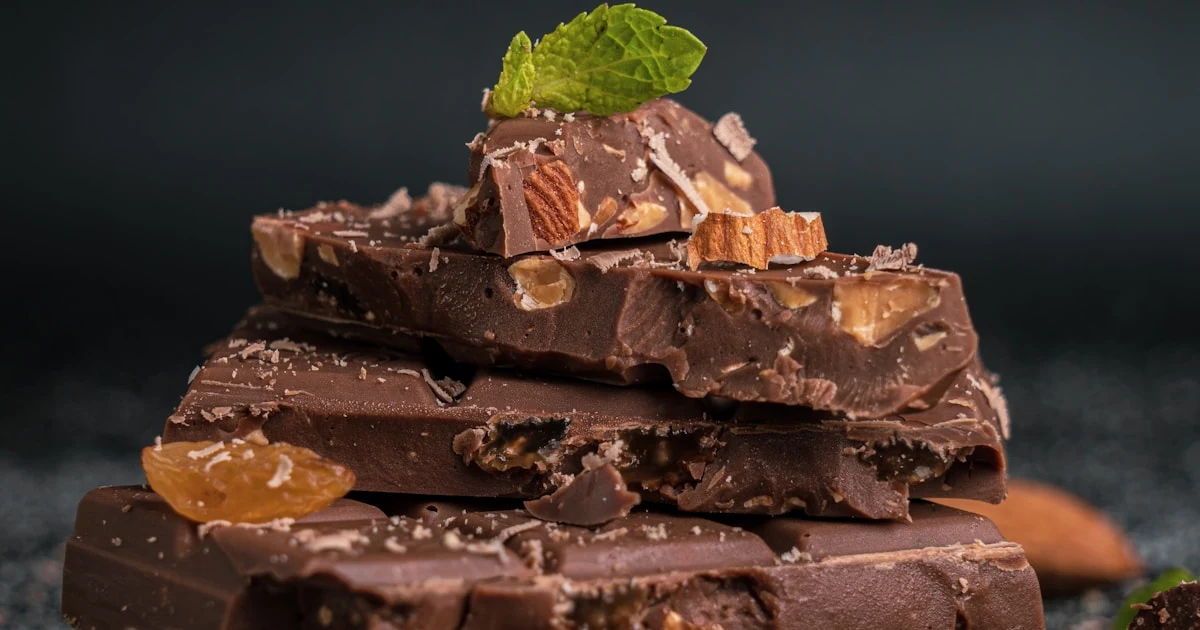
You pick up a bar of chocolate at the checkout and there’s no halal logo. Should you put it back?
The answer isn’t as simple as “chocolate is fine” — but it’s also not as complicated as some online discussions make it sound. This guide breaks it down into the specific checks that matter.
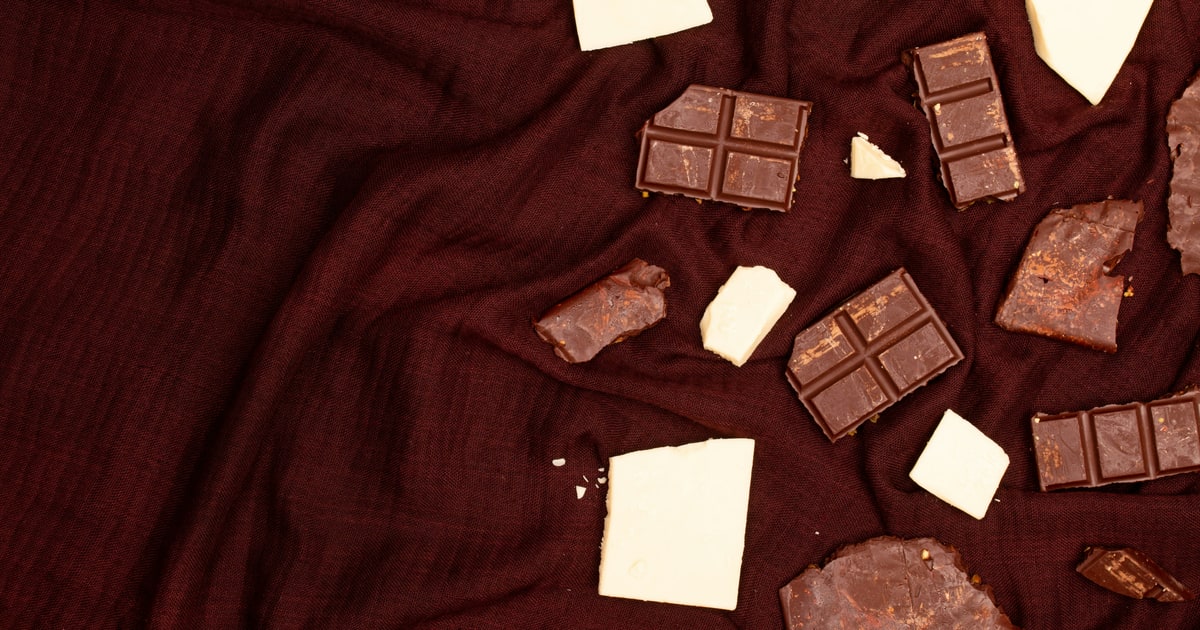
Is Chocolate Itself Halal?
Cacao is halal. The bean, the paste, the powder, the butter — all derived from a plant, all permissible.
The issue is what gets added during manufacturing. Modern chocolate contains several additives and ingredients that require a second look:
- Emulsifiers — the most common concern
- Colorings — critical in milk chocolate, white chocolate, and flavoured varieties
- Flavourings — alcohol-based extracts are possible
- Gelatin — rare in chocolate but present in some filled products
Most chocolate you pick up in a supermarket falls into the Mushbooh (doubtful) category — not because of the cacao, but because of unverified emulsifiers.
The Key E-Codes in Chocolate
E471 — Mono and Diglycerides of Fatty Acids
Status: Mushbooh
E471 is the most important additive to check. It is an emulsifier used in chocolate to improve texture and shelf life.
The problem: E471 can be derived from plant oils (halal) or animal fat — including pork. The label will not tell you which. Without halal certification, the source is unconfirmed.
Most large chocolate manufacturers use plant-derived E471 (typically palm or sunflower oil) for cost and stability reasons — but most cannot confirm this without contacting them directly.
What to do: Look for halal certification, or check the brand’s allergen and ingredient FAQ. Many brands now publish sourcing information.
E322 — Lecithin
Status: Halal (usually)
Soy lecithin (E322) is the second most common emulsifier in chocolate. It is plant-derived and widely accepted as halal.
Egg lecithin is also permitted under E322 but is used much less frequently in commercial chocolate. If you see “sunflower lecithin” or “soy lecithin” specified, it is halal.
E476 — PGPR (Polyglycerol Polyricinoleate)
Status: Mushbooh
PGPR is derived from castor oil — a plant source — so the ingredient itself is typically halal. However, some formulations may use glycerol from animal fat. It is classified as Mushbooh because the source is not always confirmed.
Found frequently in: chocolate coating, cheap milk chocolate, baking chocolate.
E442 — Ammonium Phosphatides
Status: Mushbooh
Used in chocolate as an emulsifier alternative to E322. Derived from ammonia and glycerophosphoric acid — the glycerol source determines the halal status.
E120 — Cochineal / Carmine
Status: Haraam
E120 is a red colouring extracted from crushed cochineal insects. It is not permissible in Islamic dietary law.
You are unlikely to find E120 in plain milk chocolate or dark chocolate. It can appear in:
- Pink or red chocolate coatings
- Strawberry-flavoured chocolate
- Some chocolate boxes with red-coloured fillings
- Novelty chocolate products
Always check pink or red-coloured chocolate products specifically.
E441 — Gelatin
Status: Haraam (unless halal-certified)
Gelatin is rarely used in chocolate itself, but it can appear in:
- Filled chocolates (the cream or jelly filling)
- Some marshmallow-filled products
- Chocolate-covered gummy sweets
If gelatin appears in a chocolate product’s ingredients, assume pork source unless halal-certified.
Is Milk Chocolate Halal?
Milk chocolate is typically: cacao, sugar, milk powder, cocoa butter, and an emulsifier (usually soy lecithin or E471).
The milk itself is halal. The question reduces to the emulsifier — and the same E471 source question applies.
Quick rule:
- Milk chocolate with E322 (soy lecithin): likely halal, no certification needed by most scholars
- Milk chocolate with E471: Mushbooh — look for halal certification or manufacturer confirmation
Is Dark Chocolate Halal?
Dark chocolate tends to have fewer additives than milk chocolate. A simple dark chocolate will be: cacao mass, sugar, cocoa butter, possibly soy lecithin (E322).
If E471 is absent and only E322 is listed, most scholars would accept this as halal.
Is White Chocolate Halal?
White chocolate contains cocoa butter (no cacao solids), sugar, milk, and emulsifiers. The same emulsifier question applies. Additionally, white chocolate is sometimes more highly processed with flavourings that may use alcohol as a carrier.
What About Alcohol in Flavourings?
Some chocolate products use vanilla extract or other flavouring extracts that contain alcohol (typically ethanol) as a solvent. The quantity is extremely small and most scholars consider it acceptable in food flavourings at trace levels — but this varies by madhab (school of thought).
If you follow a strict interpretation: look for “natural vanilla flavour” without alcohol, or products that declare “no alcohol in flavourings.”
How to Check Chocolate at the Supermarket
Step 1 — Look for halal certification first
A recognised halal logo (HMC, HFA, IFANCA) means the manufacturer has confirmed all sources — emulsifiers, flavourings, and processing. This is the fastest, most reliable check.
Step 2 — Check the emulsifier
Look for the emulsifier in the ingredient list:
- Soy lecithin / E322: No concern — plant-derived
- Sunflower lecithin: No concern — plant-derived
- E471: Verify or choose a certified product
- E476: Likely fine, but source not always confirmed
Step 3 — Check for E120 in coloured products
Pink, red, or strawberry-flavoured chocolate products: scan the full ingredient list for E120 or “cochineal” or “carmine.”
Step 4 — Check fillings separately
A plain chocolate shell may be fine, but the filling (cream, caramel, jelly) can contain gelatin or additional emulsifiers. Read both ingredient sections if they’re listed separately.
Step 5 — Scan with the HalalCodeCheck scanner
Use Verify Ingredients to scan the full label and get the status of every E-code at once. This takes 30 seconds and eliminates guesswork.
Which Chocolate Brands Are Halal?
Different brands have different certification and sourcing policies:
| Brand | Halal Status | Notes |
|---|---|---|
| Cadbury | Varies | Some products halal-certified in UK — check per product |
| Lindt | Mushbooh | No halal cert on standard range; E471 source unconfirmed |
| Rowntree’s | Varies | Halal-certified sweets available; check individual products |
| Maltesers (Mars) | Varies | UK products: no halal cert; E471 listed |
| Galaxy (Mars) | Varies | UK products: no halal cert; E471 listed |
| Green & Black’s | Mushbooh | No halal cert; E471 and E322 present |
For a dedicated brand check, see the Halal Brand Guide.
E-Code Summary for Chocolate
| E-code | Name | Status | Common in |
|---|---|---|---|
| E322 | Soy Lecithin | Halal | Most chocolate |
| E471 | Mono & Diglycerides | Mushbooh | Milk chocolate, coatings |
| E476 | PGPR | Mushbooh | Cheap chocolate, coatings |
| E442 | Ammonium Phosphatides | Mushbooh | Some chocolate varieties |
| E120 | Cochineal | Haraam | Red/pink chocolate products |
| E441 | Gelatin | Haraam (usually) | Filled chocolates |
Frequently Asked Questions
Is chocolate haram in Islam?
No — chocolate is not inherently haram. Cacao is a plant source and is permissible. The concern is with the additives used in commercial chocolate manufacture, particularly emulsifiers like E471 that may come from animal fat.
Is Cadbury chocolate halal in the UK?
Some Cadbury products in the UK carry a halal certification mark. Others do not. Check the specific product — the certification status varies across the range. See the full Cadbury brand guide for a breakdown.
Can I eat chocolate with E471 if it’s not halal-certified?
This is a question of personal judgement and scholarly position. Most large chocolate manufacturers use plant-derived E471 for practical reasons (cost and stability), but this cannot be confirmed from the label alone. Scholars differ: some accept plant-sourced E471 without certification, others require confirmation. Look for a halal logo if you want certainty.
Does chocolate contain gelatin?
Standard chocolate bars and blocks do not contain gelatin. Gelatin can appear in filled chocolates, chocolate-covered marshmallows, and novelty sweets with a chocolate coating. Always check filled products separately.
What is the safest chocolate to buy?
Any chocolate product carrying a recognised halal certification (HMC, HFA, IFANCA) is the safest choice — the sourcing has been independently verified. If no certification is available, look for products that specify “soy lecithin” as the only emulsifier and carry no colourings.
What To Do Next
Chocolate is a verify first product for the E471 question — the same approach as any Mushbooh code.
- Check E471 — full ruling and verification steps
- Check E120 — critical for coloured chocolate products
- Scan a product label — get every additive checked in seconds
Halal Chocolate to Buy
These products carry halal certification — emulsifier sourcing confirmed, no E120.
| Product | Why certified | Link |
|---|---|---|
| Ulker Turkish Milk Chocolate 6-pack | Halal certified — verified emulsifiers, no E120 | View on Amazon |
| Nestlé Damak Milk Chocolate with Pistachio | Halal certified — clean sourcing | View on Amazon |
| Choc&Nuts Dark Chocolate Bars 12ct | Halal certified dark chocolate — no alcohol flavourings | View on Amazon |
For a full introduction to E-codes and how to read them, start with the E-Codes Halal Guide.
Seen an E-code in this article?
Look it up instantly — 370+ codes, halal status in one click.
Ingredients change. Be first to know.
Brands reformulate without warning. We track every E-code update and halal certification — one short weekly email.
Related Articles
 E-Codes & Additives
 Is E415 (Xanthan Gum) Halal? Yes - Here's Why
E415 (Xanthan Gum) is halal in the vast majority of commercial products. Learn what it is, where it comes from, and the one edge case worth knowing about.
 E-Codes & Additives
 Is E621 (MSG) Halal or Haram? The Complete Guide
E621 (MSG) is usually halal - modern production uses plant-based fermentation. Learn why it caused controversy, when to verify, and how to check fast.
 How-To Guides
 How to Grocery Shop Halal in 10 Minutes (Step-by-Step System)
A practical 3-step system that lets you verify halal status on any product in under a minute - and build a trusted shopping list that gets easier every week.