
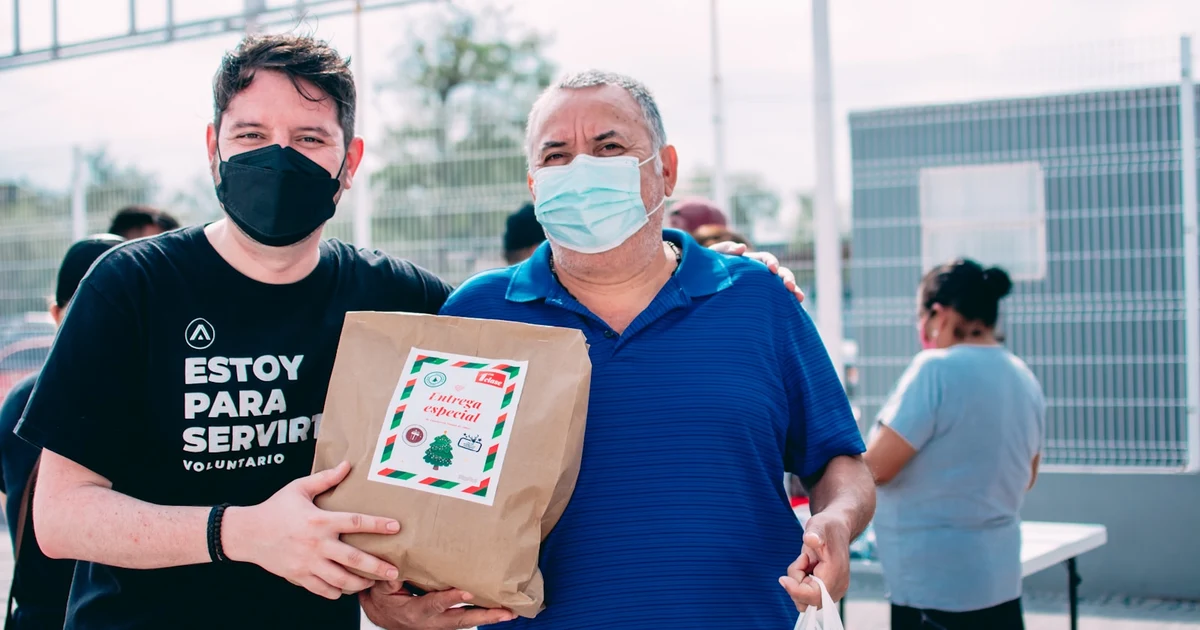
An estimated 3.45 million Muslim Americans live below or near the poverty line. Many of them rely on food banks and emergency food programs to keep their families fed. But the federal food assistance system was not designed with halal diets in mind, and most of what gets distributed at a standard food pantry cannot be eaten.
This guide cuts through the confusion. It explains what TEFAP actually distributes, what Muslim families can and cannot take from a standard distribution, and where to find dedicated halal food assistance through ICNA Relief’s halal TEFAP program across 27 states.
What Is TEFAP?
TEFAP — The Emergency Food Assistance Program — is a federal USDA program that purchases food and makes it available to low-income Americans through a network of food banks, soup kitchens, and food pantries.
The way it works: the USDA purchases food at the federal level and allocates it to each state based on two factors, the number of unemployed persons and the number of persons below the poverty level. State agencies then pass the food along to local agencies (typically regional food banks), who distribute it through neighbourhood-level organisations like pantries and soup kitchens.
TEFAP is one of the largest emergency food programs in the country. For many families, it is the difference between eating and not eating.
The Halal Reality: Most TEFAP Protein Is Not Certified
Here is the honest situation. The USDA publishes a complete list of all foods available through TEFAP each fiscal year. In the FY2025 foods available list, there is only one item with a halal certification: Tomato Sauce Low Sodium Canned (product code 110610, certified with both K and H marks).
That’s it. One item out of the entire catalogue.
Every protein item on the TEFAP list is either haram by category or lacks halal certification entirely:
Pork items are haram regardless of certification — these should never be accepted:
- Pork Canned (100139)
- Ham Frozen (100182)
- Pork Chops (110380)
Beef and chicken items have no halal certification:
- Beef Canned (100127), Ground Beef 85/15 (100159, 110260), Beef Stew (100526)
- Chicken Boneless Breast (111820), Canned Chicken (110940), Chicken Drumsticks (111579), Chicken Pouch (110477), Chicken Split Breast (111577), Whole Chicken (100880)
Cheese carries an additional concern beyond certification: animal rennet. Uncertified American Cheese (100035), Cheddar Cheese (110843, 110841) should be treated as Mushbooh.
This is not a failure of any local food bank — it reflects a gap in federal procurement policy. The good news is that there is a path around it.
What Muslim Families Can and Cannot Take From a TEFAP Distribution
Most TEFAP distributions include a wide range of items beyond meat and cheese. Below is a practical guide.
Items That Are Generally Acceptable
| Category | Examples |
|---|---|
| Fresh fruit and vegetables | All varieties |
| Dry legumes | Lentils, split peas, dried beans, chickpeas |
| Fish | Haddock, pollock, perch, salmon (note on catfish below) |
| Eggs | All varieties |
| Nuts and nut butter | Almonds, walnuts, peanut butter |
| Grains | Rice, pasta, oats, flour, cornmeal, cereals |
| Vegetable oil | Canola, soybean, sunflower |
| Kosher-certified dairy | Yogurt with a K mark |
A note on catfish: The Hanafi and Shafi’i madhabs differ on catfish. Hanafi ruling considers only scaled fish permissible and classifies catfish as haram; Shafi’i and Maliki scholars permit all sea creatures. If your household follows Hanafi fiqh, skip the catfish.
A note on uncertified cheese: Without halal certification, the source of rennet in cheese is unknown. Treat uncertified cheese as Mushbooh and avoid it.
Items to Decline
| Item | Reason |
|---|---|
| Any pork product (canned, ham, chops) | Haram — forbidden regardless of source or preparation |
| All beef items (canned, ground, stew) | No halal certification on TEFAP list |
| All chicken items (breast, whole, canned, pouch) | No halal certification on TEFAP list |
| Uncertified cheese | Animal rennet concern; no halal certification |
If you’re ever unsure about an additive or E-code on a packaged item you receive, you can check it instantly on our E-codes database or scan the ingredient label using Verify Ingredients.
ICNA Relief: Halal TEFAP in 27 States
The most significant development for Muslim food assistance in the US is ICNA Relief’s dedicated halal TEFAP program. ICNA Relief (Islamic Circle of North America Relief) has partnered with the USDA specifically to address the halal gap in emergency food distribution.
The program operates in 27 states and focuses on:
- Sourcing and labelling halal-certified products within the TEFAP framework
- Educating food suppliers and distributors on halal certification requirements
- Expanding the availability of halal protein at the distribution level
States served include Arizona, California, Texas, New York, and Michigan, among others.
To find halal TEFAP near you: Visit icnarelief.org/halal-tefap/ for a directory of locations and contact information. If you’re in one of the 27 states, this should be your first call before visiting a standard food bank.
ICNA Relief also runs direct food pantries in many cities with dedicated halal stock independent of TEFAP. Their website has a pantry locator.
How to Find Halal-Friendly Food Assistance Near You
Even outside the ICNA Relief network, there are practical steps to take when approaching a food bank as a Muslim family.
Contact the food bank before you go. Call or email ahead and explain that your family requires halal food. Ask whether they stock any halal-certified products, carry kosher alternatives, or have connections with Muslim community organisations. Many food banks are willing to accommodate dietary needs if they know in advance.
Ask specifically about ICNA Relief. Some food banks in ICNA Relief states co-distribute with the program without advertising it widely. Asking by name often gets a quicker result.
Bring your own bags and self-sort. At distributions where you take your own items, bring separate bags and use the guide above to select the produce, legumes, grains, eggs, and fish your household can eat. You do not need to take everything offered.
Contact local mosques and Islamic centres. Many mosques run their own independent food assistance programs with halal stock or maintain relationships with food banks that do. The Islamic Food and Nutrition Council of America (IFANCA) also maintains a directory of halal-certified suppliers that some food banks work with.
Check 211.org. The national 211 helpline connects callers to local food resources. You can note dietary requirements and the service will flag relevant programmes. Dial 211 or visit 211.org.
Tips for Food Banks Serving Muslim Communities
If you work at or volunteer with a food bank that serves a Muslim population, the USDA has issued guidance on handling halal foods in TEFAP distributions.
The USDA’s TEFAP Halal Factsheet (FNS 969, August 2023) recommends the following at storage and distribution level:
Storage:
- Keep halal-certified foods on separate pallets from non-halal items where possible.
- Use separate refrigerators for halal products. If that is not possible, use physical partitions and clear labelling to separate halal from non-halal within shared refrigeration.
Labelling:
- Label all halal items clearly and consistently throughout receiving, storage, and distribution.
- Train receiving staff to identify halal certification marks and handle products accordingly.
Staff education:
- Brief all volunteers and staff on what halal means, why it matters, and how to identify certified products.
- Ensure distribution staff can answer basic questions from clients about product status.
These are not onerous changes — most can be implemented with labelling tape and a short training session. They make a significant difference to Muslim families who would otherwise have to decline most of what’s on offer.
Frequently Asked Questions
Can I take chicken from a standard food bank or TEFAP distribution?
Not if it comes from the standard TEFAP supply. All chicken on the FY2025 TEFAP foods list is uncertified. Consuming it is not permissible under mainstream Sunni rulings because there is no confirmation that the animal was slaughtered according to Islamic requirements. The exception is if the food bank is part of the ICNA Relief halal TEFAP program and the chicken is specifically labelled as halal certified.
Is kosher food halal?
Generally, kosher-certified fruit, vegetables, grains, and most dairy are acceptable. Kosher meat is a more complex question: some Sunni scholars accept it, others do not. The majority Hanafi-Deobandi position is that kosher meat is not permissible because the required Islamic intention at slaughter is absent. If your household follows this ruling, decline kosher meat at distributions. Kosher yogurt with a K mark is broadly accepted.
What if my food bank has no halal options at all?
Focus on the categories that don’t require certification: fresh produce, dry legumes, eggs, grains, vegetable oil, nuts, and fish (if your madhab permits it). These items typically make up a significant portion of any distribution. Contact ICNA Relief to see if a halal TEFAP location is within reach, or ask your local mosque for referrals to halal food assistance.
Does SNAP (food stamps) work for halal purchases?
Yes. SNAP benefits can be used at any participating retailer, including halal grocery stores. If a halal butcher or grocery in your area accepts SNAP, you can use your benefits there without restriction. This is often the most practical route for halal protein if TEFAP options are limited in your area.
How We Reached This Verdict
This guide is based on primary USDA sources and does not rely on community forums or secondary reporting.
USDA sources:
- USDA FNS TEFAP Halal Factsheet, FNS 969 (August 2023): fns.usda.gov/tefap/halal
- USDA TEFAP Storage and Distribution Strategies for Halal Foods: fns.usda.gov/tefap/halal/storage-distribution-strategies
- USDA TEFAP FY2025 Foods Available List (reviewed for halal/K/H certification codes across all protein, dairy, and shelf-stable categories)
ICNA Relief:
- ICNA Relief Halal TEFAP program: icnarelief.org/halal-tefap/
Halal status methodology:
- Pork classification: unanimous across all four Sunni madhabs (Hanafi, Maliki, Shafi’i, Hanbali)
- Uncertified meat: mainstream Sunni position requires confirmed Islamic slaughter; absent certification, meat from the standard TEFAP supply is not permissible
- Catfish exception: noted per Hanafi-Maliki divergence on fish with no scales
- Uncertified cheese (animal rennet): treated as Mushbooh following the standard precautionary approach documented in our E-codes database
- Kosher meat position: based on the majority Hanafi-Deobandi ruling; noted that other scholars differ
Ingredients change. Be first to know.
Brands reformulate without warning. We track every E-code update and halal certification — one short weekly email.
Related Articles
 Shopping Guides
 Halal Shopping at Coles: Aisle-by-Aisle Australia Guide (2026)
Coles stocks halal-certified meat from accredited abattoirs but own-brand packaged goods require E-code checking — here's what to look for in each aisle.
 Shopping Guides
 Halal Shopping at Carrefour: France, UAE & Turkey Guide (2026)
Carrefour's halal status varies by country — UAE stores stock certified halal products throughout, while French stores require label-by-label checking.
 Shopping Guides
 Halal Food in Malaysia: Beyond JAKIM — Full Supermarket & Brand Guide
JAKIM certification is Malaysia's gold standard but not every product on shelf is JAKIM-certified — here's how to shop confidently in Mydin, Giant, and Aeon.