
Most halal mistakes don’t happen at the meat counter. They happen in the bread aisle, the yogurt section, the vitamin shelf - places that feel completely safe.
These 15 ingredients are the ones Muslim shoppers most commonly overlook. Some are shocking. Most are fixable once you know what to look for.
1. Gelatin (E441)
Where it hides: Gummy sweets, marshmallows, yogurt, jelly desserts, soft-gel vitamin capsules, cheesecake, panna cotta, cream cheese.
The problem: In Western products, 60–80% of gelatin comes from pork. Labels rarely specify the source - they just say “gelatin.”
What to look for: “Fish gelatin”, “halal gelatin”, “halal certified”, or “suitable for vegetarians” (which means plant-based gelling agent was used instead). See the gelatin guide for the full breakdown.
2. Carmine / Cochineal (E120)
Where it hides: Strawberry yogurt, fruit drinks, pink confectionery, red fruit ice cream, Campari, some lipsticks.
The problem: E120 is a red dye made from crushed cochineal insects. All four major schools of Islamic jurisprudence consider insects (other than locusts) haram.
What to look for: E120, Carmine, Cochineal, Carminic Acid, Natural Red 4, CI 75470. None of these make the source obvious from the name alone.
3. Lard and Suet
Where it hides: Some pastry products, pie crusts, certain biscuits and crackers, traditional shortcrust pastry mixes, some frying oils in food service.
The problem: Rendered pig fat. Rarely labeled “lard” in modern products - may appear as “animal fat”, “shortening”, or simply be part of the manufacturing process without label declaration.
What to look for: “Vegetable fat” or “vegetable shortening” confirms no lard. “Animal fat” without a species source is a red flag.
4. Mono and Diglycerides (E471)
Where it hides: Almost all commercial bread, biscuits, ice cream, margarine, chocolate, instant mashed potato, coffee creamers.
The problem: E471 can be derived from plant oils (halal) or animal fat including pork (haram). The label never tells you which.
What to look for: Halal certification, or a manufacturer statement that their E471 is plant-derived. Full guide: Is E471 Halal?
5. L-Cysteine (E920)
Where it hides: Commercial bread, burger buns, pizza bases, flour tortillas, crackers, dough improver mixes.
The problem: A flour treatment agent that can be sourced from human hair, duck/chicken feathers (from non-zabiha birds), or synthetically. The source is almost never declared on the label.
What to look for: “E920”, “L-Cysteine”, or “Cysteine hydrochloride” on bread and baked goods. Synthetic or bacterial-fermentation versions are halal - but labels don’t distinguish. Contact the manufacturer directly, or choose bread with halal certification.
6. Animal Rennet
Where it hides: Hard cheeses (especially traditional varieties), Parmesan/Parmigiano-Reggiano (always uses animal rennet by regulation), some soft cheeses, cream cheese.
The problem: Rennet is an enzyme from calf stomachs used to set cheese curd. Most people assume cheese is vegetarian-safe; many don’t realise animal rennet is common.
What to look for: “Vegetarian rennet”, “microbial rennet”, or “suitable for vegetarians” confirms no animal rennet. Parmesan by definition uses animal rennet - avoid unless halal-certified.
7. Shellac (E904)
Where it hides: Glazed confectionery (jelly beans, some chocolate-covered sweets), shiny apple coatings in some supermarkets, pharmaceutical tablet coatings.
The problem: Shellac is produced by the lac insect. Like other insect-derived ingredients, it is considered haram by most scholars.
What to look for: E904, Shellac, “Confectioner’s glaze”, “Pharmaceutical glaze”, “Resinous glaze”. These all refer to the same insect-derived coating.
8. Alcohol-Based Flavourings
Where it hides: “Natural flavours” or “flavouring” on almost any processed food - biscuits, cereals, sauces, desserts, drinks, ready meals.
The problem: Many flavour extracts use ethanol (alcohol) as a carrier or solvent. The alcohol is typically present in trace amounts after processing, but its permissibility is debated.
What to look for: Products with halal certification have had their flavourings verified. Without certification, “natural flavour” is opaque. Contact the manufacturer to ask whether flavour carriers are alcohol-based.
9. Glycerol / Glycerine (E422)
Where it hides: Baked goods (as a humectant), chewing gum, dried fruit, confectionery, toothpaste, cosmetics.
The problem: Glycerol can be derived from animal fat (including pork) or from plant oils. The source is not declared on labels.
What to look for: “Vegetable glycerol” or “vegetable glycerine” indicates plant source. Just “glycerol” or “E422” is ambiguous. Halal certification resolves the question.
10. Bone Char (in White Sugar)
Where it hides: Some refined white sugar brands, particularly in North America.
The problem: Certain sugar refineries use bone char (from cattle bones) as a decolourising filter. The bones are often from non-zabiha animals. The bone char doesn’t end up in the final product but is used in the production process.
What to look for: In the UK/EU, bone char is rarely used in sugar refining - most uses beet sugar or alternative filters. In the USA and Canada, check whether the brand specifies “bone char free” or “vegan”. Unrefined/raw cane sugar and beet sugar avoid this issue entirely.
11. Pepsin
Where it hides: Some cheese products, certain enzyme-based food preparations, digestive supplements.
The problem: Pepsin is a digestive enzyme that can be sourced from pork stomachs. It is sometimes used as a food processing aid in cheese-making and other applications.
What to look for: “Pepsin” on ingredient lists. Microbial-derived pepsin is halal. Look for halal certification or contact the manufacturer.
12. Cochineal Extract (same as E120, different label)
Where it hides: The same products as E120, but labeled differently in the USA versus EU.
The problem: In the USA, carmine must now be declared by name. In some older products or international imports, it may appear as “cochineal extract” or “natural colour” without specifying the source.
What to look for: “Cochineal extract” = same as E120/carmine. Always haram. US-made products now declare it by name; check specifically for this on imports.
13. Whey from Non-Halal Rennet
Where it hides: Biscuits, crackers, bread, protein supplements, baby formula, confectionery.
The problem: Whey is a by-product of cheese-making. If the cheese was made with pork-derived pepsin or non-zabiha animal rennet, the whey inherits that status. “Whey” or “whey powder” on a label gives no indication of how the parent cheese was made.
What to look for: “Halal whey” or products with halal certification. Standard “whey” in mainstream products has an unclear status.
14. Insects in “Natural” Protein
Where it hides: Some protein powders and bars increasingly use insect protein (cricket flour, mealworm protein). EU approved insect protein as a novel food ingredient in 2021.
The problem: Insect-derived protein is haram under all four major schools.
What to look for: “Cricket flour”, “mealworm protein”, “insect protein”, “Acheta domesticus” (house cricket), or “Tenebrio molitor” (yellow mealworm). These are increasingly appearing on snack and supplement labels.
15. Non-Halal Meat Extracts in Flavourings
Where it hides: Ready meals, instant soups and noodles, stock cubes, crisps seasoning (especially chicken or beef flavours), gravy mixes.
The problem: “Chicken flavour” or “beef flavour” in crisps does not mean actual chicken or beef - it often means a flavour compound derived from processing non-zabiha meat. Even when real meat extract is used, it’s almost never from zabiha-slaughtered animals unless the product is halal-certified.
What to look for: Halal certification on all meat-flavoured snacks and ready meals. Without it, “chicken flavour” or “beef extract” in a non-certified product should be treated as questionable.
The System That Handles All 15
You don’t need to memorise this list. You need a workflow that catches these automatically:
- Look for halal certification first - if present, all 15 categories have been verified
- Scan the ingredient list - HalalCodeCheck flags every E-code and additive from this list in seconds
- Contact the manufacturer for unlabelled processing aids - bone char, rennet type, and L-cysteine source are the three that may not appear on the label at all
Save your verified products once, check new ones with the scanner, and your safe list grows each week until most of your regular shopping requires no checking at all.
FAQ
Are these ingredients always present in these products?
No. Many products in each category are perfectly halal. This list tells you where the risk is highest - not that every product in that category is haram. Verify before assuming either way.
What’s the fastest way to check a product right now?
Scan the ingredient label - takes under 15 seconds and checks every additive against our database of 370+ E-codes. For individual codes, search the E-codes database directly.
Are “natural flavours” always a problem?
No. Most “natural flavours” in halal-certified products are fine. The issue is unverified natural flavours where the carrier or source is unknown. When in doubt, halal certification resolves it; otherwise, a quick email to the manufacturer often gets a clear answer.
Related Articles
 How-To Guides
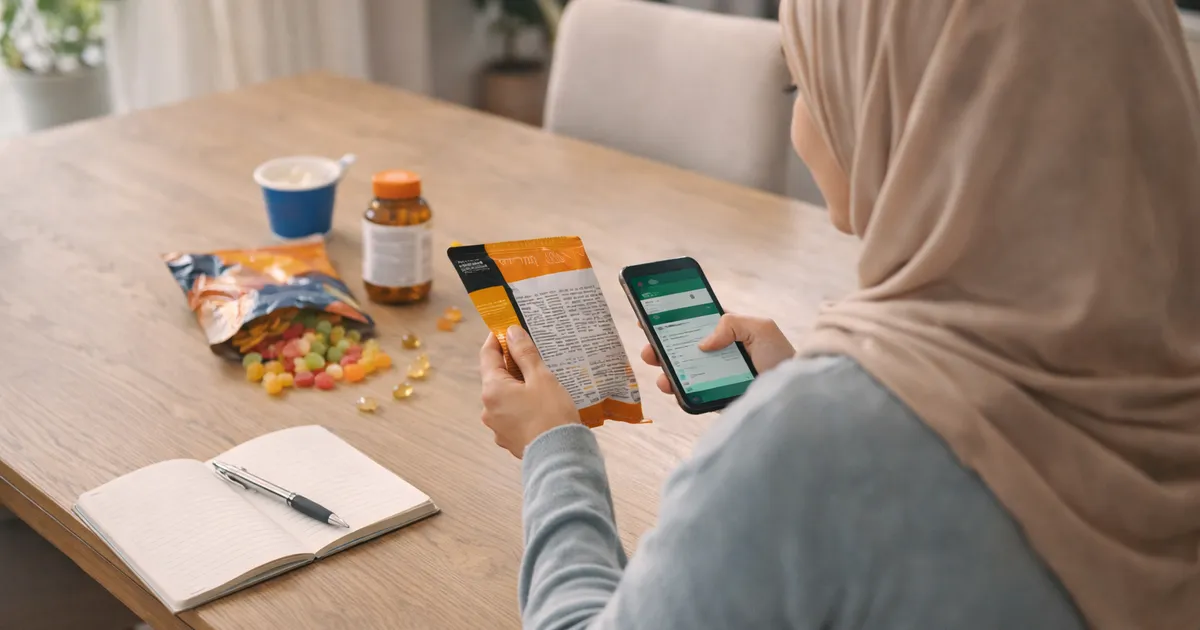
 The Most Searched Halal Food Questions, Answered Clearly
Straight answers to common halal food questions Muslims search for every week, from gelatin and E-codes to vegetarian labels and accidental mistakes.
 Ingredients
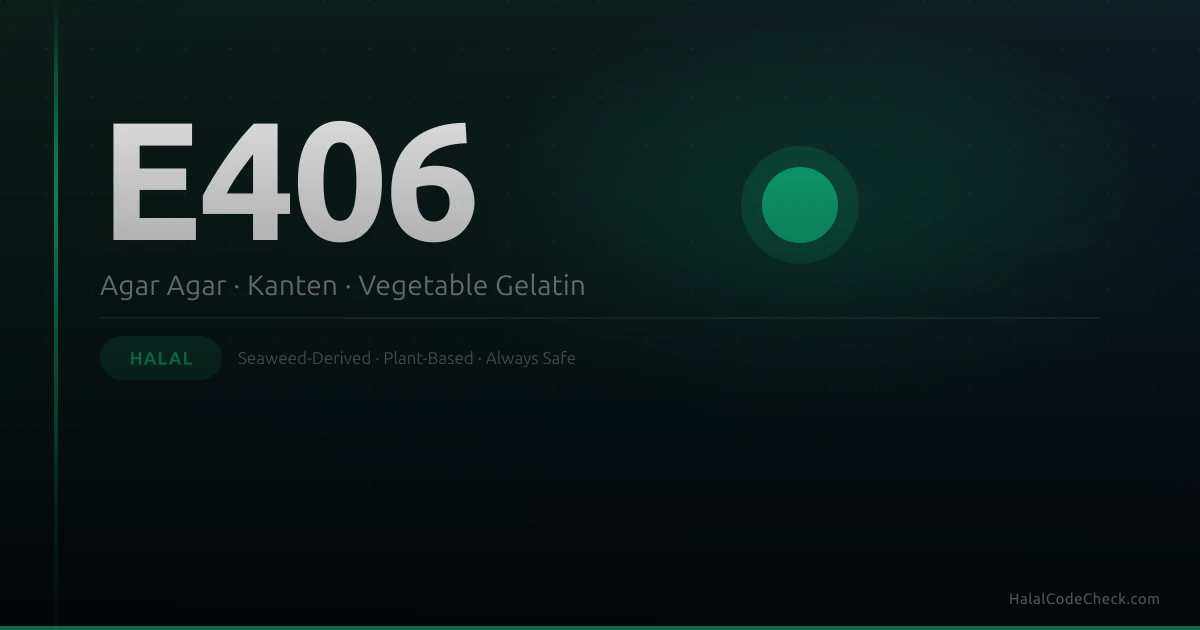
 Is Agar Agar Halal? Yes - The Seaweed Gelling Agent That's Always Safe
Agar agar (E406) is 100% halal - plant-derived from red seaweed with no animal processing. Learn where it's used, how it compares to gelatin, and how to spot it on labels.
 How-To Guides
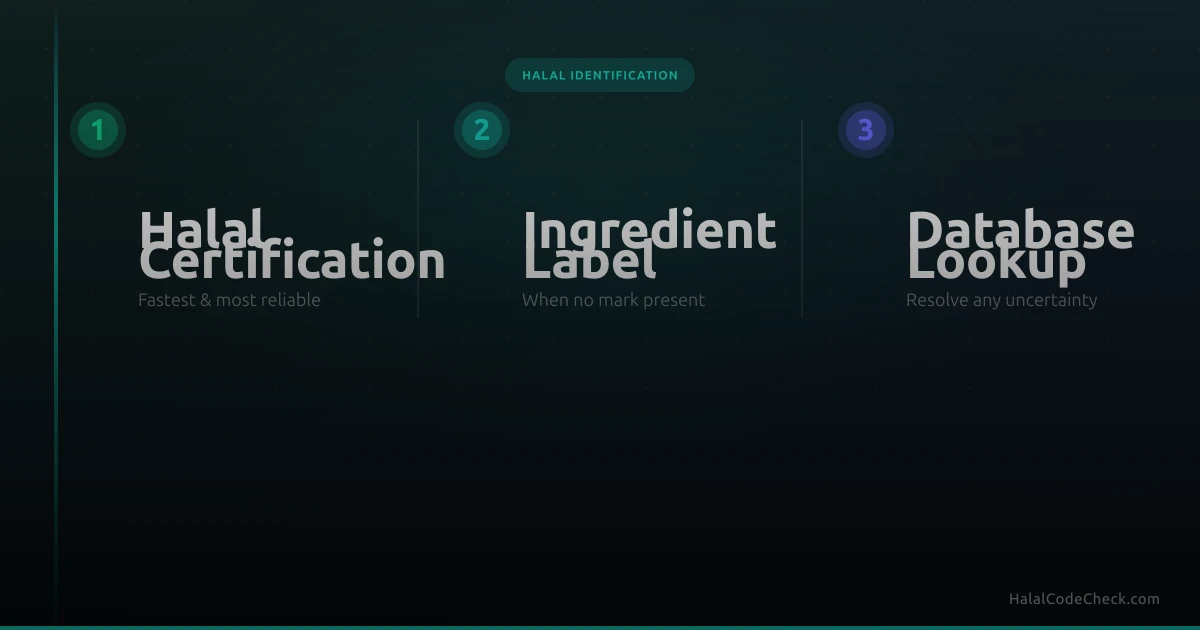
 How to Identify Halal Products: A Practical 3-Step System
Learn how to identify halal products quickly and confidently - certification marks, ingredient label reading, E-codes to watch, and tools that do the checking for you.
Ready to verify E-codes instantly?
Stop guessing about food ingredients. Use HalalCodeCheck to scan products and get instant halal verification.