
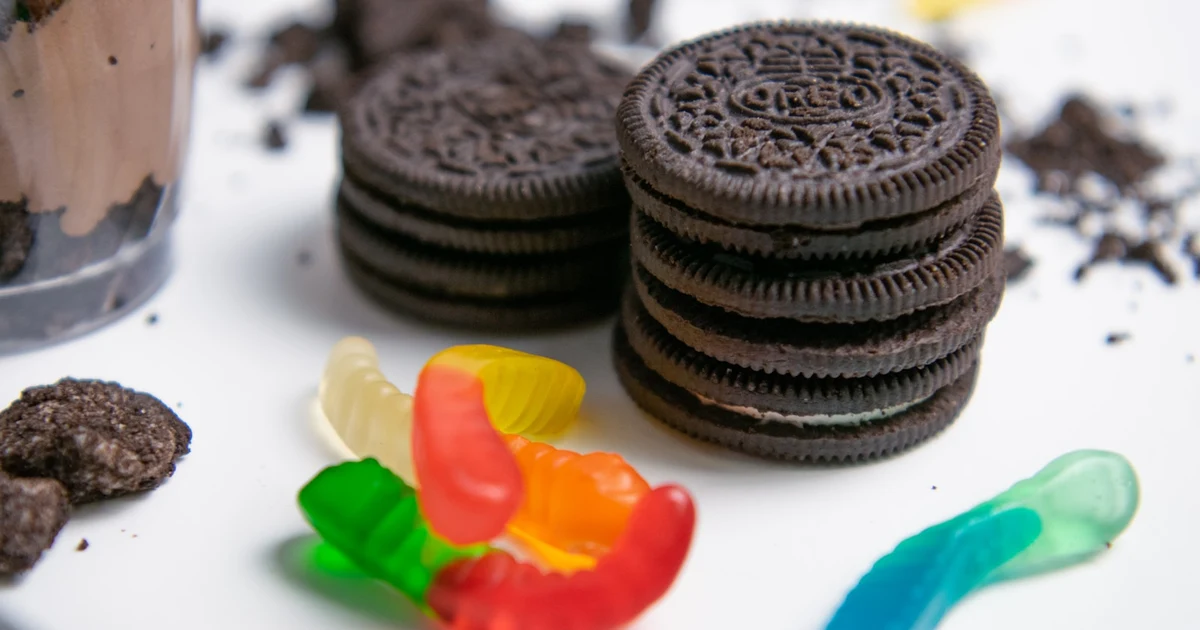
The direct answer: Trolli Gummy Worms are not halal. In the EU, UK, and US, they contain pork-derived gelatine (E441). Trolli holds no halal certification in any Western market.
This is an unambiguous case — no regional grey areas, no certification for a subset of products, no debate about fermentation by-products. The gelatine in standard Trolli products is pork-sourced, and that makes them haram.
What Makes Trolli Haram?
E441 — Gelatine (Pork-Derived)
E441 (gelatine) is the primary issue. Gelatine is a protein produced by boiling the bones, skin, and connective tissue of animals. It dissolves in hot liquid and sets into a gel when cooled — this is what gives gummy sweets their distinctive chewy texture.
In Trolli products sold in the EU and UK, the gelatine is pork-derived. This means it is extracted from pig bones and pig skin. Pork-derived gelatine is haram — this is not a contested or nuanced position within Islamic dietary law.
Trolli ingredient labels will list “gelatine” in the ingredients. Under EU labelling law, manufacturers are not required to specify the animal source of gelatine in confectionery. In the EU and UK context, “gelatine” without further qualification in a mainstream confectionery product defaults to pork.
This applies to:
- Trolli Gummy Worms (standard and sour varieties)
- Trolli Sour Crawlers
- Trolli Peachie Os
- Trolli Eggs
- Trolli Brite Crawlers (US market)
E120 — Cochineal/Carmine (in Some Red Products)
E120 (cochineal/carmine) is a red dye derived from the crushed bodies of female cochineal insects (Dactylopius coccus). It is used to produce red, pink, and orange colours in food products.
E120 is considered haram by the majority of Islamic scholars on the grounds that insects are generally not permissible for consumption under Islamic dietary law (with the exception of locusts under some rulings).
Not all Trolli products contain E120 — but red and pink Trolli varieties may. This is an additional concern on top of the gelatine issue, not a replacement for it. Even if a Trolli product did not contain E120, it would still be haram due to the pork gelatine.
Check the ingredient list of any red or pink Trolli product for E120, cochineal, or carmine.
Who Makes Trolli?
Trolli was founded in Germany in 1975 as Trolli GmbH. The brand is now owned by Ferrara Candy Company, a US-based confectionery manufacturer. Despite the change in ownership, Trolli products sold in the EU and UK maintain German-style formulations using pork gelatine.
There is no indication that Ferrara has introduced halal-certified Trolli lines for Western markets.
Is There Any Halal Trolli?
No. There are no halal-certified Trolli gummy worm or gummy worm-style products known to be available in the UK, EU, or US from the Trolli brand.
Unlike Haribo — which does manufacture dedicated halal-certified lines in Turkey for some Muslim markets, covered in our full Haribo verdict — Trolli does not appear to operate a dedicated halal production line for any Western or Middle Eastern market.
If you encounter a product labelled or claimed to be “halal Trolli” in a shop, treat this with scepticism. Check whether:
- A recognised halal certification logo (HMC, HFA, Diyanet, JAKIM, MUI) appears on the packet
- The gelatine source is listed as “beef gelatine” or “fish gelatine”
Without both of these, do not consume it.
Are Trolli Big Burger Gummies Halal?
Trolli Big Burger gummies are a separate product line from the classic worm — they are shaped like hamburgers and typically sold in larger sharing bags. The halal status is the same as the rest of the Trolli range.
Verdict: Haram in the UK, EU, and US.
Trolli Big Burger gummies sold in Western markets contain pork gelatine (E441). The gelatine is listed on the ingredients as “gelatine” without a source qualifier, but Trolli’s standard European formulation uses pork-derived gelatine throughout its gummy range. The Big Burger is not an exception.
| Question | Answer |
|---|---|
| Do Trolli Big Burger gummies contain gelatine? | Yes — listed on the ingredients as “gelatine” |
| Is the gelatine halal? | No — pork-derived in EU/UK/US production |
| Is there a halal Trolli Big Burger? | No certified halal version exists for Western markets |
What to look for on the label: The ingredients will list “gelatine” (or “Gelatine” / “Gelatina”) without specifying “beef” or “fish”. Absent a halal certification logo (HMC, HFA, or equivalent), this is pork gelatine.
If you are looking for a halal burger-shaped gummy, check brands such as Bebeto, Sweetzone, or Vidal — all of which produce halal-certified gummy ranges including novelty shapes.
Regional Summary
| Region | Status | Details |
|---|---|---|
| UK | Haram | Pork gelatine. No halal cert. |
| EU (Germany, France, etc.) | Haram | Pork gelatine. No halal cert. |
| US | Haram | Pork gelatine. No halal cert. |
| Middle East / Gulf | No certified Trolli available | No Trolli halal line known for this market. |
Halal Alternatives to Trolli Gummy Worms
These brands produce halal-certified gummy sweets including worm-shaped varieties, and are widely available in the UK:
Bebeto
Bebeto is a Turkish confectionery brand producing a comprehensive range of halal-certified gummy sweets. Their gummy worms and sour crawlers are direct replacements for Trolli Gummy Worms. Bebeto is halal-certified and uses beef gelatine. Available in major UK supermarkets, halal shops, and online.
Sweetzone
Sweetzone is a UK-based confectionery brand whose entire product range is halal-certified. They produce gummy worms and sour worm varieties. Available in halal supermarkets and online.
Kervan
Kervan is a Turkish halal-certified confectionery brand with gummy worm and sour worm products. Well distributed in UK halal shops and online retailers.
Vegan Options (No Gelatine)
Pectin-based gummy sweets contain no gelatine at all — the texture is achieved with plant-derived pectin instead. Brands include Candy Kittens (UK, vegan certified, available in most supermarkets). These avoid the gelatine debate entirely.
The 30-Second Label Check for Any Gummy Sweet
When checking any gummy sweet — Trolli or otherwise:
- Look for a halal certification logo — HMC, HFA, MCB, Diyanet, MUI, or JAKIM. This is the only reliable indicator.
- Find “gelatine” in the ingredient list — if present, look for the source. “Beef gelatine” or “fish gelatine” with a certification logo = potentially halal. “Gelatine” alone in a UK/EU product = assume pork.
- Check for E120 or “cochineal” in any red or pink product.
- If no halal logo and no source specified — do not consume.
Summary
| Question | Answer |
|---|---|
| Are Trolli Gummy Worms halal? | No — pork gelatine in all EU/UK/US products |
| Is there a halal Trolli? | No certified halal Trolli line exists for Western markets |
| Key haram ingredient | E441 (pork gelatine) |
| Additional concern | E120 (cochineal) in red-coloured varieties |
| Best alternatives | Bebeto, Sweetzone, Kervan |
| Vegan (no gelatine) option | Candy Kittens |
Bebeto, Sweetzone and Kervan are all ranked and compared in our roundup of the best halal gummy sweets and jelly candies you can order online in 2026 — worth a look if you want a certified worm-shaped swap rather than a Trolli packet.
For the full Trolli brand breakdown including all product types, see the Trolli brand guide.
To check the halal status of E441 and all other E-codes, see the E-codes database.
To scan the ingredient list of any sweet or snack you are holding right now, use the ingredient scanner.
How we reached this verdict
We checked the following Tier-1 sources before publishing this verdict:
- Halal certification bodies (HMC, HFA, JAKIM, MUI): Where the brand or ingredient appears in certified products, the certifying body’s audit covers source verification; where it appears in uncertified products, manufacturer disclosure is required.
- Manufacturer statements: Public ingredient lists, vegetarian / vegan suitability labels, customer-service correspondence on source disclosure.
- Sunni fatwa scholarship across the four madhabs:
- Hanafi-leaning bodies: IslamQA Hanafi, Darul Iftaa Birmingham, AskImam.org, Daruliftaa.com (Mufti Taqi Usmani), Wifaqul Ulama, Darul Iftaa New York.
- Shafi’i / Maliki-leaning bodies: NU (Nahdlatul Ulama, Indonesia), Dar al-Ifta al-Misriyyah (Egypt), e-fatwa.com (UAE), al-Azhar.
- Hanbali / Saudi-Salafi-leaning bodies: Saudi Permanent Committee for Scholarly Research, IslamQA Saudi.
Madhab note
The four Sunni madhabs broadly converge on the rules applied in this guide:
- Pork-derived sources — Haram across all four madhabs.
- Alcohol-based ingredients — Haram across all four madhabs.
- Source-ambiguous E-codes (E471, E476, E631, E627, E635, E920) — manufacturer plant-source disclosure (vegetarian-suitable label) is treated as sufficient under the Hanafi/Maliki/Shafi’i mainstream rule (Darul Ifta Birmingham, IslamQA case 245452); HMC-strict / Hanbali-leaning view requires formal independent certification.
- Istihāla (transformation) — Hanafi and Maliki accept istihāla strongly; spirit vinegar (alcohol → vinegar) is halal. Most Shafi’i scholars permit spirit vinegar specifically; some Hanbali scholars more cautious.
- Insect-derived dyes (E120 cochineal/carmine) — Hanafi, Shafi’i, and Hanbali generally treat as haram; some Maliki scholars permit small insects.
- Non-zabihah meat (Ahl al-Kitāb / People-of-the-Book slaughter) — Maliki and classical Shafi’i/Hanbali generally accept; Hanafi-Deobandi tradition more restrictive.
If your madhab differs on a specific ruling, the relevant section above flags the school-specific position. For binding rulings on borderline products, consult a competent scholar in your tradition.
Ingredients change. Be first to know.
Brands reformulate without warning. We track every E-code update and halal certification — one short weekly email.
Related Articles
 Shopping Guides
 Are Bassett's Sweets Halal? Jelly Babies, Wine Gums & the Sherbet Exception
Bassett's Jelly Babies and Wine Gums contain pork gelatine — haram. Liquorice Allsorts use E120 cochineal — also haram. Two products in the range are the exception.
 Shopping Guides
 Halal Bakery, Cakes and Gummies in South Africa: Albany, Woolworths, Beacon (2026)
South Africa is the easiest country in this series: Albany's bakeries sit on SANHA's public register, Sasko is certified for flour, and Woolworths prints the SANHA logo on what its certified suppliers make. Beacon Jelly Tots are starch-set with no gelatine; Beacon's gelatine lines say 'bovine'. Here is the logo rule.
 Shopping Guides
 Halal Sweets and Candy in Ireland: Haribo, Rowntree's and the Certified Aisle (2026)
Ireland has no locally certified confectionery brand. Haribo on Irish shelves is the UK/German pork-gelatine stock; Rowntree's Fruit Pastilles and Jelly Tots are gelatine-free; Lily O'Brien's certifies its desserts, not its chocolates. The certified gummies are imports — Bebeto, Sweetzone, Vidal.